 View PDF
The content displayed below is for educational and archival purposes only.
Unless stated otherwise, content is © Watch Tower Bible and Tract Society of Pennsylvania

SEPARATION OF CHURCH AND STATE
Framers of Constitution vs. modern courts
East Meets West in Olympics
Athletes conscripted for '*cold war”
Religious Belief in America
Leading creeds of U. S. religions tabulated
Facts About Thanksgiving
What was its origin and original purpose?
NOVEMBER 8. 1952 SFHWTMnNrrPfT.v
THE MISSION OF THIS JOURNAL
News sources that are able to keep you awake to the vital Issues of our times must be unfettered by censorship and selfish interests. “Awake!” has no fetters. It recognizes facts, faces facts, is free to publish facts. It is not bound by political ambitions or obligations; it is unhampered by advertisers whose toes must not be trooden on; it Is unprejudiced by traditional creeds. This journal keeps Itself fires that it may speak freely to you. But it does not abuse its freedom. It maintains integrity to truth.
**Awake !’* usee the regular news channels, but is not dependent on them. Its own correspondents are on all continents, in. scores of nations. From the tour corners of the earth their uncensored, on-the-scenes reports come to you through these columns. This journal's viewpoint is not narrow, but is international It is read in many nations, in many languages, by persons of all ages. Through its pages many fields of knowledge pass in review—government, commerce, religion, history, geography, science, social conditions, natural wonders—why, its coverage to as broad as the earth and as high as the heavens.
"Awake!” pledges itself to righteous principles, to exposing hidden foes and subtle dangers, to championing freedom tor all, to comforting mourners and strengthening those disheartened by the failures of a delinquent world, reflecting sure hope tor the establishment of a right* ecus New World.
Get acquainted with “Awake!” Keep awake by reading "Awake I”
Published Semimonthly Br watchtower bible and tract society, inc.
117 Adams Street Brooklyn 1, N. Y.( U„ S. A.
N. H. Knobs, President Grant Suiter, Secretary.
Printing tht« iMue: 976,000
Five cent* a copy
Languages in which U
Semimontbly—ATflksang, foellsb, tTtonfcft, French, Centrum, HoJliriilteh, Ncrwisiiui, fynninh, Swedish. Moclhly^Dtnlflh. GrWc, rortWi«£, Utailmm.
Oftlcs Yearly pubicriptltRi Bite
America, U.S., 117 Adams St., Brooklyn 1, N.Y. SL JcttalJ*F 11 Bd., StritltflsM, N.8.W. 8*
Canada. 40 Irwin Ave.. Toronto 5. Ontario (1 English 3d Crew Thompson, London, W. 3 7s Sooth Afeta, Private P.O. Box 77, Pretoria.
Transvaal 7i
IteMlttiBwt strwdd be Hnt io office In your «w-tey Jb ncmpliancj with regulations to manatee safe delivery <rf nwaty, BemltUneefl ate araepcerf Brooklyn from countries where no office Is located, by international money order only, SutMErlptton rata in different countrfea are here stated in local currency. Notice of wcalratlM (with renewal blank) it mt ot lent tiro .fewi before sobecriptloD w-ptfea CtanfO tf tUrr» when wnt to w nffite may be expected effective within one month, Send jour old aa well as new addrttt.
Entered as second-class matter at Brooklyn, N.Y. Act of Congress, March 3, 1879. Printed In U. S. A
CONTENTS
Maintaining a Christian Standard
Separation of Church and State
Arguments Against
"An Almost Unique Experiment1’
Thanksgiving and Feast of Tabernacles
"Zour Word Is Truth”
Religion in Helsinki Olympic Games
£/ “Now it is high time to awake”—Romans 13:11 &
Volurne XXXIiI ^Brooklyn, N. Y-, November 8, 1952 “ Number 21
Maintaining a Christian Standard
FALSE religion, commercial grafting, political corruption, rejection of God's simple but specific instructions are all involved in the bad example set by today's world. Maintaining a Christian standard of morality is made increasingly difficult by a continual flood of propaganda for loose living. It is a matter of going upstream against a swiftly flowing current. The Christian must be on his guard to see that this old world's bad habits do not slowly and subtly draw him under.
Ours is a crucial day, a time when Satan is doing his utmost in a final desperate attempt to prove his side of the great issue of universal sovereignty—to prove that he can tempt all men away from obedience to their Creator. The extent to which he would go to keep the people in bondage, even wrathfully bringing woes, world war, famine and other distresses to earth, is shown in Revelation 12:12 and Matthew 24:7. Yet a few have withstood the Satan-inspired flood of lawlessness, immorality and wild living, and have held to the Christian standard.
Not only must they resist the inclinations of their own imperfect flesh, but they must guard against a monstrous propaganda barrage that implies that loose living is a lot of fun. When weighed in the balance of common sense the world's feeble rewards are poor pay for what is lost by following its course. Pay as poor, m fact, as the bowl of food, one short meal, for which Esau sold his God-given birthright to Jacob in order to satisfy a momentary craving of his normally well-fed belly. (Genesis 25:27-34) Jesus foresaw that some would likewise sell their right to everlasting life for a few doubtful moments of sensual living, and he pointed to the wisdom of vigorously withstanding such temptations: “Because of the increasing of lawlessness the love of the greater number will cool off. But he that has endured to the finish is the one that will be saved.” —Matthew 24:12, 13, New World Trans,
Today widely circulated publications seem to take great delight in publicizing anything that implies a questionable sexual circumstance. Life magazine of July 14 did this in its article entitled “Fumble Party”, calling it “an item of the American scene". It would be better described as “an item of the American obscene”. This “lively indoor game”, to quote Life, played by a mixed group of men and women gets off to a bang when the participants swap items of clothing. Pictures show one man giving the “daughter of an oil company president” his pants. But that is only the beginning. After everyone is disguised, men and women together fling themselves down into a huddle on the floor, the lights are turned off, and the one who is “it” paws among the tangled bodies trying to identify someone. Said the host-
ess: "Nothing melts the social ice like a game or two of fumble.”
But do not misunderstand. Life pointed out that all the fumblers were well-bred. "The guests, all seasoned tumblers, included a surgeon, a state senator, the granddaughter of a former U. S. senator and the daughter of an oil company president.”
Life boasts of having a terrific impact on the nation, and if you are thinking about the suggestion this article makes to youth, you are not alone. Protested one reader, "You really hit rock bottom.” Another: "You win the limburger Oscar for that story. The thing hits a new low.” A third: “I write this letter as a teacher in the American public school system. When a magazine read by thousand^ of teenagers publishes such an article I feel helplessly inadequate in the job I have chosen to do.” Another reader wrote: "We think that Life fumbled.” Said the editors, "Life agrees that, it did indeed fumble in publishing the story,” and, "The editors apologize to those readers who were offended.” Why not to everyone? In other times a general apology might have been in order, not just for offending some readers, but for contributing to the example of delinquency.
Such conditions, however, should surprise no one. The Bible calls these the “last days” of this corrupt old world, and it well predicted what to expect. “ Tn the last time there will be ridiculers, proceeding according to their own desires for ungodly things.’ These are the ones that make separations, animalistic men, not having spirituality.” It further says men would be lovers of themselves, self-assuming, haughty, disobedient to parents, without self-control, without love of goodness, lovers of pleasures rather than lovers of God, slyly working their way into households to lead away captive weak women loaded down with sins.—Jude 18, 19; 2 Timothy 3:1-6, New World Trans.
Will you reject knowledge? Mock, imitate, mimic this old world’s questionable practices? Bow to its propaganda barrage? Join with those who “publicly declare they know God, but they disown him by their works”? (Titus 1:16, New World, Trans.) No, wise persons will take Paul’s counsel, "What! Do you not know that unrighteous persons will not inherit God’s kingdom?” And again, "For you know this, recognizing it for yourselves, that no fornicator or unclean person or greedy person—which means being an idolater—has any inheritance in the kingdom of the Christ and of God.”—1 Corinthians 6:9, 10; Ephesians 5:5, New World Trans.
One does not have to be guilty of all these things to be denied the Kingdom, but it is denied those that keep practicing any of them. A man may not worship idols, but is he an adulterer? He may not practice homosexuality, but is he a thief or greedy? He may not be a drunkard, but does he revile God’s name, either by speech or by course of action? Such is the world’s course, but it is not the Christian’s standard. Psalm 145:20 simply says: “The Lord preserveth all them that love him: but all the wicked will he destroy.”
Though in the world, the Christian must guard against letting the world’s sensuality, lust, greed and corruption influence him; guard against falling victim to its destructive propaganda. Such a system repels the Christian, for he is no longer a part of it. He now wishes to receive God’s favor and he is happy to know that God’s kingdom is no part of this loose-moraled world. (John 18:36) However, he recognizes that maintaining his Christian standard takes alertness and determination to follow right rules, but he knows the reward is well worth the effort. What is gained is far greater, more valuable, more lasting than what is lost, for it leads to Jehovah’s favor and everlasting life!
East Meets West in

ivmpics
OFFICIALLY, no country “wins” the
Olympic games. There is no official team scoring system. So those understanding the rules did not expect West to win over East or East over West The big question prior to the 1952 Olympic games was, What would the Russians do at Helsinki, since they were making their first Olympic appearance since the czarist days of 1912 ?
On July 19 the Olympiad began. Over sixty-seven nations, some of whom are still nursing the wounds of World Wars I and H, crowded under one “roof” to enjoy as one happy family the “most rich and historic of all the sports man has enjoyed through the centuries”. What politicians have failed to accomplish in their political arenas, as evidenced by the many years of bickering in the United Nations, the Olympic games, without much effort, succeeded in doing. The world family threw off its “political views or government instructions” and, at least for fifteen days, “behaved like amiable human beings,” It is reported that Americans and Russians have been “hitting it off” from the start, and that the “free world” athletes and officials are ready to call the Russians “good fellows”, “friendly,” “generous and hospitable.”
What a blow to the Russian propaganda machine, which for years has been feeding their people with a “hate America” campaign, calling Americans everything from assassins to warmongers, to see all their hard
efforts go up in smoke when Russian athletes, both men and women, willingly and enthusiastically congratulated Americans and wined and dined with them. And too, what a blow it must be to the “McCarthys” and “McCarrans” to find the cream of American youth hobnobbing, joking and back-slapping with the “Reds”. Commenting on the fraternization during the Olympics, The Nation for August 2, 1952, under the subtitle “The Subversive Olympics”, said:
“We call the attention of Senators McCarthy and McCarran to the scandalously amicable attitude of the American Olympic athletes toward their Soviet competitors—and vice versa. Our boys have permitted their pictures to be taken arm in arm with conspiratorial high hurdlers from Uzbekistan. An American pole-vault champion gratefully accepted the congratulations of his defeated Russian rival, acting as if there were no such thing as Aesopian language. In direct defiance of the Battle act prohibiting the transfer of war materials to the Soviet Union, our pistolshooters presented a box of ammunition to Russian competitors who were having trouble with their own. Worst of all, an American runner referred to by the Times correspondent as 'Horace Ashenfelter of the FBI’ showed his heels to the Russians when, as is well known, the reverse should have happened.

"Truly, all this is not only scandalous but positively alarming. Events at Helsinki, in demonstrating that we and the Russians can coexist peacefully on the athletic field, may give rise to popular suspicion that the same might be true in other fields. What would happen, then, to the cold war? To armament contracts ? To the Republican and Democratic foreign-policy planks? To Senators McCarthy and McCarran? We respectfully request that the Olympic com-
ittee be added to the attorney general’s st of subversive organizations.”
Poor Uncle Sam
And to add some more unreasonableness that has arisen from the Olympic picture that might give rise to “popular suspicion”. Russia, reportedly, is a land impoverished by her mismanagement and drained to the extreme by her tremendous war effort, yet at the Olympics she can afford to splurge and entertain even the wealthy capitalists; while rich America cannot adequately provide for her own. The New York Times for July 27, 1952, reported:
. ""The Russians and their fellow-athletes from the border satellites are in some respects more comfortably installed than the Westerners, At Kapylae, where the Western competitors are housed, concrete floors and plain camp beds and stools are the rule, and meals are served in a cold and drafty marquee. At Otaniemi it’s different—the furniture is nicely upholstered, floors are carpeted and there is a permanent dining hall, plus the only indoor running track and gymnasium in Finland, . . . They are more or less constantly entertained. Russian folk dance groups from virtually every province in the Soviet Union appear in relays at Otaniemi, as do ballet companies and actors and singers famous east of the Iron Curtain. Food and drink are brought to the Russian team from Leningrad every day.”
The very next day, the New York Times, commenting on a lavish dinner that the Russians had spread for U, S. officials, stated Soviet hospitality would go unretiirned because "it's too costly to reciprocate”. The article stated: “Officials of the United States Olympic team decided today no attempt would be made to reciprocate the hospitality extended by the Russian team last night, ‘We have troubles enough trying to raise money to send the team here, and we don’t have any left for entertainment/ said one highly placed American who declined use of his name.
“The Russians gave a lavish dinner, replete with caviar, vodka, wine, fancy meats and cakes at their Iron Curtain camp at Otaniemi. The twenty-four top men of the United States team were invited. . , . The Russians expressed keen disappointment that no American track and field champion came. United States officials said they had understood the invitations to mean officials only. Several American athletes said today they might take up the Russian invitation. , . , "Too bad we couldn’t have them over for lunch in the cafeteria/ said Simmons [of Charlotte, North Carolina].”
“Too bad” is right, especially since America’s supposed aim is to win over the friendship of the Russians and their sateJ^ lite people. Rich Uncle Sam spends billions of dollars each year for booze and cigarettes, yet when time comes for him to spend dollars where the dollar would really count, the capitalistic capital suddenly goes broke. He does not have enough for one fancy dinner! What if the Russian gesture was a propaganda scheme? Is not what is good for the goose also good for the gander? Or are we to believe that America is not engaged in any propaganda warfare? Whatever the case may be, Uncle Sam’s face should be blushing red—if you will pardon the expression.
Nationalism Sours Olympics
Olympic discussions usually recall to mind Baron Pierre de Coubertin, who dreamed up the modern revival. Coubertin could not have believed that the Olympic games would bring peaceful relations between hostile nations, no more so than any intelligent sport enthusiast would expect the same today. The Olympics did not bring peace, or even keep Greece from eventual enslavement, during the twelve centuries intervening between their establishment about 776 B.C. and their suppression A.D, 392. Discord and scandal degenerated the contests until finally, at one contest, the Romans, infuriated by Greek charges of professionalism, went on a rampage and set fire to the buildings used to house the athletes and wrecked the stadium. After that debacle Roman Emperor Theodosius called a halt to the whole affair.
About the only thing the Olympics did offer was a temporary substitute for armed conflict. The high ideals that were avowed were not always in the hearts of men, but they were there. As De Coubertin said: “The important thing in the Olympic Games is not to win but to take part, the important thing in life is not the triumph but the struggle, the essential thing is not to have conquered but to have fought well. To spread these precepts is to build up a more scrupulous and more generous humanity.”
With just a glance around the world today we see sufficient contradiction of these principles. We see “whole nations attempting to win unworthy victories by vicious means. We see vast numbers of people who are being carefully taught to be strong but not to be scrupulous and not to be generous”. Reporters have also observed that during the 1952 games, the public breathed heavily with nationalism. In this respect, “the public definitely has not caught the Olympic spirit?’
The artificial "team” rivalry between the United States and the Soviet Union was created, even though the games “are not held to demonstrate the superiority of one national group over another”. Propaganda artists on both sides of the Iron Curtain were responsible for this stench of nationalism. The New York Times stated that “Finnish Communists newspapers have at least struck a note by playing up every Russian success, of which there have been plenty, especially in the side show events, such as gymnastics, as definite proof of Russian superiority over the 'decadent youth of western imperialist countries* Avery Brundage, president-elect of the International Olympic Committee, was himself fed up with the excessive display of nationalism reflected in the obsession with national points scores. Said he: “Olympic competition is between individuals t not nations. Any form of team point totals is a violation of the true Olympic spirit and antagonistic to the best Interests of the Olympic movement.” About the only nation that did not violate this rule was the nation that did not score. Coubertin’s statement about *the important thing in the Olympic games is not winning, but taking part* seems to have lost its appeal.
Back in 1948 the London Evening Stand-ardj in a biting editorial, wrote: “Even in norma] times British enthusiasm for the games ranged from lukewarm to loathing. We do not regard sport as primarily an occasion for n a tion alistic self- assertion. Yet the Olympiad atmosphere tends notoriously to take on an unpleasant edge of jingo rivalry which is the antithesis of real sporting competition.”
As with the ancient so with the modem Olympiads, it is still bickering and rivalry. It appears that mankind will Just have to learn to wait for the kingdom of God to teach them how to work and how to play.

SEPARATION of church and state has ever been held as a basic principle of the United States. However, ever and anon there have been not only disagreement, but bitter and even violent disputes over how far the principle should be carried or applied. For some years now there has been controversy over the extent to which the principle should be applied to public and parochial schools.
The first amendment to the Constitution of the United States, on which the whole policy of separation of church and state is based, reads; “Congress shall make no law respecting an establishment of religion, or prohibiting the free exercise thereof; or abridging the freedom of speech, or of the press; or of the right of the people peaceably to assemble, and to petition the government for a redress of grievances.’’
In 1947, in the Everson case, the Supreme Court interpreted those words to mean that “neither a state nor the Federal government can set up a church. Neither can pass laws which aid one religion, aid all religions, or prefer one religion over another. . . . No tax in any amount, large or small, can be levied to support any religious activities or institutions, whatever they may be called, or whatever form they may adopt to teach or practice religion. , . , In the words of Jefferson, the clause against establishment of religion by law was intended to erect 'a wall of separation
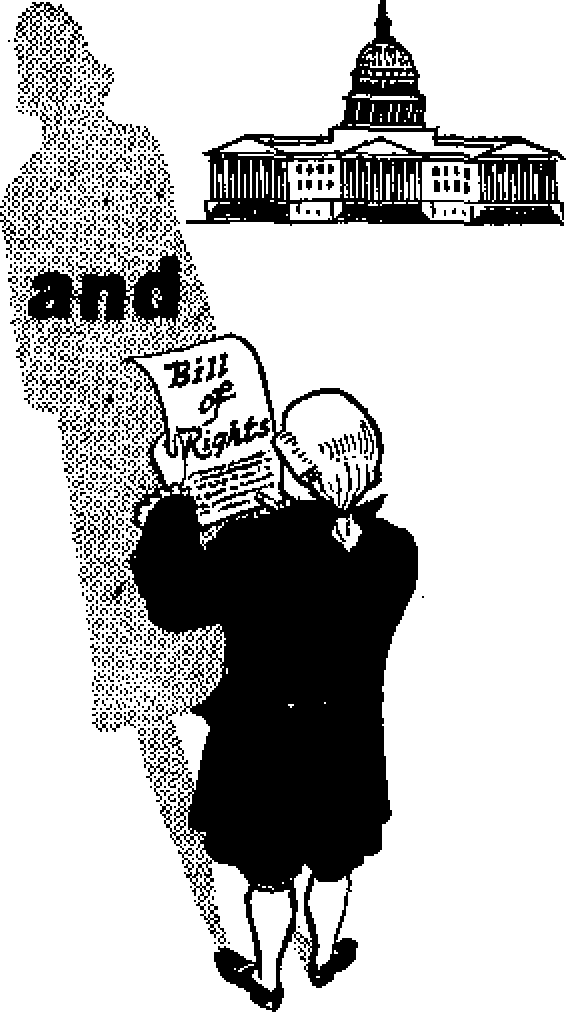
between church and state’ ”, And the following year, in the McCollum case, the Court ruled that "a utilization of tax-established and tax-supported schools to aid religious groups to spread their faith . . . falls squarely under the ban of the First Amendment".
Outspoken in their condemnation of this interpretation have been the spokesmen for the Roman Catholic Church. Says Msgr. J. S. Middleton, secretary to Cardinal Spellman, for Education: “The complete separation of church and state gives support to irreligion and such is in direct violation of the spirit of the First Amendment," because “guaranteeing the freedom of religion was not meant to be an aid to irreligion". According to him, absolute separation between church and state “is impractical, impossible and against the best in our American tradition”.
Former Attorney General McGrath, prominent Catholic politician in the United States, made a speech in which he stated: “If anything, the state and church must not have any fence between them.” And most fully stating the Roman Catholic ^position regarding separation of church and state is J. M. O’Neill, in his Religion and Education Under the Constitution, whose chief arguments we will presently refute.
While Roman Catholic policy is thus seen to be strongly opposed to complete separation of church and state, opposition thereto is not limited to that sect. Certain Protestant spokesmen have expressed themselves to the effect that if the government is going to insist on complete separation in the matter of public schools they will be obliged to resort to parochial or day schools to teach their children religion.
Arguments Against Complete Separation
Among the arguments advanced against complete separation of church and state is that the framers of the Constitution were opposed to the government’s giving aid to just one religion, “single establishment,” but not to its aiding all religions, “multiple establishment.” The facts, however, do not bear this out.
James Madison, who had more to do with the writing of the Constitution than any other one man, wrote and distributed his Memorial and Remonstrance Against Religious Assessments for the very purpose of defeating a bill which provided for “multiple establishment" of religion in Virginia; a bill which was to require all persons “to pay a moderate tax or contribution annually for the support of the Christian religion or of some Christian church, denomination or communion of Christians or for some form of Christian worship”. Arguing against this measure he said: “Who does not see that the same authority which can establish Christianity, in exclusion of all other religions, may establish with the same* ease any particular sect of Christians to the exclusion of all other sects?” As a result of his efforts Virginia was fifty years ahead of Massachusetts in the matter of separation of church and state.
Another argument advanced against complete separation of church and state is that the Fourteenth Amendment, which forbids the individual states to do what the First Amendment forbids Congress to do, does not specifically mention anything about the establishment of religion, and therefore the individual states may give aid to religion. However, this again ignores the facts of history. Strenuous efforts were made at the time of the writing of the First Amendment to forbid the individual states from establishing religion, etc., and the measure even passed in the House, but was defeated in the Senate. Such states as Massachusetts were not ready then to give up establishment of religion.
Foes of complete separation further argue that the framers of the Constitution were friends of religion and therefore would not harm religion by forbidding all government aid to it On the contrary, these argued against government aid, on the premise that it was best for both government and religion. According to Madison, the example of Virginia made it “impossible to deny that religion prevails with more zeal, and a more exemplary priesthood than it ever did when established and patronized by public authority. We are teaching the world the great truth”, continued he, “that governments do better without kings and nobles than with them. The merit will be doubled by the other lesson that religion flourishes in greater purity, without than with the aid of government.”
In the treaty made with Tripoli in 1794, we find the following words in Article XI, which treaty, of course, was made with the approval of President Washington and Congress: “As the government of the United States of America is not, in any sense, founded on the Christian religion—as it has in itself no character of enmity against the laws, religion, or tranquillity, of Mussulman—and as the said States never have entered into any war or act of hostility against any Mohammedan nation, it is declared by the parties, that no pretext arising from religious Opinions shall ever produce an interruption of the harmony exist-
ing between the two countries/’—Statutes at Large, Vol. 8, p. 155.
HAn Almost Unique Experiment”
As an argument against complete separation of church and state, Catholic spokesmen are wont to cite the examples of European countries where religious freedom is enjoyed, but where the governments do give aid to religion. These, however, overlook the fact that the uniqueness of the United States in this matter of separation of church and state was just the novel experiment that the founding fathers were undertaking. As Justice Story, nine-teenth-eentury constitutional authority, in his Commentaries on the Constitution of the United States, pointed out in 1833: “It yet remains a problem to be solved in human affairs, whether any free government can be permanent, where the public worship of God, and the support of religion, constitute no part of the policy or duty of the state in any assignable shape. The future experience of Christendom, and chiefly of the American states, must settle this problem, as yet new in the history of the world, abundant, as it has been, in experiments in the theory of government.”
Yes, as Nevins, a Pulitzer prize-winning historian, well observes, church and state separation was “an almost unique experiment” when begun in the United States. “It is the basic fundamental of our religious liberty. It helped lead the way toward more tolerance and equality tn the rest of the world.” Regarding which fact the New York Dispatch, February 11,1952, stated: “Since the United States put the idea into practice, 33 countries have promised free and equal treatment of all religions, while religious tolerance has become general in most of the 27 countries with established churches.” For the United States now to imitate other lands would be for it to take a step backward.
Enforcing the Consequences
Those opposed to complete separation of church and state argue that it is both impractical and impossible. They point to the use of chaplains in legislative assemblies and in the armed forces; to Sunday-observance (“blue”) laws and tax exemption for religious property; to religious holidays such as Christmas, and religious proclamations, such as for Thanksgiving Day.
From the tenacity with which religious organizations hang on to these “minor vestiges of early state support of religion” one can see how far ahead of their times were the framers of the Constitution, yes, even ahead of our times. A striking example of this is Jefferson’s activities in connection -with the establishment of universities in his day. In no instance did he recommend professorships of divinity, even though in his day theology played the foremost role in educational circles. Even as regards elementary schools he recommended: “Instead, therefore, of putting the Bible and Testament into the hands of the children at an age when their judgments are not sufficiently matured for religious inquiries, their memories may here be stored with the most useful facts from Grecian, Roman, European and American history.” Certainly that does not sound as though he supported religion in education, as some have contended.
And regarding the subject of chaplains in Congress, Jefferson said: “The Constitution of the United States forbids everything like an establishment of a national religion . , . The establishment of the chaplainship to Congress is a palpable vi<x lation of equal rights, as well as of Constitutional principles.” And showing that it was his sense of justice and not animosity toward religion that prompted him to take such a position, note further the following argument of his: “The tenets of the chaplain elected (by the majority) shut the door of worship against members whose creeds and consciences forbid participation in that of the majority. To say nothing of other sects, this is the case with that of Roman Catholics and Quakers who have always had members in one or both of the Legislative branches. Could a Catholic clergyman ever hope to be appointed a chaplain? [No true prophet was Jefferson!] To say that his religious principles are obnoxious or that his sect is small, is to lift the evil at once and exhibit in its naked deformity the doctrine that religious truth is to be tested by numbers, or that the major sects have a right to govern the minor.” As a remedy Jefferson suggested that the congressmen pay for the chaplain.
And Madison was not One whit behind Jefferson in his ideas. According to him, “Chaplains for Congress when paid by public funds, chaplains for the army and navy when paid by public funds, and religious proclamations by the chief executive,” were all establishments of religion.
One of the chief difficulties in the way of properly evaluating the purposes and motives of the founding fathers of the United States intended by the Constitution is the modern tendency to picture them as devout sectarians. Nothing could be farther from the truth. Thomas Paine, avowed atheist, had much influence at that time. Alexander Hamilton objected to the assembly’s being opened with prayer. Benjamin Franklin, in his autobiography, tells how it came about that he got disgusted with his Presbyterian preacher and quit going to church; his clergyman was more interested in making good Presbyterians out of his parishioners than in making good citizens out of them.
According to The American Political Science Review^ March 1951, Jefferson, Franklin and John Adams were deists. According to Webster, a deist believes in the existence of a supreme being but neither accepts the Bible as the inspired Word of God nor Jesus as the Son of God. And Washington and Madison are said to have had more than average skepticism in regard to these points. Religious sects like to claim these men because they may have had nominal membership in the churches of their day. But how good a Presbyterian was Franklin when he listed in his biography, as examples of humility, Socrates alongside Jesus, and when he asked Voltaire to bless his grandson?
According to the framers of the Constitution the most that the state can do for religion is to protect its freedom, its right to worship as it sees fit. The state cannot render aid to any religion. Man is to be not only free to practice what religion he wants but also free to have no religion at all, to be free from religion if he so chooses. As Cooley shows in Constitutional Laws, 469, “Not only is no one denomination to be favored at the expense of the rest, but all support of religious instruction must be entirely voluntary?’
So, instead of complete separation of church and state being against what is best in American tradition, as some claim, just the opposite is true. As the Supreme Court expressed it: “We have staked the very existence of our country on the faith that complete separation between the state and religion is best for the state and best for religion.”
Supreme Court Retreats
The Supreme Court of the United States on April 28,1952, however, retreated from this staunch stand. That was in the case of Zorach v. Clauson, 72 S. Ct. 679. In that case the court held that the practice in New York of releasing children from school to attend religious services and receive religious instruction during school hours each week was not unconstitutional The decision was not unanimous. The court divided six to three, Mr. Justice Douglas wrote the opinion for the court He said:
"There is much talk of the separation of Church and State in the history of the Bill of Rights and in the decisions clustering around the First Amendment. . . . There cannot be the slightest doubt that the First Amendment reflects the philosophy that Church and State should be separated. And so far as interference with the ‘free exercise’ of religion and an ‘establishment’ of religion are concerned, the separation must be complete and unequivocal. The First Amendment within the scope of its coverage permits no exception; the prohibition is absolute. The First Amendment, however, does not say that in every and all respects there shall be a separation of Church and State. Rather, it studiously defines the manner, the specific ways, in which there shall be no concert or union or dependency one on the other. That Is the common sense of the matter. Otherwise the state and religion would be aliens to each other—hostile, suspicious, and even unfriendly. . . . Municipalities would not be permitted to render police or fire protection to religious groups. Policemen who helped parishioners into their places of worship would violate the Constitution. Prayers in our legislative halls; the appeals to the Almighty in the messages of the Chief Executive; the proclamations making Thanksgiving Day a holiday; ‘so help me God’ in our courtroom oaths—those and all other references to the Almighty that run through our laws, our public rituals, our ceremonies would be flouting the First Amendment. A fastidious atheist or agnostic could even object to the supplication with which the Court opens each session: ‘God save the United States and this Honorable Court? ”
In the conclusion of the opinion for the Court Mr. Justice Douglas put the McCollum case aside so as not to prohibit the New York released time under the doctrine of separation of church and state. He distinguished the case on the grounds that the Illinois schoolrooms and system were used to promote religion. In the New York case he said that they were not so used. He refused to expand the doctrine of separation of church and state further. He ended with saying: “We cannot read into the Bill of Rights such a philosophy of hostility to religion.”
The strong views of Jefferson and Madison did not impress the Supreme Court. This recent decision impresses the reader on the subject of church and state separation with a pungent statement made by Chief Justice Hughes during his lifetime. He did not say that the Constitution means what Madison and Jefferson and others wrote. The Chief Justice said the Constitution means what the majority of justices of the Supreme Court says. With this responsibility and power in that court it will be interesting to the American people to watch, in the future, where the line will be ultimately drawn by the Supreme Court on this issue of separation of church and state.
Patron Saint of the U. S. A.
"This is probably the most nervous generation of Americans who ever lived,” said Dr. Norman Vincent Peale, pastor of New York's Marble Collegiate Church
at the convention of the National Congress of Parents and Teachers, May 22,
1952. "The patron saint of the Irish is St. Patrick; of the English, St. George.
The patron saint of Americans is St. Vitus. . . . The American people are so tense and keyed up that it is impossible even to put them to sleep with a sermon, . , .
That’s a sad situation?’ he said.

The following article provides Tn ilmplffiod form factual information on America'* religions. It wat gathered by queitionnair* and personal research by a young minister who communicated with official* of each of America's religious bodies to find out what they believe. The results have been offered to u* for publication. We have checked them, believe the report to be accurate and fair, and are publishing it for It* value to our reader*.
- - 'It—. LL ~L HL- • -fc. . T.im 1 njU ■ ~H- ~B- X
CHURCH membership in the United States in 1951 (the last year for which a complete report is available) was the highest ever reported, about fifty-eight per cent of the total population. More than eighty-eight million persons were members of over two hundred religious bodies which varied in belief from ultramodernist to ultrafundamentalist Not many persons recognize the wide variety of religious thought tn America today, but the accompanying chart compares the varying beliefs of America’s religious bodies.
This information was gathered through the kindness of officials of each denomination, who generally responded promptly and courteously to a questionnaire about their belief- The questions that were asked are listed below, together with the total replies to each question. On following pages each religious body is listed separately. An asterisk [*] marks the ones from which no reply was received. Reference works and encyclopedic sources had to be consulted for information on these. No attempt has been made to interpret or evaluate the relative merits or demerits of various doctrines. The sole purpose has been to report on actual beliefs. Thus, though simplified, an over-all picture is presented of some of the doctrinal differences in America.
Where neither a “Yes” nor "No” answer is given it may be that (1) the information was not available, (2) a "Yes” or "No” answer would misrepresent the body’s belief, or (3) it does not have a definite doctrine on this point.
Some organizations place emphasis on doctrine, others on the individual. Some have no creed at all, others a specific set of doctrines. In bodies where independence of belief is stressed, the opinion of the one contacted by this survey may not represent the position of every individual, but the questionnaires were sent to the overseer, president, moderator, correspondent, headquarters office, or other official so the reply would be as authoritative as possible.
Membership figures are in the vast major-
WHAT THE CHURCHES BELIEVE
The questions below were asked of officials of more than 250 religious bodies.
|
1. |
Does your organization recognize any authority on religious truth as beiAg equal to or superior to the Bible? |
ROTES NO PLIES | ||
|
39 |
181 |
220 | ||
|
2. |
Does It hold that both the Old Testament and the New Testament are necessary now? |
296 |
10 |
206 |
|
3. |
Does it teach that the Bible is God’s inspired Word (not just a valuable moral guide written by wise men>? |
224 |
0 |
230 |
|
4. |
Does It teacb that Christ Jesus died as a ransom to take away the sin of the world? |
207 |
16 |
223 |
|
5. |
Does it teach the existence of a personal devil ? |
159 |
22 |
181 |
|
6. |
Does It believe that man has an immortal soul? |
207 |
10 |
217 |
|
7. |
Does it teach eternal torment for the incorrigibly wicked? |
171 |
35 |
206 |
|
8. |
Does it teach the doctrine of the trinity? ' |
208 |
14 |
222 |
|
9. |
Does it teach that eventually the earth will be burned up? |
103 |
31 |
134 |
|
10. |
Does it teach that the sabbath of the Mosaic law (either Saturday or Sunday) is binding on God’s servants today? |
111 |
77 |
186 |
|
11. |
Does it teach that tithing is required? |
60 |
70 |
156 |
(For Information on individual replies to these questions see pages 14-17.)
ity of cases from the 1952 Yearbook of American Churches or the World Almanac, Interfaith membership comparisons are difficult because of the wide variation in the methods of counting, Roman Catholic the Protestant Episcopal Church and many Lutheran bodies report all baptized persons. Jews estimate all Jews in communities having congregations. Many Protestants count only those who have come to full membership. The membership figures shown on the chart are according to the body’s own way of reporting and should also be qualified by the ptfactice of some religions of not dropping former members from the membership rolls.
How Many Religions
in America?
The Yearbook of American Churches, 1952, contains a directory of 252 American religious bodies. The last U. S- government religious census (1936) listed 256. The World Almanac contains the longest list, with 265 entries. Then just how many religions are there in America?
The answer depends on several factors. It is claimed that sixty-seven bodies each with over 50,000 members have about ninety-eight per
|
7' |
X |
V |
$ |
1 Tfc |
X | |||||||
|
JUwiHst biNles: |
X* |
< > |
xS |
V |
s> | |||||||
|
Advent Christian Church |
N |
Y |
Y |
I |
Y |
N |
N |
Y |
N |
Y |
81.064 | |
|
Cbun^i of God | ||||||||||||
|
(Adventist, Abrshtnik Faith) |
N |
Y |
Y |
Y |
N |
N |
N |
N |
N |
Y | ||
|
Life and Advent Union |
N |
Y |
I |
Y |
N |
N |
N |
N |
in | |||
|
Primitive Advent Chrislian Church |
N |
N |
Y |
T |
Y |
N |
N |
Y |
N |
N |
N |
869 |
|
EfefeflUi-Dtr Adrmifru |
N |
X |
¥ |
F |
F |
IF |
N |
T |
n |
Y | ||
|
African Vrihodix Church* |
Y |
Y |
Y |
6.021 | ||||||||
|
Amana Church Society |
N |
Y |
Y |
¥ |
Y |
Y |
Y |
Y |
Y |
N |
829 | |
|
American Ethical Union |
V |
(FovtnotB1) |
5.000 | |||||||||
|
American BMfm Waters |
N |
Y |
V |
Y |
Y |
Y |
Y |
¥ |
¥ |
Y |
¥ |
1.240 |
|
Anglican (See Protestant Episci&al} | ||||||||||||
|
Ttoc ApBttollti Christian Chert* Nazunan |
N |
Y |
Y |
Y |
Y |
Y |
Y |
Y |
Y |
N |
4.500 | |
|
Afoctolk Chrlitiu Church of Anter lea |
N |
Y |
Y |
Y |
¥ |
Y |
Y |
Y |
¥ |
N |
N |
7,300 |
|
AlvtQlEe Falrt Hlulon |
N |
Y |
Y |
Y |
Y |
¥ |
¥ |
Y |
¥ |
¥ |
Y |
2.288 |
|
ApMtoGe OnreMlnQ Holy Church of God* |
Y |
70,000 | ||||||||||
|
Arson Inn Orthodox Church In Avorico |
Y |
Y |
Y |
¥ |
Y |
¥ |
Y |
¥ |
Y |
130.000 | ||
|
Assemblies of God |
N |
Y |
¥ |
¥ |
Y |
Y |
¥ |
Y |
310.478 | |||
|
Aiifrlan Janhlti Apwtolle Church* |
Y |
Y |
Y |
¥ |
Y |
1.400 | ||||||
|
Sih ’If* |
Y |
5,232 | ||||||||||
|
Books to had: | ||||||||||||
|
American Baptist AB&oeiiitiw |
N |
N |
Y |
Y |
I |
Y |
Y |
¥ |
Y |
N |
N |
296.601 |
|
American Baptist Contendcn |
N |
Y |
¥ |
Y |
¥ |
Y |
Y |
1,554,304 | ||||
|
ChrlBlUn Unity Baptist Aswrlatic*] * |
N |
¥ |
¥ |
¥ |
Y |
Y |
Y |
500 | ||||
|
Duck River (and Kindled) Aasocluiws of | ||||||||||||
|
Bapdlits |
N |
Y |
Y |
¥ |
Y |
¥ |
Y |
Y |
¥ |
N |
N |
9,362 |
|
Evangelical Baptist Church, Inc. |
N |
Y |
¥ |
Y |
¥ |
¥ |
Y |
Y |
Y |
Y |
V |
1,520 |
|
Free W1D Baptists |
N |
Y |
Y |
¥ |
Y |
Y |
¥ |
Y |
¥ |
¥ |
Y |
400,000 |
|
General Association c( Regular Baptist |
*■ | |||||||||||
|
Churches |
N |
T |
Y |
Y |
Y |
Y |
Y |
Y |
Y |
H |
N |
100,000 |
|
Genera) Bapllala |
N |
Y |
Y |
Y |
Y |
¥ |
¥ |
Y |
¥ |
¥ |
50,487 | |
|
General Six-Principle Baptists |
N |
1 |
Y |
¥ |
¥ |
¥ |
Y |
¥ |
Y |
380 | ||
|
Independent Baptist Church of America |
Pf |
n |
¥ |
P' |
r |
r |
N |
N |
Jf |
UN) | ||
|
National Baptist Convention, African* |
N |
¥ |
Y |
Y |
Y |
Y |
2,646,789 | |||||
|
National Baptist Convention, U. S. A. |
N |
Y |
Y |
Y |
Y |
Y |
Y |
Y |
¥ |
Y |
Y |
4.467,779 |
|
National Baptist Evangelical Life and | ||||||||||||
|
tinul Saving Association of U.S.A. |
N |
Y |
T |
Y |
Y |
Y |
Y |
¥ |
¥ |
Y1 |
Y |
67,074 |
|
National Primitive Baplht Convention of | ||||||||||||
|
U. 8. A. (foraorty eailud Colored | ||||||||||||
|
Primitive Baptists) * |
N |
Y |
¥ |
¥ |
Y |
¥ |
V |
76,000 | ||||
|
North American Baptist General Conf. |
N |
¥ |
Y |
¥ |
¥ |
Y |
¥ |
Y |
Y1 |
43,061 | ||
|
Northern Baptist Convention (now called | ||||||||||||
|
American Baptist Convention) | ||||||||||||
|
Primitive Baptists (also calleJ Old School, | ||||||||||||
|
Antinomian, Hard-Shell; * |
Y |
Y |
Y |
Y |
Y |
Y |
72,000 | |||||
|
Betfetljr ifapriw^* |
Ji |
Y |
Y |
Y |
¥ |
11,000 | ||||||
|
Separate Baptists |
N |
Y |
r |
¥ |
Y |
Y |
Y |
r |
¥ |
r |
F | |
|
HorenUi-Day Baptists |
N |
Y |
V |
¥ |
Y |
¥ |
Y |
6,137 | ||||
|
Seventh-Day Baptists (German, 17231* |
N |
Y |
Y |
Y |
¥ |
Y |
150 | |||||
|
Southern Baptist Convention |
N |
¥ |
Y |
Y |
¥ |
¥ |
¥ |
Y |
¥ |
Yl |
Y |
9,373,493 |
|
United American Free Will Baptist |
N |
V |
¥ |
Y |
¥ |
¥ |
¥ |
Y |
¥ |
78,850 | ||
|
United Baptiste |
N |
X |
Y |
Y |
Y |
Y |
¥ |
Y |
Y |
N |
N |
11,000 |
|
Bible Protestant Church |
N |
Y |
Y |
Y |
¥ |
1 |
¥ |
Y |
Y |
tf |
N |
2,000 |
|
■retkru (German Baptists, Omtirt) | ||||||||||||
|
Brethren Church (Pregnssstye piauhort) |
N |
Y |
N |
Y |
N |
Y |
N |
Y |
¥ |
N |
Y |
18,818 |
|
Church of God (New Dunkeml |
N |
Y |
Y |
Y |
Y |
Y |
¥ |
¥ |
Y |
Y |
Y |
688 |
|
Church at the Brethren | ||||||||||||
|
(Conservative Quakers) |
X |
Y |
Y |
Y |
Y |
Y |
N |
Y |
N |
186,358 | ||
|
Old German Baptist Brethren* |
N |
Y |
Y |
Y |
4,000 | |||||||
|
Brethren, Plymouth (Efett fnwpfi |
Jf |
Y |
Y |
¥ |
Y |
Y |
¥ |
¥ |
I |
N |
W |
5,111 |
|
Brethren, River | ||||||||||||
|
Brethren in Christ |
N |
Y |
Y |
Y |
Y |
Y |
Y |
Y |
¥ |
Y |
Y |
5,630 |
|
Old Order or Yorker Brethren* |
N |
Y |
¥ |
¥ |
¥ |
¥ |
291 | |||||
|
United Elon's Children |
N |
¥ |
Y |
Y |
¥ |
Y |
Y |
¥ |
1 |
N |
1,008 | |
|
Baptist Church of America* |
Y |
N |
N |
N |
N |
N |
73,000 | |||||
|
Catholic Apostolic Church* |
Y |
Y |
¥ |
Y |
Y |
3.577 | ||||||
|
Christadelphians |
N |
¥ |
¥ |
Y |
N |
N |
N |
N |
N |
N |
N |
S.T55 |
|
Christian and Missionary Alliance |
3 |
¥ |
¥ |
Y |
Y |
Y |
T |
¥ |
IP |
52,825 | ||
|
The Christian Congregational |
Y |
Y |
Y |
Y |
(See |
footnote #*) |
6,127 | |||||
|
Christian National Church* |
¥ |
Y |
Y |
112 | ||||||||
|
Christian Scientists (See Church of Christ■. | ||||||||||||
|
Helen tUt) | ||||||||||||
• AH FoJtnfJtoa Appear cn page J 7.
|
Membership | ||||||||||||
|
Christian Union |
N |
Y |
Y |
y |
Y |
Y |
¥ |
Y |
¥ |
Y |
15,400 | |
|
Christian Unity Science Church1 |
Y |
Y |
¥ |
Jr |
¥ |
N |
Y |
N |
N |
¥ |
682,172 | |
|
Church of Chriit Hollnm, U, 5, A* |
y |
8,676 | ||||||||||
|
Church of Christ, Scientist |
¥ |
y |
Y |
N |
N |
¥ |
Y |
(Footnote*) | ||||
|
Church of Daniel’s Baptist |
¥ |
¥ |
Y |
T |
¥ |
¥ |
Y |
Y |
T |
¥ |
N |
201) |
|
Chireh of Etonal Life |
N |
Y |
Y |
¥ |
Y |
¥ |
Y |
T |
y |
N |
Y |
113 |
|
Church of God and Saints of Christ* |
N |
Y |
V |
T |
34JJ0 | |||||||
|
Church of God in Organized by Christ |
N |
¥ |
¥ |
T |
Y |
¥ |
T |
y |
Y |
N |
N |
2.192 |
|
Church of God Christ |
N |
Y |
¥ |
¥ |
Y |
¥ |
y |
y |
323305 | |||
|
Church of Illumination |
N |
Y1 |
N |
N |
y |
N |
5,OGO | |||||
|
Church of Revelation |
Y |
Y |
N |
¥ |
N |
Y |
N |
N |
N |
1,174 | ||
|
Church of the Gospel Church of the Living God |
\ |
Y |
Y |
Y |
Y |
N |
T |
y |
N |
Y |
55 561 | |
|
(Christian Wurken fir Fellowship) |
X |
Y |
¥ |
Y |
Y |
¥ |
¥ |
T |
Y |
Y | ||
|
Church of the Lltinfl G*d, The Pillar and | ||||||||||||
|
Ground tit frith |
¥ |
V |
¥ |
¥ |
y |
¥ |
Y |
N |
Y |
4,m | ||
|
Church of fha Naz a re ne |
X |
¥ |
Y |
¥ |
Y |
y |
Y |
¥ |
¥ |
Y |
¥ |
235,670 |
|
Chvrthes of Chriit |
N |
Y |
Y |
Y |
¥ |
Y |
¥ |
Y |
Y |
1,000,000 | ||
|
Churches d Cbrist in Christian Union Chwthei of God: |
N |
¥ |
¥ |
Y |
Y |
Y |
¥ |
Y |
V |
¥ |
¥ |
5.740 |
|
Church of (led (Cleveland, Tenn.) |
N |
Y |
Y |
¥ |
y |
Y |
¥ |
Y |
¥ |
Y |
Y |
229,722 |
|
Churth of God (Anderson, IiidJ |
s |
Y |
Y |
Y |
¥ |
V |
Y |
¥ |
Y |
N |
N |
100,814 |
|
Church of God, Eevenlh-Duy |
X |
Y |
¥ |
Y |
¥ |
N |
N |
y |
Y |
¥ |
2,1)00 | |
|
The Church of God |
N |
,Y |
Y |
Y |
Y |
Y |
y |
Y |
N |
y |
5,000 | |
|
The Church of God The Church uf Cad I Seventh |
X |
Y |
Y |
Y |
Y |
V |
¥ |
Y |
Y |
y |
Y |
54,56(1 |
|
Denver, Colo. |
N |
¥ |
Y |
V |
K |
N |
Y |
N |
T |
Y |
20,000 | |
|
Church of God, Holiness Churches of God In North America |
N |
¥ |
Y |
Y |
y |
y |
¥ |
N |
N |
N |
20,700 | |
|
(General Eldership) |
N |
¥ |
T |
Y |
Y |
Y |
¥ |
¥ |
¥ |
N |
Y |
32,353 |
|
Churches of the New Jeratalem (Swtien- | ||||||||||||
|
Huntington): General Church of the New Jerusalem General Council of the of the New Jerusalem |
Y |
¥ |
¥ |
N |
N |
Y |
N |
N |
N |
N |
1,608 | |
|
in the U.S.A. |
x |
V |
¥ |
N |
N |
Y |
N |
N |
N |
N |
5,119 | |
|
Congregational Christ and Church1 |
¥ |
¥ |
N |
N |
y |
X |
¥ |
N |
Y |
Y |
1,241.4 77 | |
|
Congregational Holiness Church |
N |
¥ |
Y |
Y |
y |
¥ |
¥ |
Y |
Y |
N |
Y |
4,102 |
|
Disciples of Christ |
(JSee footnote4) |
1,792,085. | ||||||||||
|
Divine Science Church Eastern Churches; |
X |
Y |
N |
N |
N |
N |
X |
N |
M |
N |
4,085 | |
|
Albanian Orthodox Church* American Christian Church |
¥ |
¥ |
Y |
Y |
Y |
¥ |
Y |
12,000 | ||||
|
(Syro- Antiochian) |
Y |
Y |
Y |
¥ |
¥ |
Y |
y |
Y |
N |
¥ |
Y |
1.307 |
|
American Holy Orthodox Catholic .. Apostolic Eastern Church* |
¥ |
¥ |
¥ |
¥ |
Y |
¥ |
¥ |
4,500 | ||||
|
American Patriarchal Orthodox Church |
Y |
Y |
¥ |
Y |
Y |
N |
Y |
N | ||||
|
Apostolic Episcopal Church* |
V |
Y |
Y |
Y |
¥ |
Y |
N |
7.O8G | ||||
|
Bulgarian Eastern Orthodox Church |
Y |
Y |
Y |
Y |
T |
¥ |
¥ |
Y |
y |
Y |
327 | |
|
Church of the East and of the Assyrians |
N |
¥ |
V |
¥ |
¥ |
Y |
Y |
Y |
¥ |
Y |
3,200 | |
|
Greek Orthodox Church (Hellenic) Help Orthodox Church In America |
Y |
Y |
Y |
Y |
¥ |
Y |
¥ |
Y |
Y |
¥ |
N |
1,000,000 |
|
(Eastern Catholic end Apostolic > |
p1 |
Y |
Y |
Y- |
N |
y |
¥ |
x |
Y |
1,300 | ||
|
Orthodox Catholic Church in America |
X |
¥ |
¥ |
V |
Y |
Y |
Y |
T | ||||
|
Roumanian Orthodox Church |
Y |
Y’ |
Y |
Y |
Y |
T |
y |
T |
Y |
y |
N |
50,000 |
|
Russian Orthodox Church Outside Russia Russian Orthodox Greek Catholic Church uf |
¥• |
Y |
¥ |
Y |
Y |
i |
¥ |
Y |
Y |
N |
50,000 | |
|
North America |
Y |
Y |
Y |
Y |
Y |
¥ |
Y |
¥ |
¥ |
¥ |
y |
400,000 |
|
Serbian Orthodox Church |
S |
¥ |
Y |
Y |
N |
¥ |
T |
Y |
Y |
Y |
N |
75,000 |
|
Syrian Antiochian Orthodox Church |
t6 |
Y |
Y |
¥ |
N |
T |
y |
¥ |
Y |
Y |
¥ |
75,000 |
|
Ukrainian Orthodox Church of America |
Y |
¥ |
Y |
Y |
Y |
y |
Y |
¥ |
Y |
Y |
40,250 | |
|
Episcopal (See Protestant Episcopal) Evangelical United Brethren Church |
.N |
Y |
7 |
Y |
y |
¥ |
N |
Y |
735,941 | |||
|
EvangelIchI CMgrcprtlanal Church* |
N |
Y |
Y |
Y |
¥ |
27,786 | ||||||
|
Evangelical United Brethren Church* |
¥ |
¥ |
Y |
720,544 | ||||||||
|
Free BapiMtd Holiness Church (Wetieyan) |
X |
Y |
Y |
y |
Y |
y |
¥ |
¥ |
V |
1,200 | ||
|
Fraternal Christian Zion Church of Christ Friendship: |
N |
Y |
¥ |
Y |
¥ |
y |
¥ |
Y |
y |
Y |
¥ |
12,872 |
|
Illinois yearly Meeting of the Friends Church Oregon Yearly Meeting of the Friend* |
N |
Y |
Y |
Y |
y |
y |
Y |
¥ |
Y |
Y |
T |
5,087 |
|
Church |
Yf |
Y |
Y |
y |
Y |
Y |
¥ |
Y |
4,582 | |||
All Footnotes appear on pace 17.
cent of all the members, leaving only two per cent for all the rest. Therefore, many groups United small, having only a few churches, some only one or two. It is often difficult to locate their addresses to get information. If membership dwindles and they close they may remain on previously prepared lists. There United also several hundred churches usually included under the one heading “Independent Churches” and counted as just one group. Some of these United organized by in-dividualsas evangelistic movements or gospel halls. Others may be community, federated or nondenomina-tional organizations. Within certain denominations there United independent congregations that do not follow doctrines and policies of the parent organization.
More information would be available if the official 1946 religious census had been completed, but no funds were provided to pay for compiling the information after it had already been gathered. While there may be a few more than 253 different religious bodies in America today, that is the number that has been included in this survey of religious doctrine.
|
Wb |
§ |
h |
Number | |||||||
|
Haitian Baptist Belgian Society of Friends (Central Yearly Meeting) W" Bodalj of Frlandi (Cianeiratfra) Baptist Sodeij of Friaidi (New York Monthly Meeting) feHCtoac Sorlrty of Friends (Qteneral Contaena) SbIIkMib Society of Friends (Kansas Yearly Meeting) Baltimore Society of Friends (PttUndalBhia and Vicinity) and Quarterly (See Eastern OnxNlMe} Ntilave CMth of God, lac. ■mm « Dtald Independent Branch Mount Fundamental Tabernacle of America Mriirfloari Chvah of ths Feer S<mi GbrI Mratlml ■ h trivial Fedmathn IWtai Christian Chenh of Nath AwIm* JaMrt’i wHaeaa iMtah Cavmttauf Irving Give* of International University (taints; Church of Cbrtst (Temple Ian) Chrctfa of Jhu Christ (Blckertaulcd) Birt of Jesus Christ (Cutieriles) Chari) of Jam Christ of Miur-day Saints (Mormon) Latter-day Church of Jess Christ of latter-day Saints LaSalle Catholic Church Ethiopian National Reformed Church Eritrean Sudan Amiriciii Idittwau Ccnference— Alhskan Lutheran Cbureh AiKtfrtana jbaofrilciJ LaiUisran Church Eraairikal Lutheran Church Lmhdu Fne Church United EtuieUtal Lutheran Churri) Chwrii of the Lmhsru Bmtavn of Aanrica Dudsh Eranpllcal Lmtann Church of America* EnnseHnl Lutheran Churri) of Afiwka (JCtelsen Synod)* Hhulrfi Apostrite Lutheran CbureU Flnntah RnuceUcal Lutheran Church (taal Synod) frrinuH. Erauieltail Lutheran Synod of North Aasrtaa* Indejmdnt Luihsnn Cburdiss* Lutheran E&nodlal Cuuterffice of Nonh America— Evangelical Lutheran Joint Synod of Wtoconsta and Other States Lutheran Charris—Missouri Synod Negro Minion Norwegian Synod of the American EvingeUcal Lutheran Chunh Slovak Evangelical Latberu Churri) National Evangelical Luttami Chaeta Protertaut Cooiereoa (Lutheran) United Luuieraa Chinch In Aueria* ■•aanltt Win: Ctautii of Ooi tn Chrirt (Msuxmlte) CriMmUra Amhh Mrimonlte Church* |
Ji fl r i N N N N N N Ji N N Y 1 T Y Y N N N N N K fl N Fi N fl N N A N Ji K N N N fl N N N |
Y Y 1 I Y Y Y T Y Y N Y Y I Y Y Y Y Y y Y ¥ ¥ Y Y Y Y Y ■Y Y Y Y Y Y Y Y Y Y Y Y T |
I Y Y Y Y Y Y Y Y Y Y Y Y Y Y Y Y Y Y Y Y Y Y Y Y Y ¥ Y Y Y Y Y Y Y Y Y Y Y T Y Y T |
Y Y T T Y Y Y Y Y Y Y Ji N T fl Y (Bet footnote4) Y Y Y Y Y (iBterpratatlfflis vary* Y Y Y Y Y Y Y Y N Y {ttoctrinea vary) Y Y T Y Y Y Y I Y Y Y Y Y Y T T Y Y Y M H N N N T N N Y T Y Y Y Y Y Y NY Y I Y T N Y Y Y Y Y Y Y Y I TNT N fl Y Ji Y Y T T Y Y T Y Y Y Y T Y T T T T Y Y Y Y Y Y T Y Y Y Y Y Y Y I Y Y Y Y Y Y Y Y Y Y Y Y Y Y Y T Y Y Y Y Y TITTY Y Y Y Y Y I T I I I Y I Y Y T Y Y Y Y Y T T I Y Y Y Y Y T Y I Y Y T Y Y Y Y Y T Y T Y Y Y T T Y Y Y T T Y Y Y Y T Y T |
T A ) T N N Y Y N NY Y T N N Y T I T T I T Y Y Y I |
X p p N N N N N N H Y T N I Y Y Y N N N ■ N Y If N N JI N N N N H |
fl I N ■ I N I Y Ji N T Y M Y Y Y fl If fl N N H N N fl N fl 11 V N fl |
9 684 1,030 dflp81S 18,729 8,207 6,748 600 350 40.376 «5F000 04,109 Z f 11,473 (PwUieLeb} 5,000,000 1,603 2,275 2,013 S7 1,111,314 1Z6.45B 3,500 6.072 H5.M0 405,062 825.466 59,880 40.241 4.089 19,899 1,500 14.511 22,144 1,588 5,433 511.477 1,674,901 10,579 10,376 18,870 7,530 5,253 1,925,506 6,000 4,272 |
Evangelical Church of the Brethren African Mennonite Church (formerly Defenseless Mennonites) General Conference of the Mennonite Church of the United Brethren in America Krisler Mennonite Blanco Mennonite Mennonite Brethren Church of the A. Menntmlte Church Old Order Amish Mennonite Church Old Order MecMnite Oinrch (WWtf) Befonned Mennonite Church staulTer Mennonite Cbiircb Methodist Board of Missions: African Methodist Episcopal Church African MrihodU EplMnpal Etan Chmdi African Union Bethel Methodist Episcopal Protestant Cborii Catholic Methodist Episcopal Church* CtmgrtfBUlcDal Methodlsi Chvrii Congregational Methodist Church at America. Inc. Cumberland Methodist Church Free Methodist Church of N. i. Tolteness Methodist Church Holiness Methodist Church (Lunte BJver Annual Conference) Independent A. M. E. Pentecostal Church Independent Fundamenta) Methodist Chteth The Methoditt Cburch* flew ContretattoGti ttathodtat Churri) Primitive Methcdllt Church Refonned Methodist Church Reformed MatbodUl Union Itataavnl Church Reformed Episcopal Union American Church Southern Methodist Church Union American M. E. Church* Wesleyan Methodist Church of America Baptist Church* Assemblies of Military Aid of the World and Missionary Church Methodist Episcopal Church Bahamian and Moravian Brethren Evangelical Unity of the Church-Mennonite Brethren In fl. A. Moravian Church (United), Free Church, German Baptist (See Latta-dar Batata) NrflMal Darld Sphrttnl Temjta M Chrtit Ckarah Unisa (Ina.) U- 8. A. Naw Apeataik Cbreh ri North Aaartri Did Cathelle CbanM ri Arnwita: American Catholic Church. AnbdtocM ri New Tock North American Old B. C. Church* Old Catholic Church in America (Dr. Wain) (See Eastern Ckmriw) PaataaataJ AawuhLiM: Calvary Pentecostal Church, Inc.* International Pentecrau] AsMtubUei Pentecostal Anoablies ri the World Penteetetal Church ri God ri Amerira Fenlecraul yin-Baptfeed Holiness Church Pentecostal Holiness Church United PKteeutal Church Philadelphia Church Pillar ri Fin Missouri National Christian Church* Presbyterian Missions: Associate Presbyterian Church of the U.S.A. Associated Reformed Presbyterian Chwti) (General Synod) |
11 N N N fl N N N N N N N Fi N Fi N N N N Fi N N N N Ft N N N N fl fl fl N N fl fl T N T fl N N fl N Fi N SI N N fl |

TTTTTTNT
YYTYTTYY
I TTT1TFN I I T Y I
■dfefate
2,079
1,907
35,000 1,350 1,503
10,282 55,330 15,270
35,153 727 279
¥ Y N ¥ NN 1.100,301
t I Y Y T NY 723,150
TIT 392,107
T I ¥ Y t T1 11,180
I Y Y Y Y Y* 48,574
I Y ¥ 0,085.727
¥ ¥ Y Y ¥ Y Y 12,295
YYYYYYYY 11,000
Y I Y t Y ¥ 15,000
¥ Y Y I Y I Y 34.493
I * Y Y Y yi N 43.856
|
£ |
$ | |||||||||||
|
Xs |
Xs |
Xs |
Xs |
X? |
Xs |
■ambm | ||||||
|
Cajared Cumberland Presbyterian Church |
N |
T |
I |
I |
Y |
Y |
I |
I |
T |
T |
80.060 | |
|
Cumberland Presbyterian Church |
N |
T |
Y |
Y |
T |
I |
Y |
Y |
Y |
N |
81,080 | |
|
Original Cumberland Presbyterian Church |
N |
T |
Y |
Y |
I |
Y |
¥ |
T |
Y |
I |
3,031 | |
|
Presbyterian Church in the U.S.A. |
N |
Y |
I |
¥ |
Y |
Y |
F |
I |
702,360 | |||
|
Presbyterian Churches in the U.S.A. A-* Reformed Presbyterian Church in North |
N |
I |
Y |
P |
T |
T |
N |
N |
N |
2,364,112 | ||
|
America, General Synod Reformed Presbyterian Church At Nurili |
N |
T |
¥ |
T |
Y |
Y |
1 |
Y |
T |
I |
Y |
1J50 |
|
Ameriai (0M flchool) |
N |
T |
¥ |
Y |
Y |
Y |
I |
¥ |
¥ |
I |
5.280 | |
|
United Presbyterian Chureb of N. A. |
N |
¥ |
Y |
¥ |
Y |
¥ |
¥ |
¥ |
Y |
N |
Y |
810,027 |
|
Primitive Baptist Church Qaafari (See Friends) |
¥ |
T |
¥ |
¥ |
Y |
T |
¥ |
N |
2,417,404 | |||
|
Reftrmed fadlee: | ||||||||||||
|
Christian Erfonsod Church |
N |
Y |
Y |
¥ |
Y |
T |
¥ |
¥ |
Y |
¥ |
155,310 | |
|
Reformed Magyar Church in America |
N |
Y |
I |
Y |
Y |
Y |
Y |
¥ |
¥ |
N |
7,189 | |
|
Reformed Church in Aaslca |
N |
T |
Y |
Y |
¥ |
Y |
Y |
t |
N |
187,356 | ||
|
Reformed Episcopal Church |
N |
¥ |
Y |
¥ |
Y |
Y |
T |
Y |
Y |
¥ |
Y |
8,733 |
|
Roman Catholic Church Russian Orthodox (See Eastern Churches) |
Y |
Y |
¥ |
I |
Y |
Y |
¥ |
Y |
I |
29,941,080 | ||
|
Salvation Army Scandinavian Evangelical Work |
N |
¥ |
¥ |
¥ |
T |
Y |
Y |
t |
1 |
I |
327,821 | |
|
Evangelical Free Church of America Evangelical Mission Covenant Church of |
N |
Y |
I |
I |
Y |
Y |
I |
I |
I |
N |
N |
21,000 |
|
America |
N |
¥ |
I |
Y |
I |
I |
Y |
¥ |
Y |
01,850 | ||
|
SehwinHelderi fanntfe'Oay Advantlati (Seo Adventists} |
¥ |
¥ |
Y |
¥ |
Y |
T |
Y |
X |
I |
Y |
2,400 | |
|
Christian Brethren in Christ Assembly |
1 |
I |
Y |
V |
¥ |
1,001 | ||||||
|
Christian General Assembly of | ||||||||||||
|
Splrttualieti |
N |
Y |
Y |
N |
T |
N |
Y |
¥ |
150,000 | |||
|
National Christian Spiritual Alliance* |
¥ |
N |
8,157 | |||||||||
|
National Spiritualist Association |
¥ |
N |
N |
N |
N |
Y |
N |
N |
N |
N |
N |
10,500 |
|
Primitive Baptist, Church* Triumph the Church and Kingdom of God |
¥ |
N |
Y |
N |
11,347 | |||||||
|
Church of Christ |
Y |
Y |
30,000 | |||||||||
|
Wesleyan Christian United Brethren in Christ 11 |
Y |
N |
N |
N |
N |
N |
N |
N |
N |
79,901 | ||
|
Church to the United RnUnH in Christ |
N |
I |
Y |
¥ |
Y |
t |
Y |
Y |
¥ |
Y |
Y |
19,723 |
|
Unjtsd Christian Church (See iln Eran^lical United BriUiren} |
N |
T |
Y |
Y |
T |
Y |
Y |
N |
829 | |||
|
United Holy Church of America Inc. |
N |
Y |
I |
Y |
Y |
Y |
Y |
Y |
N |
T |
26,300 | |
|
United Iwaal Werld Union |
N |
N |
N |
N |
T |
N |
N |
N |
Y |
I |
2,633 | |
|
United ■iMlMary Chnh |
N |
Y |
I |
Y |
Y |
Y |
Y |
Y |
Y |
¥ |
Y |
13,920 |
|
Universal Pentecostal Church |
Y» |
N |
T |
N |
¥ |
Y |
N |
N |
Y |
N |
N |
18 |
|
Uaivmaiiif Church of Anariea |
(Sa* footnote4) |
63,975 | ||||||||||
|
Yadtnfa Sadety |
¥ |
Y |
I |
N |
N |
Y |
N |
N |
N |
N |
N |
1,200 |
|
Valiant Men at Africa |
N |
Y |
Y |
¥ |
Y |
T |
I |
I |
Y |
24,840 | ||
YYTYYYNY 40,615 Y Y I Y I NY 1,069
|
Y |
I I |
Y ¥ |
¥ |
8,435 |
|
Y |
Y |
Y Y |
48,820 | |
|
V |
Y |
¥ |
P |
274 |
|
Y |
Y |
20,000 | ||||||
|
¥ |
Y |
Y |
Y |
¥ |
I |
N |
Y |
10,000 |
|
Y |
N |
Y |
¥ |
N |
N |
N |
Y |
50,000 |
|
I |
Y |
Y |
I |
¥ |
Y |
N |
¥ |
43,000 |
|
¥ |
I |
Y |
I |
. T |
Y |
yi |
Y |
2,875 |
|
I |
Y |
Yr |
Y |
Y |
N |
¥ |
Y |
41,700 |
|
I |
Y |
N |
H |
Y |
100,000 | |||
|
¥ |
Y |
Y |
Y |
Y |
Y |
29,075 | ||
|
Y |
I |
I |
Y |
I |
Y |
F |
Y |
5,100 |
|
¥ |
Y |
N |
Y |
285,879 | ||||
|
Y |
I |
Y |
Y . |
Y |
I |
1 |
275 | |
|
Y |
Y |
I |
Y |
¥ |
Y |
26,544 |
FOOTNOTES:---
[1] The answer "Yes" is given for belief in the ransom, whether for nil, for any of his pattern, or for holy Lamb who gathers the benefits,
T2] The sinter "Yes" is given for belief In eternal tamant, ihonih severe! orginlzatirms qjjaWled • Incorrigibly wnied” with "uDair^d" or “unbeUcTers1'.
[3] The answer "Yes" is given for belief in that the church is "Scripture)” whether It Is requiftrf f<rr membership or d»L
* These organizations either did not mply or sent'only literature information was obtained for reference uutcas.
1 Belief ih» "Christian sattath'', ih« "Lord's dir", th* "Mora] law". oc the "law ad Qod" requires ulUnf Mid* ufl? day In whu.
2 Believes Jesus death was ’'lacrirlrt' or "moans” U) remore aln, but not necessarily a "ransonr", 3 Believes Bible Is principally hteturj but that nm* of Naw ThaLsuwt Is inspired,
-
4 Eicher hat do set creed, avoid* wscurlan honironnY, or beUtns spirit eupcrecdo arah
-
5 Believes Dia it an Immurul soul.
6. Believes inly Land or equal, less to be superior to Scripture.
-
7 Believfi dlrlM melaUon (a Indfrldual La equal w BINc,
-
8. "Baptism in full".
9. Accepts them as holy.
• The Church d Christ, Sciential, publishes no membership ftpm, b Jrixnib’a witnenea htw tn "membership". bm ihnr* wan 135,356 pfadman —h1-*™ fa the 0. S. fa 1951, 443,830 wld*wUa.


Mischievous or Malicious—Which?
TITLE bears and big bears are never bores. To be with them is about like being with circus clowns. There is never a dull moment. They are imitative and unpredictable in nature. Like humans they differ in temperament Some remain wild and suspicious all the time; others become fairly friendly and gentle.
In captivity their keen sense of fun enables them to get by. They find a great deal of amusement out of about almost anything—an old hat, an empty barrel— especially if they have an enthusiastic audience looking on.
The black bear, moreover, is almost always interested in observing the curious ways of the humans in front of his cage. Sometimes he will sit down and amuse himself by watching people. After they leave he will try his best to imitate the actions of the ones that impressed him most. Even in the woods he often exhibits a desire to study the habits of men. Creeping up under cover from behind, he will watch man very studiously as man fishes, or gathers blueberries, just as he himself does. To him the study of human creatures is fascinating. They seem to do the craziest things.
Bears are timid by nature. A rabbit can be approached within a few steps before it takes fright and goes bouncing away, but the black bear is much more easily frightened. Long before you are within sight of him he runs for his life in the opposite direction. Yet he is a fearless and courageous animal in his encounters with dogs and other animals. The fact is, his dread of man is about the only thing that could possibly save him. (Genesis 9:2) If the American black bear had assumed the same fearless attitude toward man in this country as that of the brown bear in Europe, he no doubt would have been killed oil long ago.
As a rule the black bear will not charge man except on real provocation, although the mothers are inclined to be touchy about their cubs. In defense of its cubs, the mother is one of the most dangerous of wild animals, attacking furiously with teeth and claws, lashing and biting its foe and clamping on a bone-crushing hug from which an enemy seldom gets away alive. No animal of equal size is as powerful.
With a single swat of his paw he can crush the head of a steer or take a twenty-foot-high oak tree and break it in two with the ease with which man breaks a match stick. Few traps will hold him. When caught in a trap attached to a 300-pound log, the bear will lift log, trap, chain and all and walk away with it The black bear stands about three feet high on all fours and is about six feet long. The male bear weighs from three to five hundred pounds. The record black bears for size and weight are one killed in Pennsylvania, December 4,1923, which weighed 633 pounds and was nine feet long, and one killed on the Moqui Reservation in Arizona, in December 1921, said to weigh 900 pounds.
During the cold snap of wintertime, bears have a unique method of managing without fuel or food. They merely stow away in a hollow of a tree or in a cave
ichucks, and
among the rocks, curl up and snooze. They, in the language of movie fans, “take the big sleep in the deep freeze.” Science News Letter for January 21, 1950, says: "The winter sleep of bears varies from sound slumber to interesting dozing, and compared to the hibernation of some other creatures, bears are wide awake. . . . Strictly speaking, some experts do not even classify it as hibernation. For one thing bears do not undergo the extreme lowering of body temperature that other creatures, such as ground squirrels, w bats, do.”
While in this state of semihibernation, probably in late January or early February, the mother will give birth to two or three cubs. They are born blind, almost hairless, and weigh no more than eight ounces! A quarter-of-a-ton mother and such tiny babies is a surprise to many. However, it is not surprising when one remembers that the mother is securely locked in her hideout by deep snow and that often she must nurse those cubs three or even four months before she can get a mouthful of food or water. If bear cubs were proportionately as large as human babies at birth, they would eat mother out of house and lot long before spring. They ;and mother would starve in the den and the race would be extinct.
About forty days after birth the cubs’ eyes open, and it is not until they are three months old that mother escorts them into the great forest, their home. The first week after the fast mother goes out of the den by herself and has a look around. She is still drowsy from the long winter sleep, so she yawns, stretches and flexes her muscles. The skin of her feet cracks and peels off, leaving the bottoms soft and tender. Her belly is not ready for the heavier foods, so she very wisely eats very lightly and only foods that are easily digested. By the end of the second week her feet are hard and calloused and her stomach is in shape for her omnivorous appetite.
School of Hard Knocks
It is not any easy job for a mother alone to bring up two or three bawling, mischievous, irresponsible “brats”. There are no nursemaids, no kindergarten or schoolteachers to supervise or assist in their education. Father bear as an instructor not only is worthless but is dangerous. He will not tolerate the presence of a cub, and he will not hesitate to kill it if the mother is not nearby. The mother, in fact, will not tolerate the male around when she is with young—until mating season. Then the young are not welcome, which they find difficult to understand at first. No wonder the female bear is a little hotheaded and high-strung at times. But she is a devoted mother, and an excellent instructor in the ways of the forest. She plays with her children, feeds them, and fights for their protection. At times she disciplines them by spanking their bottoms with her heavy paws. Like all wild mothers she is strict, yet she is affectionate, and the cubs just adore her.
Their first lesson in the forest is to learn to climb trees, because only high up in the tree can they find safety from their enemies. Mother bear will start up the trunk several times while the little ones watch very intently. Then the mother will step back and the cubs will try it. They will climb a few feet up from the ground and then get excited or careless and come tumbling down like little bundles of fur. The mother will hustle them together and make them do it over and over until they literally master the art of running up and sliding down trees. They climb with their claws and not by hugging, as generally believed. Mother also teaches them what trees to climb. For example: She will show them that trees with soft bark are danger-
WB, because the bark will come loose, and (town they will go; also dead trees are unsafe Bhd liable to fall with added weight.
Mother often combines school with comfort for herself. When the "kids” are naughty she will send them up a tree just to get rid of them for a while. The cubs become expert climbers, regular daredevils, climbing into tops of saplings until the tree bends with their weight; and for the added thrill they will swing out as far as they can and then jump off, immediately scrambling up the tree to try it all over again. Playing occupies most of their time. They will leap into the air, run in circles, wrestle, box, play hide-and-seek, and attempt all sorts of tricks and jokes just to please or tease mother. But when mother rings the dinner bell, they drop everything and make a mad dash to find their place at the dinner table.
Feeding Young
Almost invariably the mother will choose a shady spot in the forest, usually screened from prying eyes by dense bushes. Often she will choose a spot next to a log and lean against it or a tree trunk and nurse her young in a sitting or semireclining position. She may even take them up hi her "arms” while she sits and they feed, and a most benevolent and motherly expression will appear on her face. The nursing cubs hum and sing. They begin very softly, and the hum gains in power as the stomach fills, until it sounds like a swarm of bees, a sound that can be heard thirty or forty yards away.
When they are about six months old they begin to take solid foods. They tear bark off old logs in search of some choice tidbits. Mother teaches them to swim and scoop up fish with one swipe of the paw. They learn to pick berries, husk corn and pilfer acorns from squirrels. By the time autumn comes around they are ready to eat everything from mouse to moose, and from roots to nuts. Once two quarts of yellow jackets were found in the stomach of a bear. He swallowed the stinging demons whole. When ant hunting the bear will put his paw into the nest. After the ants swarm all over his arm, he will pull out his arm and sit down and lick the ants off his paws with gusto. Their great passion for honey gets them into all kinds of trouble. The bear prefers hives near to the ground because once the bees land on him he will roll and toss, snort and rage until he is free from his tormentors. Many a tiny bee has whipped a bear until he wTas more than glad to call it quits. But his greatest weakness is pork. It is surprising that this shy creature will sneak into the farmer’s pigpen and with one swat knock the pig unconscious and literally walk away with it under his arms.
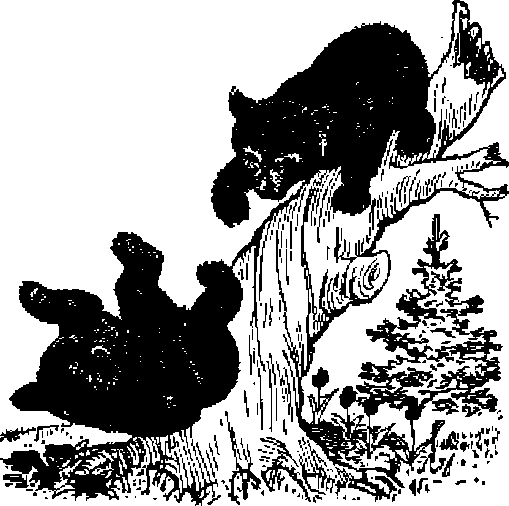
Bears hate to be fooled or teased. In national parks where black bears are quite tame a tourist is reported to have got out of his car to take a few pictures. He tried to make the animal stand on its hind legs by pretending to hold up some food. Enraged at being fooled, the bear with its forepaw lashed out and nearly tone off the man’s scalp. Many serious accidents have occurred because of this fact. The bear is known to wreck cabins and destroy everything in reach wheq his desires have been thwarted. Never un-derestimate the power of a bear.

Harvest Celebrations in China, Japan, Siam, India
Barbara Merrill in her article on “Accent on Thanks” states: “In China, on the fifteenth day of the eighth moon, the peasants marked the end of the harvest with a moon festival, most joyous occasion of the year. The moon, thought to be the god of the crops and harvest, was honored with spe
MANY Americans believe that Thanksgiving Day is strictly an American holiday; that the first Thanksgiving was celebrated by the Pilgrims in 1621; that that celebration was attended with religious pomp, hospitality, gaiety, and some merrymaking; that turkey dinners, cranberry sauce and mince pies are symbols of that first Thanksgiving celebration.
With all due respect for one’s belief, Thanksgiving did not originate in America. The first Thanksgiving festival in North America was not in 1621. The celebration of 1621 was not attended with religious pomp. The group of Indians were not welcomed guests sitting around as pictured on paintings of the first Thanksgiving. There were little hospitality, little merrymaking, little turkey if any, no cranberry sauce, and no mince pie at that feast.
Although it is true that the holiday, as Americans celebrate it, has its roots in New England, the idea of selecting a certain time each year to give thanks for the harvest is not new. It stretches across the centuries to the plains of Shinar where the ancient Babylonians worshiped their god of harvest. Historians have traced thanksgiving festivals through ancient Rome, Greece and China, each celebrating thanksgiving in a similar way, but to the honor of different gods and goddesses.
cial round-shaped foods. In addition to the parades and feasts, small children begged to stay up late on that night to see the beautiful flowers that were supposed to fall from the moon, bringing good fortune to all.”
The Japanese celebrated two harvest festivals. These were usually kept on October 17 and November 23, respectively. On October 17, at the. Shrine of Ise, the emperor offered the new grain to the sun goddess and the other imperial ancestors. Special services were held before the imperial sanctuary. This was called Kannami-Sai (Harvest Festival). On November 23, “this second national harvest festival, the emperor partakes of new grain and offers a portion to the sun goddess and the other imperial ancestors. Both the emperor and his subjects rejoice and give thanks for the bounty of the harvest.”—The Book of Festivals, by D. G. Spicer.
The Siamese have an old festival which is known as the “Swing Festival”. The purpose of this celebration is the same as that of Thanksgiving, that is, “to show gratitude for the richness of the land, the happiness of the people.” It is in this festival that the much-quoted “sacred white elephant of Siam takes conspicuous part”. —Customs of Mankind, by Eichler.
“Diwali, which falls at the time of the autumn equinox, is celebrated throughout India as a kind of harvest festival. In Bengal the festival is marked by feasting and family reunions. The houses are gaily illumined with myriads of small lamps. In Bengal, the festival is called Kali Puja, in honor of the goddess who presents Primeval Energy, symbolizes Destruction, the Creative Power of Siva, the Absolute.'* —The Book of Festival#, by D. G. Spicer; also Hislop’s The Two Babylons, page 159.
The ancient Greeks also had a feast day of thanksgiving. Nine days were set aside in honor of Demeter, goddess of cornfields and harvests. In Athens, it was celebrated in November by married women only, “Two wealthy and distinguished ladies were chosen fb perform the sacred function in the name of the others and to prepare the sacred meal, which corresponded to our Thanksgiving dinner. On the first day of the feast, amid great mirth and rejoicing, the women went in procession to the promontory of Co lias and celebrated their Thanksgiving for three days in the temple of Demeter. On their return a festival occurred for three days in Athens, sad at first but gradually growing into an orgy of mirth and dancing. Here a cow and a sow were offered to Demeter, besides fruit and honeycombs. The symbols of the fruitful goddess were poppies and ears of com, a basket of fruit and a little pig?' —Thanksgiving, by R. H. SchaufHer.
Among the harvest deities was the one worshiped by the Romans, the goddess Ceres. The thanksgiving festival was called Cerelia, and occurred yearly on October 4. The pagan Romans and Grecians worshiped Ceres as the “mother of Com”. She is pictured in ancient Greece as the Great Mother, with the babe at her breast or sometimes holding a handful of wheat. Alexander Hislop in his work The Two Babylons shows that this worship of
“Mother and the Child” stems from the Babylonians. According to Schauffler, the festival began “with a fast among the common people who offered her a sow and the first cuttings of the harvest. There were processions in the fields with music and rustic sports and the ceremonies ended with inevitable feast of thanksgiving”.
Harvest Festivals in Germany, England
In Germany, Belgium and other countries Martinsfest was a double festival, which honored both “Saint” Martin and Martin Luther. The celebration originated as an early thanksgiving festival in honor of Freya, goddess of plenty, who was supposed to have guarded the harvests of the ancient Germans. During the celebration there were processions, bonfires, and general merrymaking. Also, the boys and girls were given apples and nuts.
Colorful harvest festivals were held by the medieval English who believed a “com spirit” reigned over the fields, and their paganistic rites were directed at “placating and gratifying this god of harvest”. In England the autumn festival was called Harvest Home. This festival, according to H. P. Patten, “was celebrated with many rude and boisterous proceedings. . . . The day was spent in dancing on the village green, with rural sports, while at night great blazing bonfires were built, and great quantities of home-brewed ale were drank.” The spirit of giving thanks became an excuse for loafers, who would rather eat and play than work. At harvesttime, especially, “the feast-days and saints’ days were so numerous that the idlers neglected the very crops for which they were so anxious to be thankful, *in not taking the opportunitie of good and serene weather offered upon the same, in time of harvest.’ ” In fact, the religious and civil thanksgiving days had increased to such an extent that there were very few left for working days.
During the Commonwealth under Cromwell, there were observed, in one year, more than a hundred feast days. Except for King Edward’s reign, no one was allowed to work on such days, and those who did were fined. The day began with “a long religious service in the morning, a fast till four o’clbck, then a public feast”. However, the religious services were soon shortened or omitted altogether. The entire day was set aside for games and sports. Riotous celebrations were held, not only on the harvest thanksgiving days, but “the Sabbath, saints’ days, fast and feast days, were equally times of recreation”. Latimer, who went on one of these “holy days” to a certain church to preach, found “the village deserted, the church locked, and the people all gone a-maying”!—The Year's Festivals, by H. P. Patten.
This is what the English Puritans frowned upon. In fact, these and other offensive practices became so intolerable to the Puritan mind that they went to Holland in disgust of English “holy days”. In Holland, over a period of ten years, they grew accustomed to Dutch fast and feast days, which they felt were more fitted to the occasion, mainly because "the poor were allowed to feast with their more favored neighbors”.
The First Thanksgiving
Upon coming to the North American shores, the Pilgrims celebrated their first thanksgiving in Newfoundland, in the year 1578. A similar service was held by the Popham colony, who settled at Sagadahoc on the Maine coast, in 1607. Because the celebration at Plymouth is so familiar it is considered to be the first Thanksgiving. According to many writers, much of that festival is not history but legend. Robert Butterfield, in his article "What You Don’t Know About Thanksgiving”, which appeared in the Saturday Evening Post ior
November 27, 1948, states: "Historians can prove that the Pilgrims played outdoor games and even did acrobatic tricks with swords at the first Thanksgiving celebration, in 1621. But they did not eat pumpkin pie; or turkey either. The first thanksgiving feast, though big and hearty, would look strange on American tables today. The principal dishes were boiled eels and venison. There were also ducks and other waterfowl, clams and mussels, com bread and leeks and plums, all washed down with strong, sweet wine made from the native grapes.”
In his book Saints aiyi Strangers, George F, Willison declared that "at this first Thanksgiving feast in New England the company may have enjoyed, though there is no mention of it in the record, some of the long-legged ‘Turkles', . . . And there were cranberries by the bushel in neighboring bogs. It is very doubtful, however, if the Pilgrims had yet contrived a happy use for them. Nor was the table graced with a later and even more felicitous invention—pumpkin pie”. Neither is there any mention of the mince pie.
The Indians who attended the feast were not patiently squatting, as usually portrayed in the first Thanksgiving pictures. Instead, "except for the mighty chief Mas-sasoit, with whom the small band of 104 Pilgrims had shrewdly contracted a non-aggression pact, the 90 braves who whooped down on the harvest festival were both uninvited and unwelcome until they went out and bagged their own venison,” said Life magazine, November 26, 1945* That which attracted the ninety braves to the feast was more than the venison, of which they had plenty. The strong Indian braves loved the "comfortable warm water”, that is, Holland gin, which the Pilgrims praised as "very sweete & strong”. Many deny this festival to be the first Thanksgiving, because “there is no record
of any special religious service during this week of feasting”.
It was not until almost half a century later that the residents of Plymouth celebrated another autumnal Thanksgiving. In the meantime, however, “the idea of thanksgiving ‘holy days' had taken strong hold in the neighboring Puritan colony of Massachusetts Bay. . . . The first public Thanksgiving there took place on July 8, 1630, but it had nothing to do with harvests or feasting.” As in England, thanksgiving holidays were being celebrated for all kinds of events besides the harvest. In 1632 the Puritans gave thanks “for Protestant victories in Germany, in 1637 for their own triumphs over the Pequot Indians [In which battle some three to seven hundred Indians were slaughtered. Also a “day of publick Thanksgiving for the beginning of revenge upon the enemy’' was proclaimed*], and in 1689 for the accession of William and Mary in England”, In the last 300 years Thanksgiving Day has been held in at least “eight different months”. It has been only in recent years that Congress passed a joint resolution making Thanksgiving a legal national holiday for the first time. All previous national observances had been held “only at the request and suggestion of the president”.
Thanksgiving and Feast of Tabernacles
Some like to compare the Thanksgiving feast of today with the feast of tabernacles celebrated by Israel. Robert H. Schauffler in the introduction of his book Thanksgiving says: “The harvest festival of ancient Greece, called the Thesmophoria, was akin to the Jewish Feast of Tabernacles.” Mrs. Sarah J. Hale wrote: “Can we nqt then, following the appointment of Jehovah in the ‘Feast of Weeks', or Harvest Festival, establish our yearly Thanksgiving as a permanent American National Festival which shall be celebrated on the last Thursday in November in every State of the Union?” No, we cannot. The feast of tabernacles was a feature of the Law arrangement given to Israel. Thanksgiving is not, nor can it be.
There were three special feasts that the Lord commanded Israel to celebrate each year. These feasts were closely tied irrwith the vindication of Jehovah’s name. These were called “feasts unto Jehovah”. These feasts acknowledged Jehovah, and not some pagan god, as the Great Provider, their Creator, their Redeemer and their King worthy of all praise and worship. For a comprehensive discussion of these three feasts, consult the July 1, 1950, issue of the Watchtower magazine.
No day rooted in paganism, as Thanksgiving Day is, can bring praise to Jehovah God, who said: “Thou shalt have no other gods before me.” Christians do give God thanks, not only once a year but daily. They follow the wise counsel of the apostle Paul, who wrote: “On this account cease becoming unreasonable, but go on perceiving what the will of Jehovah is. Also do not be getting drunk with wine, in which there is debauchery, but keep getting filled with spirit, speaking to yourselves with psalms and praises to God and spiritual songs, singing and accompanying yourselves with music in your hearts to Jehovah, in the name of our Lord Jesus Christ giving thanks always for all things to out God and Father.”—Ephesians 5:17*20, New World Trans.
Has Religion Succeeded?
According to the New York Times Magazine of June 1, “Rev.” John T. Peters, secretary of the Presbyterian United Stewardship on Promotion, hag reported that “the city of New York has more alcoholics than church-going Protestants”.

Religion in Helsinki Olympic Games 66/^ Citius, Altius, Fortius”—this is the
VJ Latin motto for the Olympic games, which means “faster, higher, stronger”. If we were to use as a criterion the stop watch and meter stick, the modem Olympic games which were held in Helsinki, Finland, July 19 to August 3, were a fulfillment of those words. Records fell like autumn leaves. But the fact that the athletic peoples of the world, without a single remarkable exception, met each other in peaceful contest for the first time after the war, and that the political controversies would not disturb the brotherly sentiment of the games, surely tended to feed the fancies and religious poetry of eternal peace, which, together with the absorption and enthusiasm of the people, stamped the XV Olympic games as a. mighty devotional meeting. But the god whom the audience of 70,000 people worshiped resembled more the god of the ancient Hellas, Zeus, rather than the God of Christians.
It is not surprising to learn that the games are of pagan origin. The Greeks held, at least from the year 776 B.C., every fourth year in August, at full moon, great athletic festivals in the “holy” field of Olympus to the honor of the supreme god Zeus. In addition to regular athletic games, this festival involved sacrifices and ceremonies, the nature of which was purely religious. The most colorful spectacle is formed by the worship of the Olympic fire and the carrying of it onto the spoils field.
The Olympic games of Helsinki were no exception in this regard. In keeping with earlier pagan traditions, a “holy fire” was kindled from the rays of the sun on the mountain of Olympus. The torch was then hurried by airplane to Copenhagen, from where former Olympic winners and other athletes had the honor of carrying the Olympic torch forward along the track of honor, which was formed by the millions of people who were eager to see at least a glimpse of the ‘flame the sun had kindled on the holy mountain of Zeus’. This “holy fire” arrived in Olympic Stadium of Helsinki July 19, carried by the famous former Olympic winner Paavo Nurmi, while 70,000 followed the way of the fire with cheers.
Illustrating the position of the clergy in this pagan spectacle is the following quotation from the salutation speech to the “Olympic fire” by a leading Finnish Bishop, Eelis Gulin, as reported in Helsingin Sanomat: “Welcome to us, you, the fire of the Olympic grove'. Tell us the story of your laurel grove! Speak about how the Olympic game was controlled by Zeus, the Supreme God, the Highest whom that time knew, and how the games from the beginning were held to His honor! Gather together also our nation as one man! Tell us how Hellas was playing at your altar fire ‘under the face of the Almighty’. Bring that mercy even to us! Bring at last the tidings from modern Hellas! Tell about what the caretakers of your altar are thinking at this hour. How, that by the meeting of ancient culture and the evangelium of Christ, the European culture was born, the guardians of which we are.”
Hardly can the pagan origin of ‘the European culture and religion’ be acknowl-
edged more clearly than this. For “what harmony is there between Christ and Belial [Zeus]’*?—2 Corinthians 6:15, New World Trans.
The games themselves were worshiping virtues, youth, beauty, strength, and ability, skill and courage of Hellas. In excited tempo went one day after another. Old records were broken. New heroes and idols were born with phenomenal records. Hundreds of newspapermen from different parts of the world tried to the best of their ability to satisfy their public, which was hungry for news. United Press alone sent every day to the world dispatches comprising on the average 85,000 words. In this multitude of writing proved to be true what the Bible tells, “In the multitude of words there wanteth not sin,” because the praising and worshiping of creatures often became distasteful. Some writers composed hexarrlteters, according to Homer, to the honor of their heroes in order that the spirit of Hellas would be alive.
Especially the athletes of the South aroused attention with the earnestness with which they prepared for their performances. Before the competition, the victorious 4 x 400 meter relay band of Jamaica kneeled to offer a common prayer, and believed that they attained the gold medal and a new world’s record by the help of God. The Italian walker performed a devoted Catholic religious service before setting off on the road, and after his victory performed a wild war dance, which seemed to be very little related to that ceremony by which he had prepared for his competition. After his victorious pole-vaulting contest, the American pastor Bob Richards delivered a sermon to a vast audience in a Helsinki park and declared openly to have won^by the help of God. He declared that “faith can remove mountains” and that in his case a firm faith in God had made miracles. Although the trainers claimed that a man of his size could never come off victorious over more than 430 cm. on the pole, yet, he said that, by the help of God, he had cleared off 465 and hoped to still go 10 cm. nearer heaven, or 475. Richards mentioned some greatest names of athletic history and said that no one of these would have been capable of such splendid records without God,
Even to a bystander the logic of this argument seems weak, but to the audience living in Olympic fever it was the best sermon they had ever heard. This is no wonder, for the people have been taught for centuries that God is only for the purpose of helping mortals in their weaknesses.
Moslems prayed to Allah for the gold medal, Catholics kneeled before the virgin Mary to ask victory, and Protestants sent ardent petitions to their triune god so that this would give them the wreath of triumph. How many knew what Jesus taught in the model prayer? “Let your name be sanctified. Let your kingdom come. Let your will come to pass.” These important and unselfish things come first, and even after them does not come one’s own selfish gain and honor. But this is not known by the youth playing in the light of the “holy fire of Hellas”, who are taught only with Latin lashes CCitius, faster; Altius, higher; Fortius, stronger, for whom athletics has become a new pagan religion and for whom the winning of Olympic gold means almost the greatest joy that may fall to the lot of mortals, as the winning of an olive laurel for an ancient Hellene.
Much has been said about the unifying power of athletics, and some religious organizations were quick to give these games and the meeting of the East and West an apocalyptic significance. It was a trifling matter that the slogan, “Olympic games, the way to the unity of nations,” was repeated now and then, to compare with
what Bishop E. Gulin wrote toward the end of the games: “As a sportsman, I have been as a dreamer when following in the capital of my country these Olympic games. . . * The parade of the pick of the nations, which was participated in by almost all nations known to us, was a sight which will be engraved on my soul in-effaceably. So there is a picture which reminded of the great vision of Revelation, of how once all nations will gather as God’s children in the new world to form one single family, I saw in the athletics a great gift of God which can join nations together to a noble competition and develop the physical ability of them better and better to serve the Almighty.”—Ykteishyva, July 30, 1952,
Possibly such statements gave a religious impression upon the games, but they did not make them a Christian festival Neither is the mighty vision of Revelation of the great crowd which comes from all nations and languages and peoples and kindreds to serve God fulfilled in modem Olympic games where the object of worship is the man, the creature, and not God, his Creator. (Revelation 7:9-17) In spite of this the vision is being fulfilled now. Hundreds of thousands of men of all nations, kindreds and peoples and tongues are now gathering before the throne of God to worship him in the way he has commanded, but these have not made human beauty or strength their object of worship, but they give all praise to the Creator. Neither have they overinflated the significance of athletics at the expense of more important values. They acknowledge with the apostle: “For bodily training is beneficial for a little, but godly devotion is beneficial for all things, as it holds promise of the life now and that which is to come/’ —1 Timothy 4:8, New World Trans.
Do You Favor Corruption?
IF A public-opinion poll determined what percentage of the population could honestly say, “I am against corruption/’ how many do’ you think would be’ for it? We would like to think that everyone opposes corruption, but do they? If so, then public indignation would have snapped to new heights when the Senate Preparedness subcommittee reported on August 24 that one hundred and twenty million dollars of IL S. tax money was wasted in a North African construction “fiasco” through “indifference of officialdom”, “squandering of public funds,” “indecision, confusion, delay and poor administration/’ plus “large-scale loafing, drunkenness and failure properly to attend to duty”. Witnesses called the job “one sordid mess”. An Oklahoma welder told the Tulsa Tribune last February that North African defense workers received time-and-a-half pay for hours spent crap shooting and chess playing. His pay for five months was $5,000.
Where is the stir of public indignation at this and many like reports? They make good newspaper copy, just as do Hollywood divorces, but the people are not really up in arms. The corruption issue lost some of its sting when Truman decided not to seek re-election. Few are so naive as to believe corruption has been whipped, yet the clamor dwindled when its political value shrank. Each party likes to protest the other’s corruption, but rarely cries loud enough to cut off its own undercover sources of income.
The political trend merely reflects a growing public apathy toward or sometimes even approval of dishonesty. One political scientist recently wrote: “The record indicates that the political morality reflects, rather than shapes, the society in which it operates and that, more pertinently, it is naive in the extreme to expect from politicians a far different ethical standard from what prevails throughout the country?’
Corruption continues because too many people favor it. Blair Bolles’ book How to Get Rich in Washington begins, “When nations mature, they grow tolerant of evil,” and continues: “The United States began to wear this sign of adulthood immediately after World War I, when the voters took the Teapot Dome scandal so calmly that they refused to throw out of office the party associated with that swindle.
. What sets modem Washington apart from Washington after the Civil War and Washington after World War I is the present-day democratization of corruption. . . . Americans who were quick to suffer moral shock only a few years ago appreciate and sympathize now with the kind of human weakness from which corruption grows.” (Note how the beginning of this at World War I corresponds to the end of the Gentile times in 1914.)
Dr. Frank Kingdon’s “To Be Frank” column in the New York Post, March 7t called Bolles’ book “the record of slimy and mediocre corruption vulgarizing and polluting the public life of this nation from top to bottom”. He said: “I ask myself why I am not blazing mad.. -. Twenty years ago I would have been boiling about it. Now I find myself reading it and saying ‘Tchk tchk’. Why? The answer is, I suppose, that I can’t keep my moral indignation at the boiling point perpetually, living the life of a cover of a continually popping teakettle. . .. By the time we get to the story of the
200th specimen [of corruption] we are punch drunk and no longer able to react?’
Where does he think the blame lies? Let us read farther: “What this means is that we have to get deeper than spasms of disgust over individual deals and recognize frankly that the personal and public morals of this country have sunk to a dangerously low level. Our job is not to clean this or that local sewer, but to raise the whole moral tide so that it will flood out and clean all the sewers. It is not a case of the politicians merely being corrupt, nor the gangsters defying the moral law, but also of business using immoral means to boost contracts and profits, so-called respectable citizens handing out flagrant graft for privileges, and all the rest of us sitting back and accepting as a fact that dishonesty controls affairs. This book does not end by telling us that there are crooked deals. It says that the U. S. is a nation that has surrendered to immorality, now condones it, and says we can do nothing about it. Can we face that? Must we admit it? ... To ‘clean the rascals out’ of public office is not enough. We have to begin by cleaning the rascals out of ourselves. Any of us who is prepared to defraud the government of a dollar or to pay a policeman for a privilege is a partner in the conspiracy of immorality- Any of us who smirks over a story of sharp practice to put something over the law is an accessory to public theft, and, whether we know it or not, a picker of his own pocket?’
Every, corrupter who resigns further condemns the morals of the people. His resignation does not clean up the situation. A thousand are waiting to take his place. Ten thousand shrug it off with, “That’s politics,” but a hundred and fifty million are responsible for the politics, and in view of twentieth-century degradation not too many could answer factually: “I am against corruption!”
WATCH'NG THE


ORLD
Winter and Blood in Korea
Another dreaded winter was coming to Korea when the U. N. proposed, as a new solution to the deadlocked prisoner issue, that all prisoners be taken to a demilitarized zone where they could go to whichever side they chose. The Communists scoffed, but before they made a formal reply Red soldiers held as prisoners on Cheju island attacked U. N. troops (10/1) with rocks, barbed wire flails, sharpened tent poles and crude knives. Fifty-six were killed, 120 wounded, and the Chinese said this incident "helied all fraudulent pretexts for refusing to repatriate prisoners”. There remained little hope they would accept the new proposal, and apparently the next step toward a truce would be made in the U. N. General Assembly. Meanwhile, front-line pressures increased and blood continued to flow.
IL S- Campaign Warms Up
Political observers could recall no presidential campaign equal to the one of 1952. At the halfway point polls indicated half the population had not decided on the candidates. Politically, anything could happen. The principal issues were communism, Korea, corruption and national economy. On communism Eisenhower supported Senator McCarthy's "end result”, but not his "method”. The Republican^ charges of corruption lost force over vice-presidential candidate Nixon's expense fund, but when 175,000 telegrams responded to his television airing of his financial standing (9/23) other candidates also publicized their finances. Whistie-stop-touring Truman accused Eisenhower of becoming an unwitting tool of the lobbyists and a "captive” of the isolationists. There was much political slam-bang from both sides as each candidate sought votes for November 4.
The World Watches Russia
<$> Russian Communist Party congresses have proved worthy of attention. The first was in 1898 when nine delegates conferred for three days before the police caught them. The Russian revolution succeeded just before the triumphant Seventh Congress in 1918. The eyes of the world now turned to the 19th (which opened 10/5) for indications of future Soviet policy. Just before it* convened the Russian master made a pronouncement: "The Soviet Union will not attack capitalist countries,” but he said these countries will inevitably war among themselves because of "the struggle of capitalist countries for markets and their desire to drown their competitors”. The cold war may have been getting colder, as the Russians attempted to divide the Allies.
World Girds for War
Whether Stalin’s prediction proves true or just a cover-up for Soviet activity, both sides were heartily preparing for battle. Denmark and the U. S. announced (9/18) construction of a huge air base at Thule, Greenland, 2,450 miles from 'New York, 2,752 miles from Moscow. The U. S. publicized (9/30) a massive new 85-ton cannon that can accurately fire an eleven-inch atomic shell at Jeast 20 miles in all kinds of weather. The U. S. secretary of the navy said (10/1) Russia now has about 300 submarines, or four times the number the Nazis had at the outbreak of World.War II. The most spectacular development, however, was Britain’s first atomic explosion off Australia (10/3), making it the third nation to possess the dreaded weapon. While there is a little talk of peace, there is much preparation for war.
Britain a Lover of Speed
John Rhodes Cobb, a 52-year-old London businessman, had a most unusual hobby. He had moved faster on the ground than any other man, having driven a racing car at 403 miles an hour! In late September he was out for another record, this time on water at Scotland's Loch Ness. His jet-pro peiled boat, the Crusader, was powered by a Comet airliner engine. Rough water would submit the craft to unbearable strain, but the time finally came for the,trial (9/29). To be official, the speed run must be made in both directions over a measured mile, and the results of both runs averaged. The first mile was completed at more than 200 m.p.h., then suddenly the craft bounced and disintegrated, breaking Cobb’s neck. The record was incomplete and a lover of speed was dead.
Fate of La Sibylle
<$> Among naval disasters one of the most complete pictures of pathetic human helpless-- ness is that of men trapped in
a disabled submarine. One such was the Sibylle, a French training sub fighting a mock landing on the Riviera (9/24). She failed to surface on schedule, and planes, helicopters and ships began a crisscross search of the area, They discovered an oil slick and debris marking the spot where the sub and her crew met their deaths in a half mile of water. Escape gear is useless below 250 feet, and apparently the Sibylle, which in an emergency could have awaited rescue for 48 hours, was crushed by the terrific pressures, killing its entire crew.
Was the “Saint” a Hoax ?
<$> Doubt was cast on one of history's most widely proclaimed “miracles” by a Life magazine report (10/6), which said: “Frenchman Jean Gri-mod, a 55-year-old ex-newspaperman, has come up with one of the most ambitious debunking jobs of all time. Grimed’s thesis, which will soon be published in book form, is that the Saint Joan of Arc legend is false. Grimod claims to have unearthed documentary proof that: 1) Joan was not a peasant girl but an illegitimate member of the royal family; 2) she never had any visions but was built up as her country's savior by the king’s propaganda-conscious advis-ers; 3) another woman was burned at the stake In her place; 4) Joan married a country squire named Robert de Harmoises and lived happily ever after.”
Finland Paid in Full
<$> The only nation that punctually made its World War I debt payments to the U. S. has finally paid off the harsh Russian levy of $570 million World War II reparations. This noncommunist land with the long Russian border lost 12 per cent of its territory to Russia in the war, and in just eight years delivered to that land 573 ships, 300 paper mills, 7,000 locomotives and freight cars, as well as huge quantities of cable, electric motors, prefabricated wooden houses and river barges. Hard-working Finland has again accomplished what was demanded of it.
Lebanon Overturned Rule
-$> Lebanon's President Becha-ra el-Khoury was a congenial chap who kept a half-Christian, half-Moslem nation satisfied. Satisfied, that is, until it was discovered that his frienda and family had been cashing in on his kind-heartedness. Their businesses boomed, they peddled influence, scandals developed. One news source com-mented: “There weren't enough rugs in all Lebanon to sweep the dirt under.” Under pressure El-Khoury resigned. The new president, according to Lebanese tradition, is a member of the largest religious body, the Maronite Christians, and the premier is a member of the second largest, the Sunni Moslems. This time, without bloodshed, another Middle Eastern state had thrown out its old government and installed one pledged to drastic reform.
Seven Years of Famine
<$> The annual cry of famine has again risen from Madras state in southern India. Earlier this year 10 million were reported suffering, but now the whole state, having 57 million people (more than a third the population of the U. S.)f may have to be declared a famine area. For seven straight years the life-giving monsoon rains have failed to fall. Ironically, there is enough food, but the peasants have no way of earning money to buy it, and the $10 million the state has already spent falls far short of the needs. Such conditions re-stress the serious need for God’s kingdom blessings, when under divine direction even the desert will become productive, and famine will be no morel —Isaiah 35:1,2.
Word from the Inside
<$> Chu Tien-Hui, who fled Red China early this year, claims to have intimate knowledge of the Chinese Communist regime. Author of the book Inside Red China, he says that on February 15, 1950, months before the Korean outbreak, Red China agreed in Moscow to “assume responsibility for invading South Korea, southeast Asia and Japan”, using equipment “leased by the Soviet Union”. An INS report (Tokyo, 10/2) explains that Chu also claims he attended a high-level meeting in Nanking in the spring of 1951, at which the Red germ-warfare campaign was planned to cover up the Communists* own plans for similar war in Asia. If his report is accurate it could shed much light on the current Korean situation.
Japan’s Notable Election
# The dominant part of the Japanese Diet (parliament) is the 466-member lower house. For the first time since the end of military occupation Japan went to the polls (10/1) to elect new members to this all-powerful assembly. In the elections the ruling Liberal party retained an overwhelming majority. The Communist party lost eveiy one of its 22 seats, even though it put forward 107 candidates. About 140 election winners had been “purged” from politics during the Allied occupation because of their wartime activities, but were again put forward by the people. The only policy changes expected ae a result of the election are a slight shift to the right, and more emphasis on nationalism. The election was peaceful and a record 75 per cent of those who were eligible voted.
Man versus dements
# A month-long flood is a serious matter, particularly if it affects a third of a nation, threatens epidemics, isolates or wipes out at least a dozen villages and takes well over 100 lives. Such a flood struck the Mexican states of Guerrero on the Pacific Coast, and Veracruz and Tamaulipas along the Gulf of Mexico. The air force flew food and medicine to 200,000 half-starved victims (9/26), parachuting supplies wherever flood victims could be spotted, and small planes, boats and medical brigades were pressed into mercy missions as the danger of new floods mounted.
Moulded V. S, Mlwdle
♦ Bold headlines shouted (9/18}, -IL S. Navy Has 1,800 Robot Planes: Ushers In PushButton War Age!'* The big headlines were slightly off-beam, however, and the whole thing was scaled down to size when the naval director of guided missiles said the next day, “It wouldn’t take much imagination to realize there are better ways of doing this Job” than launching a few obsolete planes by radio control. Tme called it a "guided boomerang", prompted by the desire to sometimes “make a news story seem bigger than it actually is”. That these planes were not to be considered real guided missiles was shown by President Truman's statement two weeks later (10/2) that guided missiles, which are "now in assembly-line production”, will “soon be in the hands of tactical units”. An army announcement (10/6) indicated that the day of real guided missiles might be soon at hand, but it was not yet here.
Crime on a Grand Scale
♦ The U- S. Federal Bureau of investigation estimated (9/21) that two million major criminal offenses will be committed In 1552. (That is approximately one for every 75 citizens.) Reporting on the first six months it said: "On the average day ... one larceny was committed every 256 seconds, an auto theft every 2.45 minutes, an aggravated assault every 6.23 minutes, and a rape approximately every half hour,” and “every 4.6 minutes there was a crime of murder, manslaughter, rape or assault to kill”. More 18-year-olds were arrested than any other age group. Half those arrested for crimes against property were under 25. In case you are wondering, the U. S. still claims to be a "Christian” nation.
MAN SEARCHES THE UNIVERSE
BUT he has not yet found the secret of everlasting life. Though he were to devote himself to science's telescopes, .microscopes and other modem research equipment for a million years, he would still not find the secret of life. Why not? Because the secret of life cannot be revealed by natural creation. To the Creator of life we must go for the answer, and to his written Word. Only research based upon the Bible will reveal this secret. The 320-page illustrated book “This Means Everlasting Life” will guide you unerringly to the Bible for authoritative information on the subject of life. Send 50c to cover costs and we will mail your copy postpaid.
...........................................................................................................................................................................................
WATCHTOWER
117 ADAMS ST.
BROOKLYN 1, N.Y.
Please send me a copy of “This Means Everlasting Life". Enclosed is 50e to cover costs.
Street and Number Name .................................................................................................. or Route and Box .........................................
City .......................... ................... Zone No.........State ____________________________________________

before;
times; clergymen do
TTbc Case H$ainst EVOLUTION ®
1^1!

TS THE teaching of evolution really based upon fact? Scientists speak A of evolution as fact, schools teach it as fact, the public press assumes it is fact, many modern clergymen accept it as fact. But is it fact? Remember, scientists have changed their theories schools are not infallible; the press has been wrong many not know all the answers. Why not bring evolution to trial and test its claims?
r pHE 64-page booklet Evolution versus The New World prosecutes the case against evolution, presenting argument that weighs heavily against the theory. The “missing link”, evidence from the rocks, mutation loopholes, proved scientific data, the Bible—all of these indict evolution as a fraud. At the same time this revealing booklet introduces into evidence facts supporting the Bible account of special creation. From the fields of science, medicine and geology come witnesses against evolution. Man's adaptation of principles long used instinctively by animals argues for a master Creator. Sacred and profane history stand side by side in support of God’s creation of mankind. Send today for your copy of this revealing booklet. Only 5c postpaid. Ask for several copies and give them to your friends.
WATCHTOWER
117 ADAMS ST.
BROOKLYN 1, N.Y.
Enclosed is_________________Please send me........copies of the booklet Evolution versus The New World. (5c per copy)
Name ____________________
Street and Number or Route and Box
C I ty I ■■■!. Zone NO.
State
32
AWAKE!
