
 View PDF
The content displayed below is for educational and archival purposes only.
Unless stated otherwise, content is © Watch Tower Bible and Tract Society of Pennsylvania

Something Finer than Christmas
PAGE 5
Get the Most for Your Money
PAGE 13
Fingerprints That Are Only Yours
PAGE 17
Trace Elements and Human Life
PAGE 2 2
DECEMBER 22, 1962
THE MISSION OF THIS JOURNAt
News source* that are able to keep you awake to the vital issue* gtgus. times must be unfettered by censorship and selfish interests/ “A wake I1’ has no fetters* it recognizes facts, faces facts, if free io publish facts* it fe no/ bound by political ambitions or obligations; it is unhampered by advertisers whose toes must not be trodden on; it is unprejudiced by traditional creeds* This journal keeps itself free that it may speak freely to you* But it does not abuse Its freedom. It maintains integrity to truth*
“Awake!* uses the regular news channels, but is not dependent on them. Its own correspondents are on oil continents, in scores of nations. From the four corners of the earth their uncensored, on-the-scenes reports come to you through these columns* This journal's viewpoint is not narrow, but is international. It is read in many notions, in many languages, by persons of all ages* Through its pages many fields of knowledge pass in review—government, commerce, religion, history, geography, science, social conditions, natural wonders—why, its coverage is as broad as the earth and as high as the heavens*
“Awoke!” pledges itself to righteous principles, to exposing hidden foes and subtle dangers, to championing freedom for all, to comforting mourners and strengthening those disheartened by the failures of a delinquent world, reflecting sure hope for the establishment of o righteous New World.
Get acquainted with "Awake!" Keep awake by reading "Awake?”
Publishzd Simultaneously in th* Unitsd Staub by the WATCHTOWER BIBLE AND TRACT SOCIETY OF NEW YORK* INC. 117 Adams Street Brooklyn 1* N. Y., U. S. A.
AND IN EnQLAND BY
WATCH TOWER BIBLE Watch Tower House, The Ridgeway N, H. Knobb, President
Printing this issue: 3,650,000 4d । “Awiki!" It poblhhtd In the following 2J lanoiBBv: BnlBODibJy—Afrikaans, Ctnyari/a, Ztaifefr, Dutch, English, Finnish, French, German, Greek, Italian, Japanese, Norwegian, Portuguese,, Spanish, Swedish, Tagalog, Zulu. Monthly—Cebu-ViBAjan, Chinese, Ilocano, Korean. Malayalam, Polish, Tamil, Ukrainian.
Yearly subscription ralea
OffitM for semimonthly editions
Amtftaa, U.S.. 117 Adams St., Brooklyn 1. N.Y. $1 Matra I la, 11 Beresford Rd.. Strath Hold* N.S.W.
Cauda, 150 Bridgeland Ave., Toronto 19, Out,
Enflud, Wawh Tower House, The Ridgeway; London X.W, 7
Now Zealand, 621 New North Rd.. Auckland, 8.W. 1 V-SMth Afrln, Private Bag, ElandUonteln,, Tvl, 70e Monthly edltlona cost halt the ahuve rates.
AND TRACT SOCIETY
London N.W. 7, England Grant Scjitrb, Secretary
copy (Australia, 5d; South Africa, 3>/ac) RemltlaMU for sabscrlpttons should be sent io the office Id ytw WMJJiLjy Otherwise Mnd yonr remittance to London. Nsttae of nplntlon ,1s sent at least tauea before eulscripUon expires.
CHANGES OF ADDRESS akBild reach ms thirty diyi Mfore your morlit date, Give ns year Bid in< new aildrui (If possible, your old addroa label). Write Walsh Tower, wateh Teww House, The Ridgeway, London N.W, 7, England,
Entered as aecoud-clasB matter at Brooklyn* N,Y-Printed in England
The Bible transfetfon In Is the New Worf if Tram fatten of tta Hofy Barfpf™, ISWJ
When ether translations are ised tb* Tol law tag symbols will appear behind the citations'
AS — American Standard Version A T - Ad American Translation AV - Authorized Version (1611) Da - J. N. Darby’s version
Dv - Catholic Dirtiay version ED — The Emphatic Diaglott JP - Jewish Publication Roc. Le ~ Isaac Leeser'a version
Mo - Jamofl Moffatt's version Ro - J. B. Rotherham^ version RS - Revised Standard Version Yff - Robert Youngs version
CONTENTS
Something Finer than Christmas
Nature’s Hardy Hitchhiker—
Who Is Responsible for the Lack
Fruitage of Modem Child Training
Fingerprints That Are Only Yours
Cooks, Don’t Neglect the Lowly Bean
Winter-Long Cafeteria for Wildlife
Faithfulness Despite Family Opposition
“Your Word Is Truth"

TAKE YOUR PICK
Generally in life it is not this and that but this or that. This rule also applies to pride and love. The two simply do not mix; so you will have to take your pick. Not that you cannot have love and at the same time take a justifiable pride in some person or thing, but you cannot have love and at the same time be of a proud mental disposition.—Prov. 16:18; 2 Thess. 1:4.
Why Is this so? Because pride is a form of selfishness, whereas love is the very opposite, an expression of unselfishness.
It is almost impossible to overstate the importance of love. It is as indispensable to happiness as it is to health and as it is to salvation. According to physicians, the failure to love and to receive love is so injurious that one of them wrote a book entitled "Love or Perish.” Said another: “I believe it makes little if any difference how or Vhen the baby receives nutrition, as long as it is held and cuddled by a loving mother,"
physician’s love for his
In particular is love vital in the patientphysician relationship. "Feelings of trust, love and devotion on the part of the patient for his physician are often far more responsible for the success of the treatment of their patients with functional disorders, than the prescriptions, the injections and other forms of treatment they administer.’’ It is therefore no wonder that at times patients are heard to say to their physician, "You are my best medicine.” So we are further told that “the patient and the patient’s love for his physician are powerful influences in the restoration of patients,” be their illness functional or organic.—Mental Hygiene, July, 1961.
No question about it, whether we are young or old, sick or well, love is vital to our well-being. But pride can keep us from expressing it, from accepting it, and may even make us incapable of awakening loving responses in others.
This principle of love or pride applies, first of all, to our relationship with our Maker, our heavenly Father, Jehovah God. We need his love ever so much, but we cannot expect to receive it if we are proud. How unbecoming is pride in our relationship with him! How feeble, how insignifl-cant we are in his sight! How indebted to him we are for all we have and are! Surely with good reason his Word tells us that “God opposes the haughty ones." More than that, pride causes men to act as if God did not even exist, which is surely folly.—Jas. 4:6; Ps. 14:1.
This principle also applies in the human parent-child relationship. While pride on the part of our heavenly Parent is unthinkable, human parents often come short in showing love because of pride, as when a mother neglects her children for the sake of a career or for the sake of acquiring luxuries. So doing, she may lose the love of her children, for children deprived of love become proud, delinquent and unloving themselves.
Children too have a responsibility in this matter. Pride can make them ungrateful and ashamed to render their parents loving obedience, especially when in the presence of other wayward children. But such conduct will not endear them to anyone, no, not even their playmates.
True love will make a pair of lovers humble in each other’s presence. For example, it took humility for Jacob to serve seven years for his beloved Rachel. Pride, however, will cause such a relationship to be strained, if not also stormy and frustrating. More than one young person has become a cro'tchety old bachelor or fussy old spinster because of having picked pride instead of love. The proverb, “Hell has no fury like a woman spurned,” reveals how much pride often goes into such relationships.
Not that marriage of itself 'solves the problem. If that were so there would be no unhappy marriages, no divorces. Pride may cause a husband to ignore or reject the love his wife offers or deny her his love, to their mutual unhappiness. But still having the need for love, unconscious though it may be, the husband may seek to still it by greediness in money matters, by overindulgence in liquor or by other forms of loose conduct. How foolish!
More often than not, however, in Western lands it is the woman who suffers because she chooses pride instead of love. As one poet expressed it: “Pride makes woman hard and cruel, and it makes her too a fool. For with all her bag of tricks, love and pride she’ll never mix." (Of course, that principle applies to man also.) Yes, by proudly competing, seeking to rival or demanding equality, woman makes her marriage a drudgery when it could be a delight. The 'Creator so constructed her that she must be willing to play the role He meant for her to play, one of loving submission to her head, if she would realize fulfillment of her potentialities, if she would have a satisfying and rewarding married life. This is a conclusion, let it be noted, reached by not a few men and women psychiatrists that have written on the subject.
Yes, love is indispensable to our wellbeing. And look where we may, in our relationship with our Maker, the Creator Jehovah God, or in any of the varied human relationships in which we may find ourselves, we can have love and the happiness it brings only at the cost of pride. Pride or love—take your pick.
TOYS IN CHURCH
|Z John Heffer, minister in Langford, England, told his parishioners to let their children bring toys to church to play with. “Preferably the
softer variety of toy," he said. How different such advice is from God's instruction for all his people to congregate, including “the little ones,"
so “that.they may listen and in order that they may learn”!—Deut. 31:12.

of the United Lutheran Church in Ameri-
to substitute for the crib
with a cer-
ca, said: “The Babe of Bethlehem, now more zealously watched over than a TV moppet by its doting mother, represents an investment to be protected. Christmas, the annual pious salute in the direction of religion, is now the property of the business world, and I say it is high time that the church said in unmistakably dear words that it intends to divorce itself from the whole mess."—New York Times, December 4, 1961.
Just what was included in the “whole mess” could be learned from other voices that spoke out against the Christmas festival. On the same weekend, L’Osservatore Romano, an unofficial but authoritative voice of the Roman Catholic Church, warned that commercialism was turning the “birthday of Christ into a paganbacchanal” and suggested that Christians should prefer the “humble, eloquent, religious crib” to the "trees, the fascinating but empty glitter of blown glass, the toys and the showy decorations, sometimes with a superstitious undertone.” About a week later another Vatican newspaper, L’Osservatore della Domenica, assailed Santa Claus as a “monstrous substitution” for Christ that “offends the faith.” It criticized the Christmas tree as “an attempt tain sense of naturalism and paganism."
These were not the first nor the last observations on the commercial and pagan aspects of Christmas. In December, 1960, Santa Claus was compared to a pagan god by Francis X. Weiser, Jesuit priest at Weston College, Massachusetts. An Associated Press dispatch, hailing him as “one of the nation’s foremost authorities on the subject,” said: “In the withered pages of Germanic folklore, familiar to these Anglo-Saxons, was the pagan god Thor. He was the god of the peasants; an elderly, jovial man with a long white beard. His color was red, his element was fire, and the hearth was sacred to him. On the occasions when he left his home among the icebergs of the Northland, he frequently would come down chimneys into his element He rode in a chariot pulled by two white goats, Cracker and Gnasher.” (Newark Evening News, December 9, 1960) Even a child could see the similarity between Santa Claus and Thor the pagan god.
Another protest against the Christmas festivities came from a United Church of Canada minister, George Hamilton, as reported in the Vancouver Sun, December 23, 1959: “The stores commercialize it with their Christmas advertising, we so-
cialize it with parties, dances and liquor and we paganize it with the worship of , Santa Claus.” A fellow Canadian minister,
Ernest Nullmeyer, of Emmanuel Baptist Church in Barrie, voiced his protest in a 1958 radio sermon: "Christmas was’the counterpart to the pagan solar feast of the god Mithras,” he said. “It started pagan and it has never changed.”
The paganism in Christmas has also been noted by newspaper writers such as Brooks Atkinson, who wrote in the New York Times, December 8, 1961: “Historically, the pagan aspects of the season are more ancient than the Christian religion. They are in the blood stream of the human race, which has always celebrated the winter solstice (Dec. 21) with feasting and merriment” Many clerical and secular voices have echoed these charges.
Verification
If you take the trouble to look for verification of these charges in standard reference works or history books you will be rewarded. It is generally acknowledged that December 25 is not the actual date of Christ’s birth and that the Bible does not give a date. Says The Catholic Encyclopedia, 1908 edition, Volume III, page 727: "The well-known solar feast, however, of Natalis Invicti, celebrated on 25 December, has a strong claim on the responsibility for our December date. . . . though the abundance of analogous midwinter festivals may indefinitely have helped the choice of the December date, the same instinct which set Natalis Invicti at the winter solstice will have sufficed, apart from deliberate adaptation or curious calculation, to set the Christian feast there too,”
Agreement is voiced by Funk and Wagnails Standard Dictionary of Folklore, Mythology, and Legend, Volume I, page 229: "Correspondence of the Christian festival
with the dose of the Roman observances of the Saturnalia (December 17-24) and the natalis invicti solis, the Mithralc observance of the birth of the sun, has often been remarked upon and is not an accidental phenomenon. . . . December 25 is close enough to the winter solstice for other pagan winter festivals besides the Saturnalia which celebrate the turn of the year to have become absorbed in it. The Yule feast of northern Europe, a solstice observance celebrating the lengthening of the day with the return of the sun and concerning itself principally with the spirits of the dead, became adapted to Christmas, and many Christmas customs of today and of the past are those of the Yule season.”
Manger Scene Distorted
-The reader who compares the Gospel accounts of Jesus’ birth with the traditional manger scene may come in for an additional surprise. No “wise men” from the East visited the babe in the manger. It was humble shepherds, minus any birthday gifts, who came to the manger after Jehovah’s angel identified Bethlehem as the right place. (Luke 2:8-20) Matthew does not specify how many astrologers in the East saw a star of unknown origin and interpreted it to mean that a new king had been born to the Jews. But he does note that, instead of directing them right to Bethlehem, the strange light led them to Jerusalem first, where they came in touch with murderous Herod. From the chief priests and scribes Herod learned that the Christ was to be born in Bethlehem according to prophecy. Thereupon he sent the obliging astrologers to Bethlehem with orders to report back with the child’s ex. act location. Herod’s intent was to murder Jesus. By the time the “star” led the giftbearing astrologers to the place where Jesus was, he had grown from an infant into a young child and lived in a house, not a
manger. When God prevented the astrologers from returning to Herod, the wicked ruler attempted to kill Jesus by having all the Bethlehem boys two years old and younger slaughtered.—Matt, 2:1-16.
In view of the tragic consequences of the astrologers’ visit and the fact that astrology violates Bible principles, it is certain that God was not the source of that menacing light. Evidently it was the work of Satan, who “keeps transforming himself into an angel of light”—2 Cor. 11:14; Isa. 47: 12-15.
“The First Christmas”?
The unsavory features of the modem Christmas festival and the distortion of the Gospel account may cause some to long for the simplicity and purity of what is often called “the first Christmas.” But again upon investigating we come away better informed. The Encyclopedia Americana, 1956 edition, Volume 6, page 622, states: "The celebration was not observed in the first centuries of the Christian church.” August Neander, an outstanding religious historian, wrote: “The notion of a birthday festival was far from the ideas of the Christians of this period in general.” —The History of the Christian Religion and Church, During the Three First Centuries, translated by Henry John Rose (1848), page 190.
That the apostles did not celebrate Christmas may be ascertained as well from a statement by John Chrysostom, A.D. 386. Chrysostom, who later became patriarch of Constantinople, declared that the celebration of the birth of Christ “according to the flesh” was inaugurated in Antioch ten years previously. He intimates that, while he approved of this festival, many opposed it. (The New Schaff-Herzog Encyclopedia of Religious Knowledge, Volume III, page 47) Antioch, the birthplace of Chrysostom, was also the city where Jesus’ disciples were first called “Christians.” (Acts 11:26) Paul, Barnabas and Peter visited the Christian congregation there. (Acts 13:1, 2, 9; Gal. 2:11) Had the apostles or other Christians in Antioch observed the Christmas festival, it certainly would have been well established and accepted there long before the time of Chrysostom. That it was not so accepted is further indication that Christmas was not celebrated by the early Christians.
The same conclusion is required by all the inspired Scriptures. Nowhere do they tell of anyone celebrating Jesus’ birthday, exchanging Christmas gifts or greetings. Since Jesus’ fleshly brothers did not exercise faith in him until after his death, it is not likely that they ever honored him as the Christ or Son of God during his lifetime. (John 7:5) Nor would they or the apostles hold a “mass” after his death, for the apostles taught that Christ’s sacrifice was offered “once for all time” and needed no repetition. An “unbloody renewal of Christ’s sacrifice" (as the “mass” is defined) would not be observed by them, in view of Paul’s statement: “Unless blood is poured out no forgiveness takes place.” (Heb. 9:22-28) Early Christians did celebrate the anniversary of Christ’s death, but had no authority to observe any other date, including his day of birth.—Luke 22:19.
A Most Serious Objection
One of the most serious objections to the Christmas festival from the Scriptural standpoint is its rank paganism. Driving the money changers out of Christmas and bringing back “an old-fashioned Christmas” would not make the celebration proper for Christians. We have no authority to absorb pagan customs and sanctify them as fit for Christian worship. The Bible makes this plain; “What sharing do righteousness and lawlessness have? Or what fellowship does light have with darkness? Further, what harmony is there between Christ and Belial? Or what portion does a faithful person have with an unbeliever? And what agreement does God’s temple have with idols?” Paul says that even “a little leaven ferments the whole lump.” (2 Cor. 6:14-16; Gal. 5:9) He reprimanded some of the early Christians for observing days and seasons once approved by God under the law of Moses. How much less can we today observe a day or season never authorized by God and profuse with unscriptural customs?—Gal. 4:10, 11.
Something Finer
There are many sincere persons who feel hurt over the pagan and commercial aspects of Christmas. In their heart they have a real desire to honor God and Christ. If you are one of these persons you can rejoice that the Bible shows a better way. Note Paul’s counsel: “Keep on making sure of what is acceptable to the Lord; and quit sharing with them in the unfruitful works that belong to the darkness.” (Eph. 5:10, 11) What is it that is acceptable to the Lord? Jesus made this clear when he said: “My Father is glorified in this, that you keep bearing much fruit and prove yourselves my disciples."—John 15:8.
The apostle Paul also speaks of this fruitage that is acceptable to the Lord. “The fruitage of the spirit,” he says, “is love, joy, peace, long-suffering, kindness, goodness, faith, mildness, self-control.” (Gal. 5:22, 23) This fruitage produces a generosity that is much finer than the “Christmas spirit” that blooms just once a year. God’s spirit produces a kindness and unselfishness that is evident each day of the year. It is a way of life. Giving is practiced, not out of compulsion or with thought of repayment, but out of genuine Christian love. (Luke 6:35, 36; 14:12-14) And, even better than such material gifts, God’s spirit energizes the true Christian to give something else.
This Is the message of life, which all who are proving themselves Christ’s disciples gladly share with others. Participation in such activity is service to God, and in connection with it the apostle Paul writes: “I entreat you by the compassions of God, brothers, to present your bodies a sacrifice living, holy, acceptable to God, a sacred service with your power of reason.” (Rom. 12:1) This matter of rendering service that is acceptable to the Lord is also likened to bearing fruit, for Paul states: “Through him let us always offer to God a sacrifice of praise, that is, the fruit of lips which make public declaration to his name.” (Heb. 13:15) Those who offer such a sacrifice of praise are outspoken advocates of the kingdom of God, as Jesus was. They do not point to Christ as a helpless babe in a manger. Rather, they call attention to his enthronement in heaven as the King of kings and Lord of lords. Now is the crucial time to give our friends and neighbors the good news that mankind’s judgment is in progress; that soon Christ will wage war against all unrighteousness and that mankind’s woe will end.—Gal. 4:1; Rev. 19:11-16.
If it is your sincere desire to honor God and Christ, produce these acceptable fruits. Do not forget Jesus’ instruction: “Let your light shine before men, that they may see your fine works and give glory to your Father , who is in the heavens." (Matt. 5:16) Do this and you will enjoy true Christian worship, something finer than Christmas.


a wings, tiny creature, only about one-fifth of an inch long, the bedbug does get around. The insect and its kind have been seen in almost every part of the earth. About thirty species have been described in writings and, of these, eight are found in North America. The others have made their home in Europe, Asia, Africa, South America and the isles of the sea.
The bedbug’s fancy Latin title Cimex lectularius, when freely translated, means “a bug in a bed.” That is why most people call the insect “bedbug.” However, they are known by a host of other names as well, such as, “red coats," “conenose” and “mahogany flats.” Evidently they are so called because of their mahogany color, cone-shaped noses and flat bodies. But we, for the sake of our story, will refer to this bloodsucking insect as “Mr, H. Bedbug” or just plain “Mr. B.” The “H” in his name stands for his hitchhiking skill and hardy effort to resist extermination.
How Mr. B and his family journey from place to place has always been a wonderment to many. The late Sir Arthur Shipley quoted an old ■ American verse that seems to highlight this curiosity. It says:
"The lightning bug has wings of gold;
The gold bug wings of flame;
The bed bug has no wings at all, But it gets there just the same.”
And so it does, Mr, B does get arbund.
Since Mr. B and his family have no wings, they must crawl to get places. And crawl they will and do from one apartment to another or from one house to another, if the houses or apartments are in dose proximity. But Mr. B and his brood would much rather hitchhike than crawl. They seem to have a special knack of hitching a ride by clinging onto handbags or trouser cuffs. They also travel in furniture, mattresses and bedding handled by dealers in secondhand goods, and in laundry deliveries. People who travel about make excellent systems of transportation. Mr, B is not a bit fussy how he travels. Anything is faster and better than crawling. In fact, he will even ride a rat or a mouse or enjoy a bouncing ride on the back of a rabbit or take to the air on the wing of a bird. We might say that the bedbug’s motto is: If it moves, ride it. Little wonder then that it enjoys the distinction of being nature’s most experienced hitchhiker, and who is there to deny it?
Description and Habits
As for looks, the bedbug would win no beauty contest. It is rather ugly in appearance. When hungry, its ovate-shaped body is crinkled like crepe paper. But after a big meal its body swells until all those crinkles seem to disappear. It then takes on a reddish hue and looks twice its normal size. That is why people often mistake the pest for another kind of insect.
But you do not have to see bedbugs to know that they are around, because these tiny creatures secret an oily fluid that possesses a distinctive, musty odor that can be smelled in a room. Though the odor is unpleasant, it is not harmful unless, of course, you are violently allergic to it.
The bedbug Is repulsive primarily because of its eating habits. Usually it gorges itself,on human blood. But if there are no humans around, it may feed on rabbits, rats, guinea pigs, mice, birds and chickens.
Say what you will about the great outdoors, Mr. B is strictly a homebody. He is not fond at all of the outdoors. He especially enjoys the comforts of a well-heated home where temperatures soar above 70 degrees Fahrenheit. Anything colder than that affects his growth and eating habits adversely.
Food and Hideouts
Mr. Bedbug is nocturnal. He feeds mostly at night. However, if he is very hungry and if the light is dim, he will not hesitate to feed during the day. He also demonstrates remarkable skill and cunning, almost reasoning powers, when in pursuit of a meal. Malcom Burr, author of The Insect Legion, writes.- “If a bed be placed with its legs in bowls of water so as to isolate it from the floor, the indomitable little devils will climb up to the ceiling, survey the spot, and drop vertically upon th^ir victim below.” N. P. Wright of San Antonio, Texas, also tells of bedbugs leaping from a wall and ceiling onto cots where their victims were lying. Dr. Campbell, also of Texas, has marked bedbugs to check their migratory habits. He says that he has placed the marked bedbugs “in an unoccupied cot at one end of the [hospital] ward in the evening, and the next morning discovered them in an occupied cot at the other end of the ward.” They actually crawled from bed to bed in search of food.
The bedbug gets its food by biting people who are asleep. Perhaps that sounds a bit more gruesome than It is, because Mr. B's bites are a neat bit of painless surgery. With his elongated razor-sharp, conelike beak he slices the skin. Then, as he lowers his beak into the incision, he will inject a fluid that aids the blood to flow. The fluid, however, may irritate the skin and cause it to become inflamed and itch. In some instances welts may form. Nothing serious usually results, unless you rub or scratch the spot excessively. In three to five minutes both the operation and the meal are over. A full bedbug will then crawl to its hideaway and there digest its meal—a process that may take several days.
The bedbug’s hideouts are many: cracks, crevices, seams, tufts and folds of mattresses, and daybed covers are choice spots. If allowed to multiply, they will establish themselves behind loosened wallpaper, in furniture, cracks in plaster, partitions, and what have you. Habitual hiding places are usually marked by black or brown spots of dried excrement, eggs, eggshells and cast skins. Once bedbugs are permitted to settle themselves in houses built of wood, it becomes almost impossible to cope with them because there are so many places to hide and because of their hardy nature.
Breeding and Maturing
Not only can the bedbug survive being caked in ice weeks at a time, but it can live a year without eating! And if left alone in a warm climate, it will produce three to four generations in a single year. In overheated homes or hotels there may be even more.
Mrs. B may lay three to four eggs a day and from two to five hundred eggs during a period of two to three months. When the temperature is above 70° F. and meals are regular, then egg-laying is at its very best No eggs are laid if the temperature drops below 50° F. The eggs are white and about one-thirty-second of an inch long. When first laid, they are coated with a sticky substance that dries at once. This causes the eggs to stick to the object on which they were laid. It takes an egg from six to twenty-eight days to hatch, depending on the temperature. When hatched, baby bedbug enters the world almost translucent and nearly colorless. It is shaped like its parents and has their same flimsy, crinkly appearance.
Newly hatched bedbugs are hardy. They come equipped with tools and appetite and are ready, willing and able to eat. However, in warm weather they can, if necessary, live several weeks without a meal/And if they are hatched during cool or cold weather, they can survive for several months without anything to eat!
The baby bedbug must undergo five molts before it reaches full growth. After each molt (shedding of skin) it is pale at first, then it becomes brownish. Warm temperatures bring on maturity in four to six weeks. Since temperatures vary and meals may be irregular, there may be a considerable variation in the period of development of the bedbug. As a result, bedbugs in all stages are present at all seasons of the year, perhaps with one exception. The exception is an unheated room in winter, when only adults may be present.
Controlling Mr. B
Pestiferous Mr. B has resisted control for centuries. In times past men poured kerosene into his crack-and-cranny hideaways. There were casualties, but Mr. B survived. In more recent times kerosene has been superseded by the newer chlorinated hydrocarbon Insecticides. A single treatment with DDT, lindane, malathion spray or with a pyrethrum-DDT spray usually puts an end to bedbugs in a room and leaves a deposit that prevents reinfestation for several months. These insecticides can be purchased at drug, hardware and department stores and at large food markets. Sprays are preferred to dusts because dusts do not cling to mattresses, bedsteads, springs or vertical surfaces as well as sprays do and therefore do not give a long-lasting protection. Also, dusts are harder to apply properly and are unsightly in exposed places in homes.
ARTICLES IN THE NEXT ISSUE
-
• The Beauty of Self-Control.
-
• Tribalism and the New Africa.
-
• Those Mytterioue Radionic Machines.
In many areas bedbugs have become resistant to DDT, and other insecticides must be applied. Malathion and pyrethrum are effective bedbug killers, and no resistance to them has been observed. However, hardly ever is control complete and immediate. It may be necessary to spray all the hiding places every two weeks until no more bedbugs are seen moving about.
Careful studies have been made to find out if the common North American bedbug is a disease carrier. So far it has been found to be an important vector of no disease. The Triatoma, a giant bedbug of Central and South America, however, sometimes transmits Chagas’ disease to its hosts. It is also suspected of carrying a ^number of other maladies. But Mr. B of North America has not been convicted of being any more dangerous than his bite.
Special precaution, however, should be taken with regard to insecticides. They are poisonous. Be sure to store in a cool, dry place out of reach of children and animals. Follow directions carefully. Otherwise you may learn, to your regret, that Mr. B can be less a hazard than the remedy.
Who Is Responsible
|HE minister of the South Brisbane Con' gregational Church in Australia, a H. Parker, expressed what observant persons
have noted for some time, when he said: “True Christian faith in our churches is dead.” But why? Why is there such a lack of faith in the Bible throughout Christendom? Have the clergy failed to teach the Bible and build people’s faith in it? Yes!
Today It is a common thing to read or hear expressions of ministers that are apparently designed to undermine faith in the Bible. J. G. Hall, church rector of Harrisburg, South Africa, said In a letter to the press on April 26, 1959: The position of the fundamentalists "is undoubtedly untenable in view of the many contradictions not only between the Biblical account and material science, but also in view of the many contradictions contained in the Biblical narratives themselves." Hall does not back up his assertion by citing examples of contradictions, yet many persons will believe him because he is a minister.
Many ministers hold similar opinions. George R. Service, as minister of the Augustine United Church In Winnipeg, Canada, said that “the people who wrote the various [Bible] manuscripts were limited to the knowledge of their day,” and therefore the Bible was subject to error. He asserted that “evolution Is another proved fact," and that the Genesis story of Adam and Eve could neither be historically nor biologically true.
Ernest W. Bames, the late Anglican bishop of Birmingham, England, was quoted in the press as saying that the Bible contained “fanciful falsehoods” on the origin of man. He told the clergy of his diocese: “We cannot teach fanciful falsehoods, however poetic, literary or symbolic, to children in our Church schools.” Bames continued: “If we wish to win the confidence of our young people we must tell them the new found truths of the origin of man and of human civilization and these proofs must be combined with their religious education.”
It is the very ones that pose as Bible teachers and supporters who are its chief opponents. Heinrich Jochmus, editor of the T>er Feste Grund, an Evangelical monthly published in Germany, In its May, 1961, issue, observed that some university professors
for the Lack of Faith?
"felt the Bible was chiefly composed of myths, 1 sayings, legends and mythological Ideas. . . . / the creation of the world, the Flood, the hls-J tory of the patriarchs, the life of Jesus, his \ being the Son of God, his birth from a virgin, / his miracles, his sacrificial death on the cross, \ his resurrection, his ascension into heaven, \ his return and the final things, reported on / in the book of Revelation.—these were all 1 myths, sayings and legends. All of these , things did not occur as related and are un-/ true.”
The most influential theologian in Germany • today, Rudolf Bultmann, holds to such opin-f ions of the Bible as these. And it is observed that “today his pupils fill the leading uni-
• versity posts in the German theological' r world.” No wonder faith within Christendom's churches is dead!
'i The Expository Times, published in Edlh-\ burgh and widely read by ministers of all / denominations, gave this admonition to clergy-j men, in its January, I960, issue: “As long . as we continue publicly to read from the Bi-j ble without qualification or explanation we \ are engaging in a kind of duplicity. We have C good reason, for example (indeed, all scholars f are agreed on this), for believing that much j of the Fourth Gospel cannot be considered , as in the narrower sense of the term ‘histori-f cal’; yet we continue to read it publicly as though it were....
* “We read as if we regarded what we read f as ‘true’ in the way it appears to be, whereas j) in point of fact we know ourselves that we j cannot read it without holding a mass of un-f communicated reservations. . . . How many listeners, for example, believe that the stories about Daniel and the three young men are \ nothing more than ancient traditions elab} orated with literary brilliance into tracts for the times, namely to encourage resistance to \ the persecutions of Antiochus Epiphanes IV? $ The preacher should make unmistakably clear i what they are, instead of reading them aa if . they were actually historical instancea of Di-I vine intervention.”
/ No wonder the faith of millions is dead, j False ministers are chiefly responsible. Jesus , said of them: “Blind guides is what they r are. If, then, a blind man guides a blind man, / both will fall Into a pit.’’—Matt. 5:14.
&tagjarj&r
MEETING the rising cost of living is no doubt one of the chief problems that confronts your family. You are not alone. Families the world over are wrestling with it too. Increasing your income might help, but you can do much to meet this problem by striving diligently to get the most for the money you spend. Perhaps you think that you do, but it is very likely that your purchasing methods can be improved, and that to your own advantage.
If you live in a country that has supermarkets, you probably make many purchases on impulse. As you walk down gleaming rows of foodstuffs, you pick up items you had not planned on buying. FoocTmanufacturers design their packages for that very purpose, using eye-catching shapes and colors that will motivate you to pick up their products. The store arranges its displays with the same objective in mind. Both the manufacturer and the
your food budget.
Even if you buy your food in

a market for one day at a time, as is common in many lands, the money you set aside for food can go much farther when your purchasing is planned in advance. But if you are accustomed to buying larger quantities of food, you might find it advantageous to plan your meals for a week and make a list of the staples and other things you will need. Then you can try to do most of your shopping in one trip. Oftentimes, the more visits you make to the market the greater is the likelihood of your exceeding your food budget. Also, when your children go shopping with you, be careful or you may find that you buy things that are not really needed. They are a strong influence on parents to do impulse buying.
store follow the suggestions science of motivational research.
The psychological factors that cause impulse buying are of special interest to motivational researchers. They want to know what will stimulate you to buy things you do not necessarily need. It has been estimated that almost half of all purchases in American supermarkets are done on impulse. Of the many nonfood items sold there, eight out of ten purchases are without previous planning. This is not the way to get the most from Plan to take advantage of some of the advertised food sales, and when seasonal foods are the cheapest, buy them in quantity if you have the storage space for them. This foresight can be a big saving for you. Your savings may not be realized, however, if you fail to count your change after each purchase.
Shortchanging and short-weighing are the most
of the new

common cheating ers. Not
ways of custom-all mer-
chants dishonest, to be sure, but the number who are is constantly Increasing.
Careful Buying
With a little care and thought you can stretch your food budget a surprisingly long way. Instead of buying seasonal fruits and vegetables when they first appear on the market, wait until they are more plentiful and cheaper. Sometimes a merchant will sell at reduced prices leafy vegetables that are slightly wilted. Since these can often be restored to their original crispness by washing them and placing them in the crisper box of a refrigerator while still wet, you might make a small saving by inlying them. Of course, families without refrigerators may not be able to avail themselves of this opportunity to save.
Do not look down on small savings. You are making food purchases regularly throughout the year, and the pennies you save each time you shop can amount to a tidy sum by the end of twelve months. Take milk, for example. If your family buys two quarts a day, you purchase 730 quarts in the course of a year. Imagine how much you could reduce your milk bill by saving a few cents on each quart. Perhaps you can make a saving by buying your milk at the store rather than having it delivered. Where it is possible to purchase milk in gallon jugs rather than in quart bottles or cartons, an additional saving can be achieved. For some purposes you might find that you can use inexpensive dry milk rather than whole milk. It can be used in soups, omelets, custards and baked dishes. You might even make a mixture of it with whole milk as a substitute for regular half and half.
In some localities savings can be had by buying day-old baked goods. Oftentimes a market has the practice of selling leftover baked goods at reduced prices. Usually this is done first thing in the morning; so it pays to shop early. There are large bakeries that maintain special stores for disposing of their day-old goods. Doing your own baking, of course, may prove to be even better if you have the time and the ability.
The eggs you use for baking and other cooking do not have to be of the highest and most expensive grade. Lower grades have just as much nutritional value and are cheaper. You might even consider using cracked eggs for this purpose if they are available. They should sell at greatly reduced prices.
Careful buying of canned and packaged goods can also bring you savings. If you can use a large amount of a product over a period of time without its spoiling, you would do well to buy the large economy size of canned or packaged goods. Be certain, however, to compare the price per ounce with that of a small size. Surprising as it may seem, small sizes are sometimes just as economical, and occasionally more so than the large size. Do not stop at comparing sizes; compare brands as well.
You will find that some brands are cheaper per ounce than other brands; yet the product may be just as good. Read the labels and make comparisons of how much each costs per ounce. Although manufacturers often make this difficult by using hard-to-compare sizes, such as 5 5/8,13 1/3 or 28 16/17 ounces, it is worth the effort to make comparisons. Sometimes brands that are not as well advertised as others may serve your purpose just as well for less money.
How you intend to use a food should determine what grade you buy. Why buy a grade “A” can of tomatoes for stewing or for soup when grade “B” suits your purpose just as well? The same can be said of canned fruits. You may want the best grade for a salad, but for another dish where appearance Is not important a less expensive grade could be used.
Be alert to hidden price increases. You can spot these by checking the net weight or volume of a product. It is not uncommon for a manufacturer to redesign the package of his product so that it appears to be the same size as before but actually holds less. Where it previously may have contained sixteen ounces, it may now contain only twelve, but the price may be left the same.
Sales
Take advantage of money-saving sales, but keep in mind that not all sales save you money. They are bargains only when the sale items are truly lower in price than usual. Sometimes they are not. This requires you to be familiar with the product you want and its customary selling price in your area. Shop around and see what price other stores are asking for it. Knowing the product and the price at which it can generally be had is the way to spot genuine bargains. This is especially important in countries where it is necessary to haggle with merchants for everything that is bought.
When a store makes a special offer of several items for a certain price, do not assume that you will save money by taking the offer. Sometimes such deals bring no saving at all. Do a little calculating with the price for one of the items. See If the price for buying several at a time actually gives you a saving.
It is wise to time your purchasing to take advantage of the seasonal sales that are put on by reputable stores. These occur at regular intervals throughout the year. In January, for example, in some lands there are clearance sales in which goods of many types can be bought at substantial savings. Winter clothing, furniture, big appliances, linens, towels and blankets are often sold at substantially reduced prices. In July and August; spring and summer clothing are usually on sale in northern locations. Anticipate your needs and the seasonal sales so as to do your buying then. If you do not need an item that is on sale, it is not a bargain for you no matter how low the price may be. Do not buy what you do not need or cannot use,
Major Purchases
When it comes to buying a car, furniture and household appliances, you are faced with a sizable outlay of money. It is important to shop around, comparing prices before making a purchase. Learn what you can about the good and bad features of the various makes of the article you want. If it is at all possible to pay cash, by all means do so. You will pay much less for the article that way than by financing it, because you will avoid costly carrying charges. In some cases retailers make more profit from the sale of credit to their customers than from the actual articles they sell them.
If you are considering a used car, do not ignore the fact that practically all used cars have something wrong with them. Repair bills can be expected. Because of this it might be worth your while to pay your mechanic to go with you when you shop for one.
A decision to buy a new car should be with the understanding that the rate of depreciation is much greater than with a used car. It depreciates about 30 to 40 percent in its first year but only 15 to 20 percent in its second year. To get the most for the money you put into a new car, consider the lowest-priced car of the model in which you are interested. Usually many models of one make are basically the same car, with a few changes to place them in different price categories. This makes the lowest-priced model a better buy than the higher-priced ones. You are faced with diminishing returns as you go up into the range of expensive cars. They give you less return on the amount of money you invest than do the lower-priced cars.
If it is furniture you are interested in buying, it is not wise to invest in something that is shoddily made simply because the price is low. Furniture is something you want to last a long time, not fall apart in a short while. In the long run you will save money by buying well-made furniture of good materials, although you may have to pay more. In the course -Qf time, you will find yourself saving money by paying for quality in the beginning. This is especially important with beds and mattresses. Your rest and health require them to be comfortable as long as_you have them.
An important thing to keep in mind when buying an appliance is the cost of maintenance. The more electrical appliances you have, the more you will be paying out to repairmen if they are not well made, To lessen costly repairs, be certain that the make of appliance you buy will give you as much trouble-free service as possible. You may have to pay more for such an appliance, but it is more economical over the years that it will be used.
Take the time to make inquiries of people who own various makes of the appliance in which you are interested. Compare what they say with suggestions from a friendly repairman or a consumer organization. After you have bought the appliance make certain that everyone in the family who will use it clearly understands how it should be operated and cared for. By reading the instructions together carefully, you can avoid many unnecessary and costly repair bills.
Clothing is a big expense for a family and should be purchased with the same care as given to any other large investment. Usually you will get more for your money by buying quality clothing that will give good, satisfying service for a long time. Good-quality housedresses, for instance, will wear far longer than cheap ones and will wash better, fit better and look better. With other clothing, a woman gets more for her money by buying quality garments that are in simple, classic styles that can be worn for several seasons.
A man likewise does well to buy clothing that will serve him well for several years. A good-quality suit, although costing more than a cheaply made one, will give longer service, keep its shape better and maintain a much nicer appearance. A quality suit bought on sale is superior to the very best of the cheap ones. It will give a man much more value for his money.
There are many ways that an alert family can get the most for their money. AU that is required is a little extra effort, time and, above all, planning. As the cost of living continues to rise, the ability you can develop at stretching your income will have a direct bearing on your standard of living and yotir freedom from needless financial burdens. The increased value you can get from your money is worth the effort it takes to buy wisely.
TtaZfaya oft Modttn @kild “Ttaining
• The bad fruitage from modern theories of child training was pinpointed by Jenken Lloyd Jones, editor of the Tulsa, Oklahoma, Tribune, when he said: “We have sown the dragon’s teeth of pseudoscientific sentimentality, and out of the ground has sprung the legion bearing switch-blade knives and bicycle chains.”

ugust Meter was a citizen of Summerdale. His business? Clothing salesman. Anyone in town would have gladly vouched for his integrity. But what the people of Summerdale did not know was that Meier was a thief—a burglar.
One day Meier jimmied open the basement window to Sonnenbaum’s store. A half hour later he came out wearing four silk shirts under the coat of his new suit. His pockets were crammed with silk ties and socks, the best in the shop, and the stolen suitcase was, packed full of expensive shirts and underwear. Over his shoulder he casually slung an imported topcoat and on his head he wore a fine silk hat. Meier. made his exit from the store as quietly as he came. No one saw him.
A week later two detectives paid Meier a call. “Good morning," said Meier to the strangers cheerfully. “You are under arrest,” said one of the detectives. Meier became indignant. He protested his innocence. But the detectives would not be moved. The people of Summerdale felt sure that there was some mistake. Meier was taken to court and tried. He was found guilty and sent to the penitentiary. There was only one witness that testified against him—a thumbprint-—one that Meier had accidentally left behind.
Fingerprints have been protecting the innocent and convicting the guilty for many centuries. An ancient clay tablet bearing the testimony of a Babylonian officer certifies that he was authorized to make arrests and secure the fingerprints
that are

O^nURS ot def
rk n i ni
defendants. In
ancient Assyria
finger impressions served as a seal to give authenticity to important documents. Chinese monarchs used the thumbprint as a seal when signing; documents of importance. According to the laws of Yung-Hwui (A.D. 650-655), a Chinese husband suing for divorce was required to mark with his fingerprint the document setting out his claim. In the Japanese laws of Tai-ho (A.D. 702) a similar clause applied to illiterate husbands. But none of these ancients, as far as we know, took impressions of all ten fingers, as is done today.
Even in early folklore and superstition reference is made to fingerprints. In old China fingerprints were used as charms to drive away the evil spirits. And in Indian folklore one reads that a red finger mark on a wall would hasten the delivery of a child. According to the following Chinese formula for fortune-telling, the future of a person was predicted In accord with the number of whorls and loops borne on his fingers:
“One whorl, poor; two whorls, rich;
Three whorls, four whorls, open a pawn shoo:
Five whorls, be a go-between;
Six whorls, be a thief;
Seven whorls, meet calamities;
Eight whorls, eat chaff;
Nine whorls and one loop, no work to do— eat till you are old.”
Technically the science of fingerprinting is referred to as “dactylography.” Dactyi-iomancy, on the other hand, is divination by means of finger rings or prints, and it is still practiced even in this modern world, but it is not as popular as palmistry.
“Infallible” Identification
No two sets of fingerprints have ever been found identical. The prints of identical twins, triplets and even of the Dionne quintuplets reflect completely different pattern characteristics in their individual fingerprints. The late Tighe Hopkins of the London Daily Chronicle said: “It is improbable that once in ten thousand years, the imprint of the finger tips of two pairs of hands would be found to coincide.”
The chance of similarity of fingerprints is extremely remote. Scientist Sir Francis Galton of England, after an extensive study, concluded that “the chance of two fingerprints -being identical is less than one in sixty-four thousand millions.” “It is wholly inconceivable,” he said, “that two persons should show an exact coincidence in the prints of two or three, not to speak of ten fingers.” M. Baithazard of France gave the ratio of possible duplication as one in 1,000,000,000,000,000,000,000,000,-000,000,000,000,000,000,000,000,000,000,-000,000. In view of such ratios, it is of little wonder that the system has been termed “infallible.”
Other methods for identifying people have been tried, but have proved unreliable for positive identification. Sight, for example, is confused by the extraordinary resemblances between some people. Police lineups have established this fact beyond doubt. Identification through examination of a person’s teeth has also proved unsatisfactory, since teeth may be extracted and the pattern changed. The camera has proved unreliable, too, because culprits have disfigured their features just as the picture was being taken. Age and disease have also changed people beyond recognition.
The only serious competition that fingerprinting has ever had was the Bertillon system. Alphonse Bertillon, a French anthropologist, proposed the use of eleven body measurements. One day in 1903, however, the system ran into serious trouble. Will West who was being booked into prison was found to have almost exactly the same measurements as those of a man called William West, whose card was already in the file. What is more, from photographs the two men looked identical. The question arose, Were they one and the same person? This was impossible, because William West was a prisoner already, serving a life term for murder. Although the two men looked almost alike and had nearly identical measurements, their fingerprints were substantially different. With that experience the Bertillon system collapsed and the fingerprinting system went on to win the distinction of being called “the only unchangeable and infallible means of positive identification known to man.” J. Edgar Hoover, chief of the Federal Bureau of Investigation, had this to say about fingerprints: “Of all the methods of identification, fingerprinting alone has proved to be both infallible and feasible.”
Files and Fingerprints
The F.B.I. has the world’s greatest file of fingerprints. If this bureau’s eight-inch-square fingerprint cards were stacked in one pile, they would reach nine times the height of the Empire State Building! Over 170,000,000 sets of prints are on file in a six-story building near Washington, D.C. Actually only about 73,000,000 people are represented, since many of them have several prints on file. This file is increasing at the rate of 20,000 prints a day. Yet of all the millions of fingerprints taken no two have ever been found to be alike.
What are fingerprints? A fingerprint is a reproduction of the pattern or design formed by the ridges of the inside of the first joint of a finger. The average fingerprint has as many as fifty “characteristics, ” all or any of which may differ from every other print in the world. To the fingerprint expert every one of these characteristics has a name and is easily recognizable. A single fingerprint left at the scene of a crime may be as valuable to detectives as a calling card or a photograph. In Chicago a man accused of murder was identified by fingerprints more than ten years after the crime was committed. Fingerprints convict the guilty, but they also protect the innocent.
Individual Protection
It is a great mistake to think that fingerprints are used only in connection with crime. For every criminal print in the massive F.B.I.’s collection today, there are four from persons whose records are unspotted by crime. These include the fingerprints of all army, navy and marine corps personnel as well as the prints of civilians wishing to have their fingerprints on record as a protection against accident, amnesia or loss of identity through some disaster. These prints are kept separately from those pertaining to criminals.
Compulsory fingerprinting has been suggested as a protection for individuals. Some 200,000 persons disappear each year. Fingerprints could help locate these for relatives and friends. Every year there are thousands of amnesia victims wandering aimlessly about the streets. Fingerprints could help restore these to their anxious families in a matter of a few hours. Fingerprints could prevent the forgery of documents, such as wills. They could protect insurance companies against false claims and serve many other purposes as well.
The likelihood of universal fingerprint registration is remote indeed, especially so in a free society, because in many minds there is a close association between fingerprinting and criminology. It is reported that Russian delegates entering the United States refused to submit to fingerprinting; they bluntly called it a practice only for criminals. This idea may stem from the fact that, when the science of fingerprinting was developing, it was used strictly for the detection and identification of criminals. In fact, the U.S. government’s first collection of prints was actually managed by imprisoned criminals to save the expense of hiring clerks. In 1938 the American Civil Liberties Union denounced the F.BJ.’s voluntary fingerprinting program as “an early and effective move in the direction of general regimentation of the people.” The whole science of dactyloscopy (identification by comparison of fingerprints) in European countries and Great Britain is associated in the public mind almost exclusively with police and crime, and a general view prevails that the introduction of compulsory fingerprint registration would be bitterly resented by the people. They regard it as an intrusion into their private lives.
Permanent Patterns
There has always been some question as to whether fingerprints can be removed. Criminals frequently attempt to alter their fingertips, thinking in this way that they can do away with or change their fingerprints. Some have sandpapered the ends of their fingers, rubbed them on cement walks, burned them with acids and hot irons, cut them into strips with razor blades, inserted melted paraffin under the skin, grafted new skin, and other things, without success. No one has yet been able to change a finger so that it will make a different fingerprint after it is fully
DECEMBER 23, 1S62
19
The pattern of a fingerprint never changes during a lifetime. Those found on infants are traceable in old age. Not even the Bearing heat or terrible radioactivity of an atomic bomb can change the distinctive patterns. Ex-convicts and others who had their hands injured in the explosion of Hiroshima show no pattern changes whatsoever.
Dr. James W. Burks, Jr., of the Tulane University School of Medicine, division of dermatology, stated that his findings disclose that fingerprints can be completely removed by the surgical technique of skin planing. However, the very absence of ridge patterns on fingers could reflect an attempt to conceal identity and thereby arouse suspicion.
'mere nave Deen other scares. Reports of identical prints have been made, but when experts checked, the similarities disappeared. Others have claimed that fingerprints can be forged. By forgeries they mean that fingerprints of one person can be transferred upon a surface that he has never touched. But forged fingerprints are susceptible to the same detection as any other forgery, such as in handwriting. Police Chief August Vollmer of Berkeley, California, said: “Close inspection of any forged fingerprint will soon cause detection. For this reason the forging of fingerprints has never been taken seriously.”
Out of all the fingerprints made since Adam, your prints are distinctive of you. No one else has ever had or may ever have a set precisely like yours.

The Old-Weapons Peril
♦ In Providence, Rhode Island, a cannon from the Civil War stood on the grounds of the State House. The cannon had been loaded ninety-nine years ago; and during the many years up until August, 1962, countless children had climbed upon the cannon’s wooden carriage and straddled its brass barrel. That the cannon might still be loaded occurred to Captain William Warren of the Naval and Maritime Museum in Newport. He took his theory to the state National Guard, and authorities took action. The cannon barrel was removed from its carriage, taken to an open field and put powder-end down in a washtub. Navy men used an air drill to penetrate five Inches of brass and then washed out two and one half pounds of black powder with a high-pressure hose. Naval ordnance experts declared it was “a miracle” that the cannon’s charge had not exploded, which could have happened even by a hard jarring. Said an * ordnance man: “Like whiskey, blackpowder X gets more dangerous with age.” y ♦ A French musket loaded at the battle of
Fontenoy two centuries ago has claimed a $ casualty—the wife of an armourer of Nimes, y who was cleaning it. Neither he nor the own-v er, the Marquis de Valmont, had the slightest 5 idea that the weapon might be loaded or, ;? indeed, that eighteenth-century powder might -j- still be explosive. Having reopened the hole $ through which the spark from the flint reached the powder, the armourer cleaned the trigger, and pulled at it to see if it would £ move. An explosion followed and a lead bul-X let that had been rammed home in May, 1745, ❖ penetrated the partition between his workshop and the kitchen, wounding his wife in J the arm.—Manchester Guardian ’Weekly.
❖ Meanwhile people continue to be injured or killed by modern firearms that were also $ thought to be unloaded.
Cooks, Don’t Neglect the Lowly Bean
RE you a cook who looks down upon the lowly bean? Don’t, for there is much to
I recommend it. The lowly bean is truly nourishing, economical and can be made very palatable.
No other vegetable appears in such a variety of color, texture and flavor as does the lowly bean. There are upward of 3,500 different types and varieties 2,500 of the soybean alone, the most valuable of all the bean family. Beans are the chief source of protein for hundreds of millions of people in Asia and Central and South America (the home of many of the heans). In fact, it is said that if it were not for the soybean there would be no China today.
If Chinese records can be depended upon, the use of the bean by man goes back more than 4,000 years. Broad beans are mentioned in the Hebrew Scriptures, and Aesop, who lived some six centuries before our Common Era, also refers to them.
Some beans are eaten fresh, pods and all. The French or runner beans of Europe and the American pole, string, stringless and wax beans are eaten this way. The dried seeds are eaten of such varieties as the Asiatic soybean, the European broad or horse beans, the American kidney (red and kidney-shaped), navy (white), black, pinto and the large and small lima beans. Especially flavorful are the green lima bean seeds, both large and "baby" varieties.
Fresh beans have a valuable vitamin content, particularly vitamins A and C. Dried beans, in addition to their precious protein content and carbohydrates, contain considerable calcium, phosphorus, iron and copper, also vitamin B.
When it comes to cooking fresh beans, do not always content yourself with merely boiling them in water. For variety use an herb, such as oregano, and a slight thickening sauce, made with Hour that has been first browned in a hot pan and to which butter and fine-cut onions have been added. It makes a little more work; the results, however, are worth it.
Have you ever prepared string, French or runner beans as a salad? After cooking beans, or heating them if canned, add finely chopped onion and mix thoroughly. Then let cool and add French or other favorite dressing. It makes a fine salad for hot summer days and an economical one for winter menus when lettuce is not available or too high in price.
At present dilly beans are popular in the United States. They are simply fresh beans prepared the way pickles are, with vinegar and dill, and are served as olives are.
Among the many ways in which dried beans are served, they are baked with bacon and molasses, also with chopped meat and chili pepper. If you cook them plain, add other vegetables diced small.
Make your bean soup more appealing by using lima beans or by first mashing the beans or running them through a blender or liquefier to make a puree. Then add milk, butter or a substitute and one or more vegetables diced small for added flavor.
Then there is bean souffle, especially recommended for those who have difficulty digesting beans, Soak, cook, mash and then use them as you would cheese in making a souffle; be generous with eggs and diced browned onions for flavor. If it is made right, your family will never guess what it is.
Then there is the dried-bean salad. Take •well-cooked small white beans, navy or baby limas, add onions diced small and your favorite Russian or French dressing, and you have a nourishing, tasty and economical salad.
But tops are bean sprouts, made either from mung or soybeans. Take a cup of beans, wash them and remove all the bad or broken ones, and then put the beans in a jar containing four measures of lukewarm water to each measure of beans and let them stand overnight. The next day drain off the water, tie cheesecloth over the top or use a lid that has holes punched in it, and then rest the jar upside down to drain but tilted to allow ventilation. Keep the beans in a dark place and water them every four hours during the day for several days, until sprouts are from one and a half to two inches in length; but use them before they get roots. They require little cooking, may be served raw in salads, and are ideal for soups, chop suey, stews and suchlike. Nutritionists state that nothing can compare with bean sprouts as an economical supply of certain vitamins, in particular ascorbic acid, or vitamin C.
Yes, cooks, there are many ways of utilizing the lowly bean, to your family’s health and enjoyment and as a help to your budget.

T-1E billions of living cells that make up the human body are constructed from the elements in the ground. As the Bible says: “Jehovah God proceeded to form the man out of
With this scientists agree. In fact, in analyzing the human body they have found that the total amount of minerals In its composition weighs about six and a quarter pounds and would be worth approximately ninety-seven cents. An outstanding fact is that the proper functioning of the human machine is directly dependent upon these minerals. Every organ, every tissue and every cell are marvelously coordinated and must cooperate together so that the minerals in the human body can carry out their roles in .the activities of life. This means that each part of the body was designed for a purpose: to complete the functioning of the whole so as to produce an intelligent creature equipped with all the faculties enabling him to enjoy life.
Out of all the elements existing in the ground, six of these comprise 99 percent of the body’s composition: oxygen, carbon, hydrogen, nitrogen, calcium and phosphorus. There are other elements found in the body in amounts so slight that they were for a long time immeasurable. They came to be known as the “trace elements.” In the soil they are usually referred to as micronutrients. Yet man’s health, his feeling of well-being and even his life depend, not only on the pres-
LIFE
ence of these elements, but also on the amounts present in his body. One’s appreciation of the delicate precision and balance in the body is enhanced by considering the importance of these trace elements to human life.
Among the essential trace elements found in the body are iron, copper, iodine and fluorine.
' Some of these carry out
their specific duties as parts of complex molecules that are indispensable to body processes. An example of this is iron. In the transport of oxygen in the bloodstream the main function of iron is as part of a protein called hemoglobin. Oxygen is carried as a complex with the iron as part of the red blood cell. Each red blood cell must journey back and forth along a 70,000-mile network of arteries, veins and capillaries carrying oxygen from the lungs to the cells and carbon dioxide back to the lungs for expulsion. This hurried activity exhausts many red blood cells daily. The body must manufacture 900 billion new red blood cells each day to replace those worn out through use. However, the body is economical. It salvages some of the iron from the worn-out cells and sends it to the bone marrow, where it is reused to produce new cells. But the body must also take in iron through food each day. The total amount of iron in the system is about one-tenth of an ounce, about the weight of a penny.
When one has a feeling of utter fatigue, weakness and nervousness, possibly with shortage of breath and headache, chances are he Is suffering from iron-deficiency anemia, a shortage of iron in the system. This has been cited as the most common of all deficiency diseases in man, but is usually* due to factors other than dietary inadequacy. It is more common in women than men because of menstruation, gestation and lactation. Among the foods that provide iron for our bodies are liver, oysters, oatmeal, eggs, raisins, potatoes, spinach, cabbage, apricots, molasses and whole grain cereals. Thus the importance of iron to human life is indisputable.
However, there are times when iron-containing foods or iron preparations will fail to improve an anemic condition, as was the case with a group of anemic children. It was discovered that by adding tiny traces of copper to the diet they were cured. Where iron preparations had failed copper had succeeded. Iron without copper is as useless as sawdust. Copper combined with iron steps up the speed with which new red corpuscSles are generated. In controlled tests of 140 subjects en increase of one milligram of copper was added as a supplement to the daily diet. The result was an increase of from 5 to' 26 percent in the hemoglobin in the blood.
Small concentrations of copper are found in the liver, heart, kidneys, hair and brain. The tissues of the central nervous system require traces of copper. According to Science Digest of July, 1958, "Deficiency of copper may be related to anemia, depressed growth, bone disorders and loss of pigment in the hair."
Iodine and Fluorine
Most of the essential elements are known to serve a variety of uses in the workings of the human body, but iodine has only one use according to man’s present knowledge. It serves as part of the thyroid hormone, thyroxine, which governs the rate of every chemical process in the body. The amount of iodine in the entire system would scarcely cover the head of a pin, yet less than that amount would interfere with normal growth and intelligence and could result in idiocy and stunted growth. Too much iodine plays havoc with the coordination of the organs and causes the heart to beat at an alarmingly rapid rate. Uncontrollable nervousness and restlessness develop. Too little iodine causes one to become mentally and physically sluggish. The thyroid gland (a butterfly-shaped structure in the front of the neck) enlarges itself in a frustrated attempt to produce the necessary thyroxine. This enlargement is called simple goiter. It may cause an unsightly lump on the throat and can interfere with swallowing and even breathing. Seafood, such as fish and seaweed, is rich in iodine. In Japan, where they eat a variety of seaweed, goiter is rare. The most convenient way to make sure you have the necessary iodine in your diet is to use iodized salt.
Too much fluorine in the drinking water can cause an ugly discoloration of the teeth, with yellowish-brown spots interspersed with white ones. The teeth will be soft and break off easily. Fillings will not stay put But a lack of fluorine will increase the number of dental caries or cavities. So the conclusion is that what is important is the amount of such an element present. In high concentrations fluorine is a deadly poison, but just a trace is essential for life. Not only is it essential for the formation of teeth and bones but also for undisturbed function of metabolism. Fluorine is found in the liver, kidneys, heart and other organs.
Other Elements
There are other trace elements whose importance was for a long time doubted by some. Cobalt, for example, has been found widely distributed through the body in very slight concentrations. In the liver there is one pan per 10 million. What role does such a slight amount of cobalt play? For one thing, it is believed that cobalt stimulates blood formation. It is known to be an essential component of Vitamin B-12, which functions in the production of hemoglobin.
Sulphur combines with certain amino adds to form our tissue “building blocks” and keeps the hair and nails healthy. Bromine is believed to play a part in helping us to fall asleep. Also, it is thought to be necessary to the functioning of the adrenal glands. Molybdenum is present in the liver and the kidneys and is known to be a part of at least two enzymes. Silicon keeps the skin elastic. Arsenic probably has something to do with the growth of the hair. Sodium and chlorine are essential constituents of blood and other body fluids.
Manganese is present in all human tissue. Albert von Haller tells of an interesting experiment conducted concerning manganese. In endeavoring to determine whether manganese was essential to the functions of an organism or not, Dr. McCollum of the research department of Johns Hopkins University used rats. The results of his experiment did not become apparent at first In controlled tests, which he continued over a long period of time, he discovered that omission of manganese from their diet caused a deterioration of the testicles of the males and eventually led to complete sterility. The females fed a manganese-deficient diet were completely Indifferent to their young. The strongest instinct in a female rat (which is to suckle her young) was missing. Additionally, it was discovered that the young of these manganese-deficient rats inherited their lack.
Thus manganese, white not indispensanie to life, is important to life. How important is it to human life? Since experiments of this kind could not be performed on humans, the result of a manganese-deficient diet is not known. It is known that manganese is an irreplaceable component of important ferments (those complicated substances that participate in numerous chemical changes). And there is evidence pointing to the fact that manganese is important to the effectiveness of many a vitamin, especially Vitamin B-l, thiamine.
McCollum’s experiment led to the realization that if a trace element is lacking in diet, it does not necessarily become apparent at once. Deterioration develops slowly, then all at once the defect appears as an incurable malady. It may be that many of the diseases whose origins are unknown today have some relation to a deficiency of manganese or some other trace element in the diet,
Much to Be Learned
There are many things yet unknown concerning the trace elements. In analyzing the mineral content of the body a total amount of two grams of zinc is found spread in trace amounts in the hair, nails, bone and pigmented (colored) tissues of the eye. Does the amount of zinc affect the eyesight? Does it have any influence on the coloring of the eyes or hair?
A mere little speck of aluminum has been found to exist in the human brain. To the extent of man’s limited knowledge, there is no apparent reason for its presence. But why' is it there ? What does aluminum have to do with the functioning of the brain? Slight traces of copper and manganese have also been found. Are the extremely small amounts of such elements essential to man’s thinking ability? Do they have any influence in human behavior? At present scientists do not know.
These are questions that will no aount oe answered in the future.
It seems that some of the trace elements appearing In certain mediums and In certain concentrations can cause detrimental effects. It has been known for some time in industry that nickel dust is a cancerproducing agent. Science Digest in its January issue of 1961 stated that nickel in tobacco smoke has been implicated as a possible cause of lung cancer.
Many scientists believe that the trace elements play their most important roles as cofactors for enzymes. (Enzymes are a group of proteins that direct and hasten, or catalyze, chemical reactions in all living things.) Thus the U.S. Department of Agriculture states that “the function of trace elements in the action of enzymes has become one of the central problems in biochemistry today.” One thing has become very-apparent: trace elements are important to human life! Scientists are now working with trace elements in many different fields besides nutrition: metallurgy, cancer research, mental health, optics and others.
How much of a trace element is needed for maximum health and efficiency? Scientists have been unable to determine the answer to this because there are so many racrors that may affect their absorption and use, and so much is still unknown about them. They can only estimate daily requirements.
Sometimes the benefit of the trace elements provided by the soil is lessened by man himself. For the most part, the trace elements are lodged in the outer skin or husk of seeds, fruits and tubers. It is these outer layers that fall victim to the refining of foodstuffs customary in many parts of the world. Potatoes are peeled, peas are taken from their pods, rice is polished and ground, and flour is refined. In cooking, too; an appreciable part of the trace elements goes down the drain. Yet with the use of what limited knowledge man has acquired concerning the trace elements and their importance to human life, it is possible for people in all parts of the world, with diets of many descriptions, to get the substances needed to sustain life, because these substances come from the ground.
How marvelously the human body has been formed! Though it was produced simply from the dust of the earth, the Grand Designer of it made it a system so durable yet in such delicate balance that it continues to be a source of wonder to man.
Winter-Long Cafeteria for Wildlife
“Certain of the crab apples come fairly close to providing an ideal perennial, winter food for wildlife,” reports The Conservationist for April-May, 1962. "First of all, crab apple trees, when given reasonable care and protection are long-lived.
Moreover, the fruits of certain individual crab trees have been found to persist on the branches until early spring, so that they are readily available during the period of snow cover. They produce abundant crops of fruits each year with a minimum of pruning, unlike the commercial apples which must be pruned, fertilized heavily. Finally, of these individual selections, many have already demonstrated their value by being eagerly sought after by many species of wildlife,' including pheasants, grouse, bobwhites, squirrels, cottontails and deer and a host of overwintering small birds. Even when the fruits have been frozen so that the pulp is rotten, the seeds are eagerly sought.”

STRENGTHENING TO FAITH
A woman in Arizona began studying with Jehovah's witnesses, but her husband, who was very opposed, moved the family to another city to get away from the Witnesses. However, in due time the Witness who had studied with the woman received this letter: “I finally made my stand definitely for the truth. This time I made up my mind no matter how frightened I was, I’d Just do God’s will anyway. My husband tried violence, he tried being overly nice and kind. He tried to get me fired at work. He threatened everything he could think of. He called me everything he could think of. One night after a meeting, he tried to keep me up all night. All I did the whole time was quote scriptures and read from the Bible. It had the double effect of giving me added strength and making him feel ashamed. It certainly has strengthened my faith to have this persecution. I have good news too. I’m finally going to be immersed at this coming assembly. Incidentally, I told my husband for every hour he persecuted me, I was going to spend one in the service, to get back at Satan. Now I know how a person can be persecuted and be joyful at the same time.’’
LITERATURE DESTRUCTION no SA»atfg
A Witness in Arizona tells about a young woman who is studying with Jehovah's witnesses but whose husband is opposed. The Witness writes: “He will not allow her to attend meetings or to associate with Jehovah’s witnesses in any way. He destroys her literature in a most fiendish manner, doing so right In front of her. The sister with whom she studies is not allowed to set foot on his property, so they study in the car, parked in the street. Every Sunday morning, the goodwill lady slips quietly out of bed, goes into the kitchen, turns the radio on very low, places her ear to the speaker and enjoys the program ‘Things People Are Thinking About.’ Once after her husband tore up her literature, the Witness who studies with her offered to contribute some without cost. The woman stated, ‘No, just let him tear it up and I’ll spend his money to buy more.’ Recently in front of her and the children, he ripped their Paradise books to shreds. This threw the children Into near hysterics. Later that evening the little boy, four years old, brought to his mother a one-dollar bill that his father had given him some time previously. Holding it up to his mother, he said, ‘Here, Mamma, buy us some more Paradise books.’ They have more books, and the mother was recently immersed at a special baptism.’’
“LAST RESORT" SHOULD HAVE COME FIRST
At an assembly in Oklahoma City, Oklahoma, this experience was related: "For three years I was a strong opposer of Jehovah’s witnesses. When my wife began to study with the Witnesses, my first serious step in opposition was to order her not to attend meetings, When this did not work, I removed the distributor rotor from our second car so she could not drive the car. The Witnesses then came by and picked her up in their car and also stopped by our house when I was not at home. So I threatened to put a sign in the yard for the Witnesses to keep off my property. Still she studied. I then searched the whole house and gathered all the literature and books from their hiding places and threatened to burn them, but actually I took them outJIde and hid them in the garage. Then I came home and found her studying over our telephone. I told the sister she had been talking with to please quit ‘bothering’ my wife. Then she studied through the mail. My next step was to tell her we were going to the hills of Arkansas where the Witnesses could not find her. Then she informed me the Witnesses were active even in the hills of Arkansas, My wife got baptized.
“My last resort, which should have been my first, was to turn to the Bible, to try to prove the Witnesses were not teaching the truth. I began to read the Bible completely through. Before I finished the Hebrew Scriptures, it began to appear that the Witnesses might have a good case. I began to attend a few Bible lectures, still with an opposing attitude. I soon asked for a home Bible study. When I realized Jehovah’s witnesses really studied and knew the Bible and were teaching its truths, I wanted to learn everything possible about Jehovah God and his Word so that I, too, could share in the work of preaching his kingdom.’’
GOD’S Word, the Bible, identifies Jehovah God as the Creator, the Source of life, the Most High and the Everlasting One, the One from time indefinite: “This is what Jehovah has said, the Creator of the heavens, He the true God, the Former of the earth and the Maker of it.” “Jehovah, your loving-kindness is in the heavens . . . with you is the source of life.” “You, whose name is Jehovah, you alone are the Most High over all the earth.” “From time indefinite to time indefinite you are God.”—Isa. 45:18; Ps. 36:5, 9; 83: 18;90:2.
On the other hand, Jesus Christ is identified for us as the Son of God, the beginning of God’s creation, the firstborn of all creation and the Mediator between God and man; “You are the Christ, the Son of the living God.” “These are the things that the Amen says, the faithful and true witness, the beginning of the creation by God.” “He is the image of the invisible God, the first-born of all creation.” “There is one God, and one mediator between God and men, a man Christ Jesus.”—Matt. 16: 16; Rev. 3:14; Col. 1:15; 1 Tim. 2:5.
In spite of the plain import of such Scripture texts, many claim that Jehovah was merely the prehuman Jesus. Among the scriptures a recent trinitarian publication cited to prove this contention were Matthew 1:23, John 1:23 and Philippians 2:10. Do these texts indeed contradict the plain meaning of the scriptures cited and quoted above? No, they do not, as we shall see. How could they? The Word of God does not contradict itself. If it did it would not be God’s Word.
At Matthew 1:23 we have the apostolic writer’s quotation of Isaiah 7:14: “ ‘Look! The virgin will become pregnant and will give birth to a son, and they will call his name Immanuel,’ which means, when translated, With Us Is God.’ ” The claim is made that since the definite article appears before “God” in the Greek, Jehovah God is referred to and so when Jesus was born Jehovah God himself was literally present with his people.
But how could a newborn infant, not knowing a thing, be said to be Jehovah God? The fact that Jesus was to be called, as it were, Immanuel, meaning “With Us Is. God,” does not mean that Jesus is Jehovah God or that when Jesus was present Jehovah God was present. Otherwise, we would have to conclude that the name “Jehu,” which means “Jehovah Is “He,” indicated that a certain king of Israel who bore that name was Jehovah God himself. Besides, the words of Isaiah 7:14 were first directed to Isaiah’s own wife, that she was to have a third son by this name. If she did indeed have this son, certainly her son’s having this name did not mean that Jehovah God was then present in the form of that son. Rather, it meant that Jehovah was with the kingdom of Judah at that time, it being a time when it was being threatened by a conspiracy.
The fact that Jesus was to be called, as it were, Immanuel merely meant that his first coming, to preach God’s kingdom and to die for mankind, was an indication that Jehovah God was with us in the sense of being on our side, in favor of our salvation. From the time of Jesus’ baptism Jehovah was also present representatively, so that Jesus could say: “He that has seen me has seen the Father also."—John 14:9.
Now consider John 1:23, where John the Baptist answers those who asked him who he was. “I am a voice of someone crying out in the wilderness, ‘Make the way of Jehovah straight,' just as Isaiah the prophet said.” (See Isaiah 40:3.) Since John here was referring to his work of preparing the way before Jehovah and he actually prepared the way before Jesus Christ, it is argued that Jehovah and Jesus Christ are the same. But not so. Time and again Jehovah is said to appear when, in fact, it was an angel, and Jehovah therefore appeared only in a representative capacity. Thus at Genesis 18:1-33 the spokesman fbr the three angelic messengers, who told Abraham that he would have a son in a year and that Sodom and Gomorrah were to be destroyed, is spoken of as Jehovah fifteen times. So the mere fact that John the Baptist was said to prepare Jehovah’s way does not mean that Jehovah himself came but rather that he came in a representative way, in the person of the Logos. John later wrote: “At no time has anyone beheld God.”—1 John 4:12.
There is yet further proof that Isaiah 40:3 could not mean that Jehovah God himself came, that he came in person upon the preaching of John the Baptist. Note the way the context, Isaiah 40:1, 2, reads: “ ‘Comfort, comfort my people,’ says the God of you men. ‘Speak to the heart of Jerusalem and call out to her that her military service has been fulfilled, that her error has been paid off. For from the hand of Jehovah she has received a full amount for all her sins.’ ” There can be no doubt that this refers to Jerusalem’s Babylonian captivity, and certainly at the time this prophecy had its initial fulfillment Jehovah God did not in person return to Jerusalem from Babylon. Rather, a remnant of faithful ones returned for the purpose of restoring Jehovah’s pure worship in Jerusalem. Yet it is said that Jehovah’s way was prepared for his return. He returned in a representative way, even as in the days of John the Baptist, by his chosen servants—back there a faithful remnant of Israel, in John’s day, by means of his Son Jesus Christ.
Also note Philippians 2:10, which reads: “In the name of Jesus every knee should bend of those in heaven and those on earth and those under the ground.” It is claimed that Paul is here quoting Isaiah 45:23, 24, which reads: “By my own self I have sworn—out of my own mouth in righteousness the word has gone forth, so that it will not return—that to me every knee will bend down, every tongue will swear, saying, ‘Surely in Jehovah there are full righteousness and strength.’ ’’ Does the fact that Paul seems to be quoting from this text and applying it to Jesus Christ prove that Jehovah and Jesus Christ are one and the same? No, it does not.
True, Paul did quote this prophecy at Romans 14:11 and there he does apply it to Jehovah. But the mere fact that he used similar language at Philippians 2:10 does not mean that he was quoting Isaiah and applying Jehovah’s words there to Jesus. Why not? Because of what Paul goes on to say at Philippians 2:11, “And every tongue should openly acknowledge that Jesus Christ is Lord to the glory of God the Father” Clearly this shows that a distinction must be made between Isaiah 45:23, which is quoted at Romans 14:11, and Philippians 2:10.
From the foregoing it is clear that the texts used to support the claim that Jesus and Jehovah are the same, namely, Mat-thew 1:23; John 1:23 and Philippians 2: 10, do not at all do so. Rather, they are found to be in harmony with the testimony of the rest of the Scriptures, which show that Jehovah and Jesus Christ are two separate and distinct persons, the one the Father, the other the Son.

F rench Politics
On October 28 the French people in nationwide balloting supported President de Gaulle's proposal to elect the next president by popular vote instead of by an electoral college. Although only 46 percent of the eligible number of voters and 61 percent of those who cast valid ballots gave him a vote of confidence in the referendum, De Gaulle said that he was satisfied with the results. He had warned earlier that if he was not given a sufficient vote of confidence he would step down from the presidency.
War In India
The border conflict that broke out between China and India on October 20 may prove to be a long-drawn-out war, India’s Prime Minister Jawaharlal Nehru warned during the second week of November. After only a little more than a week of fighting New Delhi reported that some 2,000 to 2,500 Indians had been killed or were missing. Other sources placed the casualty figures much higher.
Tropical Typhoons
<$> On November 11 typhoon Karen whipped the island of Guam with sustained winds of over 150 miles an hour and with gusts close to 175 miles an hour. It was described as the worst tropical storm in Guam’s history, but because of plenty of advance warning only a few persons were reported killed, although hundreds more were injured, and damage was estimated into the hundreds of millions of dollars.
Toward the end of October tropical storm Harriet lashed southern Thailand with a destructive fury that swept many out to sea and demolished up to 40,000 homes. On November 3 the government reported that 769 persons had been killed, 140 were still missing and hundreds more were badly injured.
Nuclear Testing
<•> On November 4 President Kennedy announced that the United States had concluded atmospheric testing in the Pacific and expressed hope that the nuclear powers “can conclude an effective test-ban treaty so that the world can be free from all testing.” The following day eighty-one nations of the United Nations adopted a resolution urging the nuclear powers to permanently end testing. No country voted against the resolution, although the nuclear powers and their allies abstained from voting on it.
Determining Earth’s Size
On October 31 the United States orbited a small 355-pound "firefly” satellite with four intensely bright flashing lights. By photographing these flashes against the background of the stars scientists will be helped in determining accurately the size and shape of the earth.
Mars Probe Launched
-
<♦> On November 2 the Soviet Union announced “the first launching of a Mars probe.” The one-ton space probe was shot toward Mars from a heavy satellite orbiting the earth. Nearly a week after launching, the rocket was reported on course and was expected to pass within 600 to 6,800 miles of Mars sometime next June, at which time Mars will be 150,000,000 miles from earth. It is hoped that the planet’s surface can be photographed and the photos eventually relayed back to earth.
Membership Denied
-
<$> On October 30 a vote by the 110 member nations of the United Nations again denied Communist China a seat in that world organization, This, year 56 rejected Red China’s quest for membership, 42 were in favor of it and 12 nations abstained, to compare with 48 against, 36 in favor and 20 abstentions last year.
Church “Reform”
Word comes from the Vatican Ecumenical Council that efforts are being made to "reform” the Catholic church. George W. Cornel], syndicated Associated. Press religion writer, quoted several high-ranking church officials to this effect in his column appearing in the Fort Lauderdale News of October 25, 1962. “We want to adapt and reform the church in accordance with the spirit of the church as it was in the first centuries,” said Franzikus Cardinal Koenig, archbishop of Vienna. "We've dragged along some old things from th* Middle Ages that don't beat serve their purposes now and could be done away with,” Another clergyman, John P. McCormick of the Catholic University of Washington, D.C., offered this analogy: "It's as If the front parlor had been cluttered up with grandma’s old furniture. A new generation comes along and wants to get rid of the useless items and put in better furnishings/’ To the Bible student there is no question that the Catholic church has 'dragged along from the Middle Ages' many pagan doctrines and practices that were foreign to first-century Christianity; yet there is no sound evidence that this aid pagan furniture will be replaced with Bible teachings.
Wrangle over Peace
♦ On the evening of November 1 the Community Church of New York, located at 40 East 35th Street, was the scene of a noisy wrangle touched off by two famous Americans who had just received peace awards. Following their reception of the 1962 Gandhi Peace Award, Dr. Linus C. Pauling, Nobel Prize-winning scientist, and James P. Warburg, the economist and author, engaged in anything but a peaceful exchange of views. Although the half-dozen official on the stage shook hands, Warburg and Pauling continued their verbal attacks even after the, crowd began to dismiss. Warburg said he would not have appeared If he had known that Pauling was also to receive the peace award.
World's Fair a Success
0 On October 22 the World’s Fair in Seattle, Washington, closed a six-month run that was successful far beyond the dreams of its promoters. The fair was patronized by about ten million visitors.
Deformed BaMea
0 Between January 19W and August 1963 some 390 babies were born in Britain to women that had taken the sleepinducing drug thalidomide during pregnancy, the British Ministry of Health reported recently. At least 302 of these infants are still living, but 224 of them have malformed limbs, and 58 have internal deformities that may never be cured. Most of these deformed babies, reports Dr. A. White Franklin, child health specialist of St. Bartholomew’s Hospital, London, have survived with unimpaired intelligence.
Drugs During Pregnancy
On November 1 Dr. Ernest W. Page, chairman of the department of obstetrics and gynecology at the University of California School of Medicine, warned prospective mothers against taking drugs during the first three months of pregnancy. If only those drugs essential to the preservation of health are used, the incidence of children born unfit might be reduced, he said. Dr. Page told the annual meeting of the American Academy of Pediatrics that “we do not know, and we may never learn, how many drugs currently in use may affect embryonic development in a small percentage of cases.”
Lang Submersion
4> In mld-September two skin divers spent seven days and nights beneath the waters of the Mediterranean Sea without surfacing. A huge 32-ton, 19-f oot-lon g and 7-feet-in-diameter capsule anchored to the sea bed at a depth of 33 feet and Into which the divers entered at Intervals by means of an airlock made the long submersion possible. The capsule, named Diogenes, permitted the divers to rest and eliminate nitrogen while underwater.
PoOuttou cd the Sea
0 Early this fall an Issue of the /United Nations magazine UNESCO Courier reported that oil pollution of the open seas had become a grave problem, killing hundreds of thousands of sea birds, fouling beaches and preventing lobsters from breeding. The magazine said that “the enormous growth of oil fuel use throughout the world—a 50-fold increase in the last 40 years," as well as the methods of removing oil waste from tankers was responsible for the pollution. The dumping of radioactive atomic wastes into the seas adds to the pollution. It was announced on September 29 that forty locations had been selected on the Pacific Coast of the United States and Canada for such disposals.
Modern Youth
<$> James S. Coleman, chairman of the department of social relations at Johns Hopkins University, was shocked at the findings of a study of adolescents in ten schools of from 100 to 2,000 students. “These findings," he said, “gave me a picture of teenage communities quite different from what I had expected,” Coleman’s studies found teen-agers to be disobedient to parents and the parents negligent in exercising proper authority. He concluded: “The middleclass suburban home is worse than useless as a place for teenagers to live. The teenagers exploit the home but receive little psychological support from it. They flout its discipline but are bound to it by a kind of indentured servitude. Their parents have little need for them and little to offer them."
Baptist Theology Dispute
<$■ Great dissension in the Baptist organization was manifested this year as a result of the publication of the book
The Message of Genesis by Ralph H. Elliott, professor at Midwestern Baptist Theological Seminary, Kansas City. The book claimed that there were more than one Adam and more than one Eve, that the Noachian flood was a local flood, that the great ages the Bible gives for men such as Methuselah are "extravagant exaggeration for effect,’’ that when God told Abraham to sacrifice his son, he did not mean to do such a thing literally, but “God’s command was to give his best," and so forth. Although the Southern Baptist Convention last summer reaffirmed the church’s faith in "the entire Bible as the authoritative, authentic, infallible Word of God,” a faculty member at Louisville’s Southern Baptist Seminary said that the faculty were "almost one hundred percent” m sympathy with Elliott’s views. Time magazine of November 9 reported that "what worries many professors in Baptist seminaries is that they are as far from the conference’s stated position on the Bible as Elliott is. Yet, says one seminarian, 'officially we still believe the Bible was let down on a golden string.’ ” So officially the Baptist organization accepts the Bible as accurate and true, but in reality many of her religious leaders do not rely on it as the “authentic, infallible Word of God." Thus it was "reluctantly and regretfully” that the trustees of the seminary fired Elliott. Sydnor L. Stealey, president of the Southeastern Baptist Theological Seminary in Wake Forest, N.C., said that faculty and students alike were “deeply disturbed by the news and deeply sympathetic toward Dr. Elliott.”
Mood Music
# A Flint, Michigan, radio station sponsors a program called “Champion of Sounds” in which teen-agers call in and vote for their favorite popular song. On the night of October 24, two nights after President Kennedy’s announcement regarding the Cuban blockade, the overwhelming winner was a song named "The End of the World.”
Inefficient Operation
According to a UP! news dispatch of September 11 the United States military services waste millions of dollars a year by selling as surplus at cut-rate prices the very items that they buy new. This was reported by government auditors, who said; "This situation is likely to continue year after year unless the armed forces improve their system for checking need for material prior to disposal.”

-gufae one/force forrtg/rfeousness
-No other book has affected so many lives as has the Bible. That is because it is God’s Word to man, a moving force that vitalizes all who study it. Read it in the living language of today. This complete modern-English Bible is only 7/6 (for Australia, 8/10; for South Africa, 75c.) Send today.
New World Translation of the Holy Scriptures
WATCH TOWER THE RIDGEWAY
LONDON N.W. 7
Please send me the complete modern-English Bible, the New World Translation of the Holy Scriptures. I am enclosing 7/6 (for Australia, 8/10: for South Africa. 75c). For mailing the coupon I am to receive free the booklet God’s Way is Love.
Name......................................................................................
Post
' Town.......................................................................................
Street and Number or Route and Box ...........-...........................................
Postal District No.............County...............................................

Jehovah’s witnesses are more than another religious group. Theirs is a new way of life; they are a “New World” society. That is because they believe and preach that God’s kingdom will replace this wicked world in this generation.
Wherever people live, this good news is being preached. The report of this activity and of the thousands who are hearing and believing will remind you of the acts of Jesus’ apostles. Read the report of last year’s preaching Send only 3/6 (for Australia, 4,'-; for South Africa, 35c).
1963 Yearbook of Jehovah's Witnesses
Send also for the beautiful 1963 calendar that strikingly portrays God's deliverance. It is 1/8 (for Australia, 2/-; for South Africa, 17c).
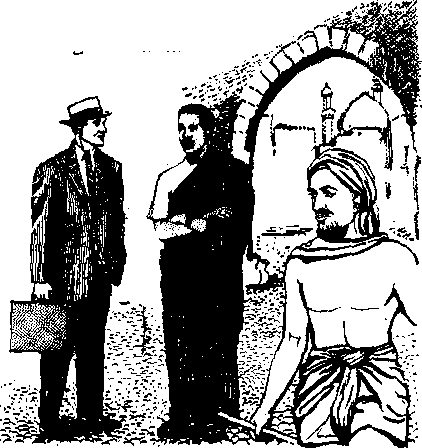
WATCH TOWER
THE RIDGEWAY
LONDON N.W. 7
Please send me f J 1363 Year 600 ft of Jehovah’s Wifsewes (3/6: (or Australia. 4/-: for South Africa, 35c); L J 1963 calendar (1/8; for Australia, 2/-; tor South Africa. 17c). I am enclosing...........
Street and Number
Name ................................... -___„___________ or Route and Box .............................................................
Port Postal
Town........................................................................................ District No.............County...............................................
fat AUSTRALIA address 11 Beresford Rd., Blrathfleld, N.8.W. CANADA: 150 Bridge]and Ave., Toronto 1B, Ont. WUTH AFRICA! Private Bag, ElandsfMitela, Transvaal. UNITED STATES: 117 Adams Bt., Brooklyn 1, N". F.
32 A WA KE J
