 View PDF
The content displayed below is for educational and archival purposes only.
Unless stated otherwise, content is © Watch Tower Bible and Tract Society of Pennsylvania
You may be able to find the original on wol.jw.org
Energy
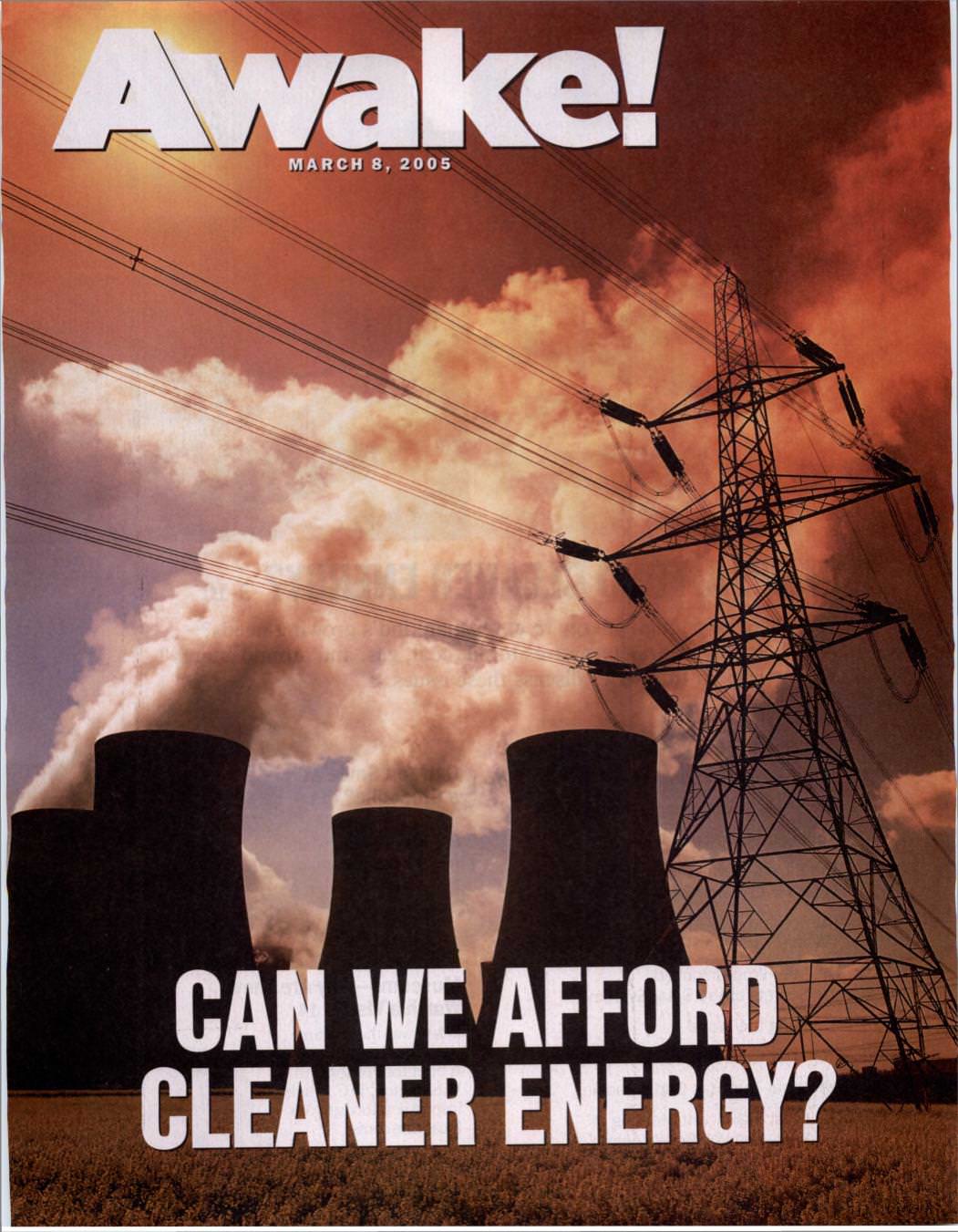
BABY Micah was born in August 2003. A gasoline-powered car rushed his mother to the maternity ward. A coal-burning power station lit the hospital in which he entered the world. A central heating system burning natural gas warmed the room in which he took his first breath. If any one of these traditional power sources had failed, little Micah’s life could have been jeopardized.
The modern civilization into which Micah was born depends on a variety of energy sources for its very existence. Every day we rely on fossil fuels in some way
The journal Bioscience says: “On average, every year each American uses about 93,000 kilowatt-hours [of power], equivalent to 8000 liters of oil, for all purposes, including transportation, heating, and cooling.” In Australia, China, Poland, and South Africa, more than 75 percent of the electricity used comes from coal-fired generators. India relies on coal for 60 percent of its electric power, while the United States and Germany burn coal to supply more than half their electricity.
“It’s less well known that the world’s food is now nourished by oil,” states journalist Jeremiah Creedon in an article entitled “Life After Oil.” “Petroleum and natural gas are crucial at every step of modern agriculture, from making fertilizer to shipping crops.” (Utne Reader magazine) But how secure are these energy sources from which modern society draws its life and livelihood? Are there any cleaner alternatives available?
[Footnote]
For more information on the history of oil exploitation, see the November 8, 2003, issue of Awake! pages 3-12.
