 View PDF
The content displayed below is for educational and archival purposes only.
Unless stated otherwise, content is © Watch Tower Bible and Tract Society of Pennsylvania
You may be able to find the original on wol.jw.org
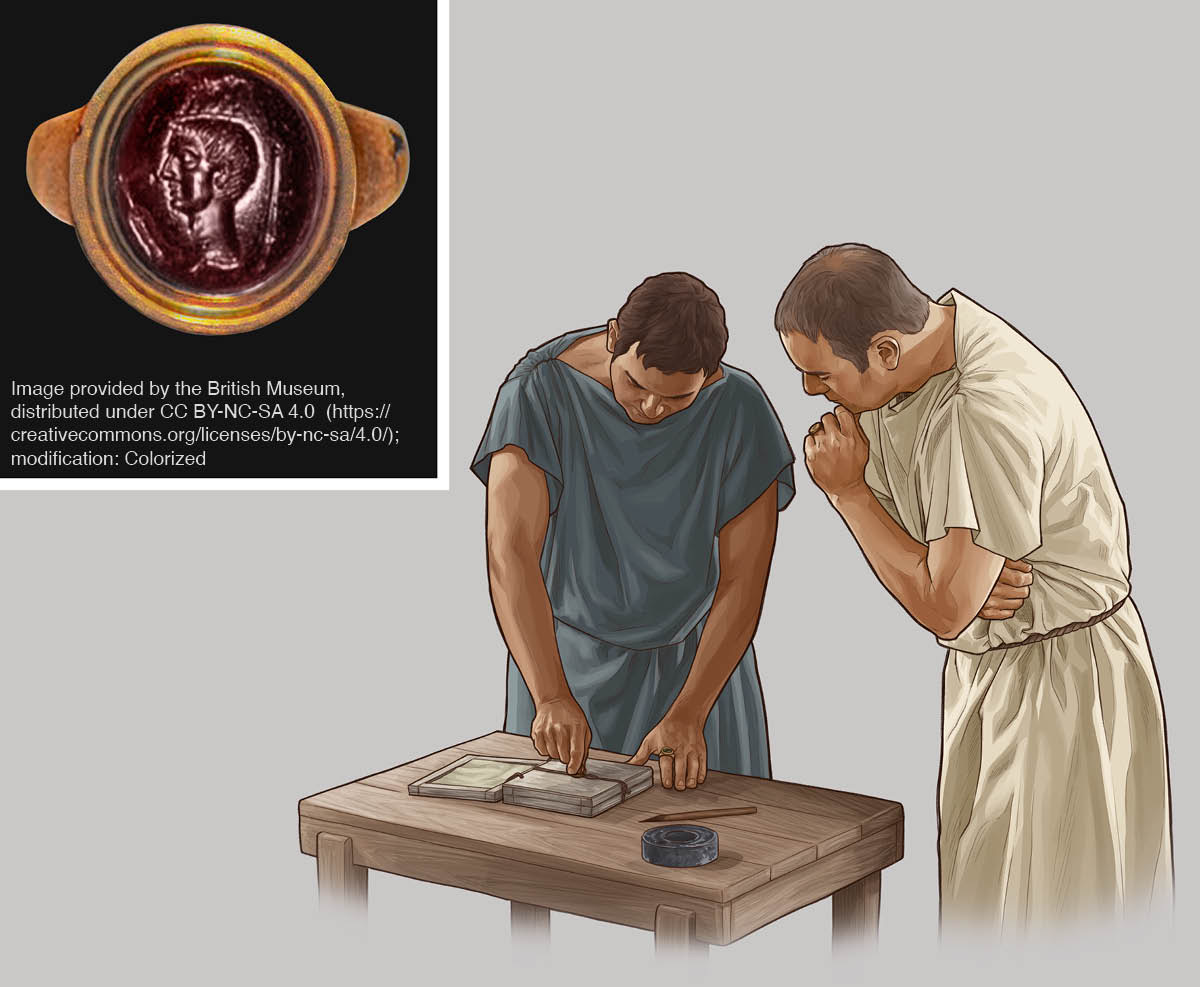
Sealing a Document
In ancient times, seals had various purposes. For example, they were used to show authenticity or agreement. (See Glossary, “Seal.”) People in Greco-Roman times recorded legal or business transactions on wooden tablets covered with wax. The valuable information in these documents needed to be authenticated by witnesses. A witness had his personal seal, a distinctive mark that was engraved, often on a ring. He pressed it into a lump of hot wax covering a string that tied the document together. When the wax cooled, it would seal the document shut, and the document would remain shut until it was publicly opened. In this way, the witnesses attested to, or acknowledged, the truthfulness of the content, and the document was protected from being tampered with. For this reason, the expression “to seal; to put a seal on” came to be used in the sense of certifying, confirming, or authenticating that something was true. The apostle John wrote that whoever accepts Jesus’ witness has put a seal to, or has confirmed, that God is true, or truthful.—See study note on Joh 3:33.
Image provided by the British Museum, distributed under CC BY-NC-SA 4.0 (https://creativecommons.org/licenses/by-nc-sa/4.0/); modification: Colorized
