 The content displayed below is for educational and archival purposes only.
Unless stated otherwise, content is © Watch Tower Bible and Tract Society of Pennsylvania
You may be able to find the original on wol.jw.org
Video above © Watch Tower Bible and Tract Society of Pennsylvania
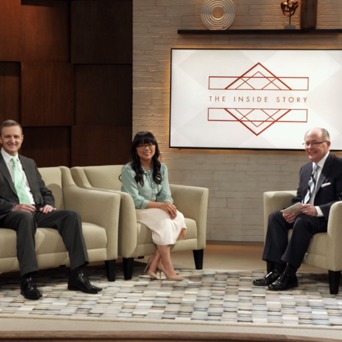
00:00 The next part is a video entitled The Inside Story, 00:05 hosted by Brother Ken Stovall, 00:08 who also serves as a Theocratic Schools instructor. 00:42 I am so excited to be with you here again 00:45 on this segment of The Inside Story! 00:48 This time we’re with class number 143 of the Gilead School, 00:52 and you are going to meet some adorable brothers and sisters. 00:56 And let me tell you, 00:57 they have some moving experiences to relate to you. 01:01 And we’re going to solve two fascinating mysteries. 01:05 And we have music. 01:06 Students in this class are going 01:08 to thrill you with their musical talent. 01:10 There is a captivating song that they’re going to sing for you. 01:14 So come with me as we, together, 01:17 get “the inside story.” 01:23 Let’s introduce our first guest. 01:25 And that would be Saša Komaromi from the Serbia branch. 01:37 So, Brother Komaromi, you serve at the Serbia branch. 01:42 But you told me that some years ago, before you were in the truth, 01:46 you discovered that there were two main interests you had in life. 01:50 One of them had to do with a career choice. 01:52 Could you explain that? 01:54 One was music. 01:56 Music. 01:57 Now, is this a picture of you? 02:01 That was the old me. 02:04 Evidently, you were in a band. 02:07 Yes, we were at a competition at the time. 02:13 That was one of your interests, but there was another. 02:16 What was that? 02:17 Searching for the purpose of life. 02:19 And how did you go about searching for life’s purpose? 02:22 I read a lot of books 02:24 —books about parapsychology, Buddhism, 02:28 spiritism, Tibetan Lamaism. 02:30 Amazing! That’s a lot of books. 02:33 Now, at the time, though, you were dating your wife, Vicki. 02:38 What did she think of all these books? 02:40 Did she share your interest in all this reading? 02:42 I wished she did. 02:44 But no, she did not. 02:46 To be honest, it’s not really easy 02:50 to like to read those kinds of books 02:52 —for example, The Book of the Dead. 02:55 The Book of the Dead? 02:57 I can see that’s not going to be a very enjoyable book. 03:02 Now, was it only books? 03:04 Was that the only way you were searching for the purpose of life? 03:07 No, I was also experimenting with different states of mind 03:12 under the influence of drugs. 03:15 During my hallucinations, 03:18 I had many things already “solved.” 03:21 You had everything “solved.” 03:23 This is what I thought. 03:25 But after I came to myself again, 03:30 I was again in the same room and everything was the same. 03:34 So I was really, really disappointed. 03:37 And then I prayed to God. 03:39 I said: “God, I’m asking just for one thing. 03:43 But whatever it is, just, please, help me to be certain that I find the truth.” 03:48 Very interesting. 03:50 So you prayed for Jehovah to help you find the truth. 03:52 Of course, you didn’t know Jehovah at the time. 03:55 So how was your prayer answered? 03:59 Soon after that, I went to Germany. 04:01 I had the idea to form my music studio. 04:05 During my visit there, 04:07 I understood that my uncle and my aunt were Jehovah’s Witnesses. 04:11 And you never knew that before? 04:12 No. No, I didn’t know. 04:14 So, what did they have in their home that would have been really exciting to you? 04:20 As all Jehovah’s Witnesses, they had a lot of theocratic books. 04:25 Ahh. 04:27 So, did you read the books? 04:29 Yes, I read them a lot. 04:31 Actually, I read a book daily. 04:33 Wow! 04:34 So you get back home; you open up the suitcases. 04:38 And Vicki is there, and she sees books. 04:42 And you were supposed to bring home musical equipment. 04:45 What did she think about that? 04:47 She thought, ‘Now definitely he’s totally crazy.’ 04:52 So, what did you do? 04:55 I explained to her immediately that from now on 04:59 I would like to live according to what I read in these books and the Bible. 05:03 And I would also like it for her —that she also live like that. 05:08 If this was OK with her, we could stay together. 05:11 If it was not OK with her, we were finished. 05:16 You like to be direct, don’t you? 05:18 I know, I was “very tactful.” 05:22 But I also offered her the book Young People Ask. 05:25 Did she like that? 05:26 Yes. 05:27 Yes, she liked it much more than my ultimatum. 05:30 I see. 05:31 We started studying the Bible. 05:34 At the beginning, my wife started because of me, 05:38 but later she did this because of herself. 05:40 And after six months, we became unbaptized publishers. 05:45 Then we got married, and we were baptized in 1994. 05:51 Immediately, we started full-time service, 05:53 and we served five years as regular pioneers 05:56 and then almost five years as special pioneers. 06:00 And now we’ve been 13 years at the Serbia branch. 06:05 Jehovah has answered your prayer. 06:07 You’re satisfied; 06:08 you found the truth; you found the purpose in life. 06:12 But there’s still the music. 06:15 Did you have to give up your desire to play music, 06:19 to be involved in music, especially since you’ve come to Bethel now? 06:23 Actually, in 2013, 06:25 there was an idea that we should start with a project 06:29 of recording vocal renditions of our theocratic songs. 06:34 And my wife, Violeta, and I had the privilege to participate in that project. 06:39 Now, was this just for the Serbia branch? 06:42 No, the plan was to record the songs in four or five languages. 06:46 Four or five languages? 06:48 But would this mean, then, that you would travel 06:50 around to different countries surrounding Serbia? 06:53 No, the idea was that singers 06:57 would come from other countries to Serbia, 06:59 and they would be full-time singers 07:02 for a period of time until we finished that project. 07:05 That must have been a tremendous amount of work. 07:07 How did you get that accomplished? 07:09 Yeah, it’s easier if we see a video, 07:12 and it will be much more understandable. 07:15 All right, good. Let’s watch the video. 07:19 One of the first things we needed was a recording studio. 07:25 So with the help of many, we built our own. 07:34 A typical day began with a little music theory, 07:41 a little stretching, 07:43 and a brief review of the song’s Scriptural theme. 07:49 Once they received a new song, 07:51 they practiced in separate groups. 07:55 Then they would all come together. 08:00 Finally, it was time to record. 08:05 This resulted in 450 songs being recorded 08:09 in a period of 22 months. 08:30 Looking back, these songs were sung not just with words 08:34 but with hearts full of love for Jehovah. 08:44 Look at them. 08:49 Those are nice greetings at the end there. 08:51 Yeah, nice surprise. 08:52 I loved the way the chorus sounded. 08:54 You did a good job with them. 08:55 That must have been a tremendous amount of work, 08:58 getting that all done, though, in five different languages. 09:02 Yes, the singers did a great job and also all the crew. 09:05 And you really could see, all the time, 09:08 their love for Jehovah and love for the brotherhood. 09:11 And every day you could see a lot of their self-sacrificing spirit. 09:16 Now, Saša, let me ask you one more question. 09:18 We saw the picture there of you as a musician, 09:20 and I know you have some musical talent. 09:23 Possibly, you could have become famous. 09:25 Do you ever regret not pursuing some sort of a career in the world 09:30 as opposed to giving your life in full-time service to Jehovah? 09:34 As you said, I could be famous. 09:36 Or I could have become a drug addict and now be dead. 09:41 That’s a good point. 09:43 So no, no regrets at all. 09:46 I received much, much more than I ever imagined. 09:52 And in my case, from my first prayer till now, 09:56 Jehovah assured me that he’s really the “Hearer of prayer,” 09:59 as the psalmist mentioned in Psalm 65:2. 10:04 Excellent! Thank you so much, Saša, 10:05 for sharing these very heartfelt comments. 10:08 You’re welcome. 10:09 Thank you. 10:17 Now, you know what we’re going to do? 10:19 We’re going to give you the opportunity 10:21 to get to know some of the students 10:23 in our audience. 10:24 We’re going to do an activity 10:26 I call What’s My Favorite Scripture? 10:28 So we’re going to ask the students if they’ll volunteer 10:31 and give us their favorite scripture and, in a minute or less, 10:34 tell us what it says and why it’s their favorite scripture. 10:37 OK, 10:38 let’s see now. 10:42 Who would like to go first? 10:45 Shingirai Mapfumo from Zimbabwe. 10:49 Psalm 84:11. 10:51 And what does that say? 10:53 “For Jehovah God is a sun and a shield; 10:57 “he gives favor and glory. 10:59 “Jehovah will not hold back anything good 11:02 from those walking in integrity.” 11:04 OK, so tell us, Why is that your favorite scripture? 11:08 During the economic crisis in Zimbabwe, 11:11 my pioneer partner and I ran out of food. 11:13 We were really starving, 11:16 and physically we were so weak that we could not even function. 11:19 Still, we managed to go to town, 11:21 hoping that we could get some money from the bank. 11:24 There was a long queue, 11:26 and the bank was not giving any money either. 11:29 We were so distraught. 11:31 At that moment when we didn’t know what to do, 11:35 a truck from the branch office brought food supplies for us. 11:40 Then it became so clear to me 11:42 that Jehovah is “a shield,” 11:44 and he never “hold[s] back anything good” from his loyal servants. 11:48 Amazing! Well, I can see why that’s your favorite scripture. 11:51 All right, who else? 11:53 Let’s get Sister Tšèpang Mhlongo, 11:56 and she’s from South Africa. 11:58 My favorite scripture is Psalm 68:5, 12:02 and it says about Jehovah 12:04 that he is the “father of the fatherless and a protector of widows.” 12:08 Why is that your favorite scripture? 12:10 Well, I became motherless when I was only one year old. 12:14 But Jehovah has provided me with hundreds of mothers around the globe, 12:19 both black and white. 12:22 And because our Bethel work 12:25 involves traveling all around the African continent 12:28 working with the translators, 12:30 it makes it even more precious to me 12:32 that I adopt this family wherever we go. 12:36 Truly, Jehovah has proved to be my Father 12:39 and my Protector to this day. 12:41 Hmm, very touching. 12:43 And I’m sure that all of those parents who have adopted you 12:45 are proud to have you as a daughter. 12:49 Who else could tell us their favorite scripture? 12:51 All right, let’s get Brother Sylvain Bois from Benin. 12:56 It is Psalm 94:18, 19. 12:59 And what does it say? 13:01 “Your loyal love, O Jehovah, kept supporting me. 13:05 “When anxieties overwhelmed me, 13:08 you comforted and soothed me.” 13:11 So tell us, Why is that scripture special to you? 13:15 Years ago, when I was attending Ministerial Training School (MTS), 13:19 I had a serious stroke and I was hospitalized. 13:22 When I awoke from the coma, 13:25 I felt very happy because I was alive. 13:28 But also very discouraged 13:30 because I thought everything was over for me 13:33 —pioneer service, school, 13:35 and even my dream to one day become a missionary. 13:40 But one of the instructors and his wife came to the hospital, 13:44 and they read me that verse. 13:46 And my heart was full of anxieties, 13:50 but I really felt that day that Jehovah 13:52 was able to comfort me and soothe me. 13:55 And you know what? 13:57 One year later, 13:59 I was permitted to again attend MTS. 14:01 And a few months later, 14:03 Jehovah fulfilled another of my dreams, 14:06 as I was assigned as a missionary in Africa. 14:09 Brother Bois, that was very touching. 14:11 Thank you so much, and we’re so glad to have you in this class of Gilead. 14:14 Well, that’s all that we’re going to have time for. 14:20 So now it’s time to introduce our next guest, 14:24 and that would be Brother Paulo Maganha, and he’s from Brazil. 14:37 Now, Brother Maganha, you’re at the Brazil branch. 14:39 But you came into the truth at nine years old, 14:43 at the same time as your mother. 14:45 And you went to the branch, to Bethel, in your early 20’s, 14:49 and you’ve been there for 27 years. 14:52 What department do you work in at the branch now? 14:55 I am now in LDC for one and a half years. 14:58 LDC. 14:59 OK, would you just tell us, What does the LDC Department do? 15:03 LDC is the Local Design/Construction Department. 15:06 It’s responsible for the work of planning, 15:09 construction, and maintenance of Kingdom Halls and Assembly Halls. 15:13 You have the LDC Department there at Bethel, 15:17 but who outside of Bethel 15:19 works with building Kingdom Halls and Assembly Halls? 15:23 Outside we have many brothers and sisters 15:26 serving as construction servants, construction volunteers, 15:29 remote volunteers, and field representatives. 15:33 Now, this is— This is the mystery. 15:34 This is our first mystery. 15:35 What really, then, does a field representative do? 15:38 OK, let’s just call them field rep. OK? 15:42 OK. Field rep, I like that. 15:43 You could say that they are the eyes and the ears of the LDC at the branch. 15:48 But what if I show you some pictures regarding the work? 15:51 I would love that! 15:52 OK. 15:52 At the first step, the office asks him to investigate some congregation needs. 15:57 He meets with the local elders and the circuit overseer 16:01 to determine the needs. 16:03 And later, he sends a recommendation to the office. 16:06 I see. So if he has a large region, 16:08 he may have to have many, many of these meetings 16:11 and do a lot of research to determine what the needs are for Kingdom Halls. 16:14 Yeah. 16:15 Once the project is approved, 16:17 the next step is to search for appropriate land, a property. 16:21 To do that, he goes to the Internet, 16:23 consults real estate agents, local brothers, neighbors. 16:28 To find the right property at the right cost can be very time consuming 16:31 and requires of him a lot of skills and abilities. 16:34 And the field rep is also responsible for getting the permits, 16:38 the approvals, for construction. 16:40 And he visits several different agencies every day 16:44 to get the permits to have everything approved by the government. 16:48 In big cities, he may have to stand in line after line after line. 16:51 This could take— 16:52 Yeah. And in bigger cities, it can take even some weeks 16:55 or months to get everything approved. 16:57 Finally, when everything is approved, the construction group starts the work. 17:02 And you can see him again visiting the site 17:04 in order to give some technical support to the construction overseer. 17:08 So, now, does he stay on the site 17:10 when a building is being built? 17:12 No, he returns to his office 17:14 but remains in contact with the group to give some remote support. 17:18 Especially when some big issues arise at the site, 17:22 the construction overseer can always count on his good support. 17:26 OK, good. 17:27 I notice in this picture, behind the field representative, 17:30 we see a sister pictured there. 17:32 Who might that be? 17:33 Well, if he’s married, 17:35 his wife can do lots of work to help him. 17:39 But if he is not, he can count on a local volunteer to help him. 17:43 Once the project is concluded, he visits the site again, 17:46 now to do the commissioning 17:48 and to make sure that everything was done according to the plans. 17:51 So, evidently, his job is done now. 17:54 No, not yet. 17:55 He’s also responsible for giving training to local brothers 17:59 to properly maintain the building. 18:01 Wow! So you have helped solve this mystery. 18:03 He does have a lot of work to do. 18:07 But really, does working on one project keep him busy? 18:11 No, it is not just one, Brother Stovall. 18:13 They are very busy and productive workers. 18:16 On average, each field rep can be working on 10 to 15 projects 18:20 in different phases but at the same time. 18:23 My goodness! That’s amazing! 18:24 So they really do an amazing amount of work then. 18:28 Paulo, I understand that at your branch, 18:30 you’ve come up with a very innovative idea 18:34 regarding Assembly Halls and Kingdom Halls. 18:37 Could you explain that to us? 18:39 Yes, we have done what is called an expandable Kingdom Hall. 18:43 Expandable Kingdom Hall? 18:46 Saša, do you have expandable Kingdom Halls in Serbia? 18:49 Not that I’m aware of. 18:52 I can’t even imagine. 18:53 How do you expand a Kingdom Hall? 18:55 OK, what if we see a brief video about this? 18:58 OK, I’d like that. 19:02 At first, it looks like a normal Kingdom Hall. 19:06 But something wonderful happens when the back walls are lifted. 19:11 It’s now large enough to hold an entire assembly or convention. 19:19 But before we can meet there, it has to be cleaned. 19:23 Chairs are rented and arranged. 19:27 And audio and video equipment must be set up 19:30 so that no matter where you sit, 19:33 you won’t miss anything. 19:36 All the hard work is worth it when you see how much the friends benefit. 19:59 When the special weekend of activity is over 20:02 and the walls are lowered, 20:04 it goes right back to being a Kingdom Hall again. 20:26 That’s our family there. 20:28 Uh-huh. They sent you some spirited greetings. 20:30 Yeah. 20:31 And what a brilliant way 20:33 to get the most out of a building and save money! 20:36 Now, Brother Maganha, I just want to ask you, 20:38 What has impressed you the most about working with the LDC Department? 20:42 What really touched my heart is to see the spirit of willingness to help 20:47 shown by all those involved with the LDC. 20:50 You know, these brothers and sisters have left their families, 20:53 their houses, their friends behind 20:55 to work with these projects. 20:56 All these sacrifices are done out of love 21:00 —love for our brotherhood and especially love for Jehovah. 21:03 That’s the reason that I really, really appreciate their work. 21:07 Thank you, Brother Maganha. 21:09 Obviously, those brothers and sisters that work with LDC 21:12 set a good example for the rest of us. 21:14 Thank you very much. 21:15 My pleasure. 21:21 Now, Brother Komaromi, 21:23 it’s time for you to give us a sample of your musical talent. 21:26 Would you go and join our band? 21:33 Recently, the Governing Body has given us loving encouragement 21:37 through our regional convention program to never give up. 21:41 Now, the Gilead students have written a song 21:44 that goes right along with that spirit and that theme. 21:48 It’s entitled “We’ll Never Let Go.” 24:43 I thought that was a thrilling song. 24:46 You brothers and sisters did a marvelous job on that. 24:49 And you know what I liked about the song too 24:51 is that it gets progressively more modern 24:53 as you go through the song. 24:56 So it really says to me that our organization 24:58 in its modern-day history, 25:00 even in early times, has never given up, 25:03 and we will never give up. 25:05 And it’s so joyful. 25:07 It says that we’re going to endure with joy. 25:10 No one can take that away from us. 25:11 It’s Jehovah’s gift through his holy spirit. 25:15 Now it’s time to introduce our final guest, 25:18 and that is Sister Angela Khang from the United States. 25:32 Angela, you are one of the single sisters in our class, 25:36 but where in the United States do you serve? 25:39 I’m at the remote translation office (RTO) in Sacramento, California, 25:42 and they translate into the Hmong language there. 25:44 Now, I have to confess —the Hmong language— 25:47 I never knew until very recently 25:50 that there was such a language as the Hmong language. 25:53 And I didn’t realize there was a Hmong people. 25:56 Why is that? 25:58 Well, for a long time, the Hmong story was kept a secret from the American public. 26:02 Now this is another one of our mysteries 26:04 because why would it be 26:07 that someone would try to keep the existence of a whole culture secret? 26:13 Well, during the Vietnam War, which was a very unpopular conflict, 26:16 many U.S. citizens didn’t want the war to expand. 26:20 So the U.S. government actually went to Southeast Asia, 26:22 and they secretly recruited the Hmong men 26:24 who were living in the hill tribes of Laos 26:26 to fight Communism in that part of the world. 26:29 In the end, about 40,000 Hmong men were killed in that war, 26:32 and so that’s about 1 in 4 Hmong men. 26:34 So every family lost someone. 26:36 Forty thousand men. 26:38 I don’t think that people really are aware of that fact, are they? 26:42 No. Many historians call that conflict the Secret War. 26:46 Looking at our monitor here, what is it we are seeing here? 26:49 This was an exhibit showcasing the Hmong experience 26:51 —how they came to the U.S. 26:53 And it’s a wall of unknown soldiers who fought in the war, 26:56 and they were asking the Hmong community to identify their loved ones. 26:59 So a few in our congregation knew some of those men. 27:02 I see. 27:04 Now, as I think back to the history of that war, 27:06 at some point in time, the United States pulled out of Vietnam. 27:09 So, what happened then 27:11 to the Hmong that were left there in Vietnam when the U.S. pulled out? 27:16 It was a desperate situation because there was an aggressive campaign 27:20 to capture and kill any of the remaining Hmong families, 27:23 and so many of them had to find a way to escape. 27:26 And so we see that here in this photo. 27:28 This is Long Tieng Air Base in 1975. 27:32 About 30,000 Hmong people converged on that airport, 27:34 hoping to find a way out. 27:36 But only about 2,500 were airlifted —the more prominent officials. 27:40 I see. 27:41 You can see that those thousands of people there 27:42 are not going to fit on that airplane. 27:44 So all those thousands that were left behind, 27:47 what happened to them? 27:49 They were pretty much left on their own, 27:51 and they had to find their way out along with thousands of other families. 27:55 And so that’s what happened to my family. 27:56 They found their way across the Mekong River into Thailand, 27:59 and they were placed in refugee camps. 28:01 I see. 28:02 So who are we seeing a picture of here now on the monitor? 28:04 This is my father in a Thailand refugee camp 28:08 and my mother, my grandmother, and my uncle. 28:12 So your family managed to survive by fleeing into Thailand 28:16 and getting into the refugee camp. 28:18 But then how did they get to the United States? 28:22 In 1979, they were sponsored to the United States. 28:25 And the Hmong culture is patriarchal, so you stick close with your clan. 28:29 And so my entire clan ended up in California, and they settled in South Sacramento. 28:34 I can imagine that this experience must have been a tremendous amount of loss 28:39 for the Hmong people, Hmong families. 28:42 My father lost his mother when they were fleeing; 28:44 he lost his brother. 28:45 He saw many people lose their lives. 28:47 Many clans were separated. 28:49 Some of their relatives ended up in France, 28:51 and the rest of them ended up in the United States. 28:53 And then when they settled here, my mom lost her hearing. 28:57 So it was just an added stress in their lives. 28:59 So how did all this suffering and loss, how did it affect your mother? 29:03 Even though her background is animist, 29:05 she knew that the Bible was a holy book that would teach her about the Creator. 29:09 So she found comfort in reading the Bible. 29:11 And she started to collect different Bibles from different translations 29:15 and comparing them to try to understand what she was reading. 29:17 And every night she would pray with me and my sister. 29:20 And so from a young age, we were taught that God is real, 29:23 even though we didn’t know Jehovah yet. 29:26 Wow, very, very interesting. 29:28 So she was really, really looking for the truth. 29:31 So how did she eventually find the truth? 29:34 Well, in the meantime, my uncle (the one who was pictured earlier) 29:38 and his wife started studying the Bible, and they came into the truth. 29:41 And they asked a sister to come and study with my mom, 29:43 and soon my entire family was studying. 29:46 In 1996, my mom was baptized. 29:48 In 1997, my sister and I were baptized. 29:51 Amazing! So, now, you were baptized at the age of 12, 29:55 and then you started pioneering at the age of 15. 29:58 Yes. 29:59 Now, first of all, you were in an English congregation. 30:01 But what changed that? 30:04 Our circuit overseer came through, and he was telling us about a Hmong group 30:07 that had formed in our sister congregation. 30:10 And he told us we had no reason to be in English, 30:12 and he was right. 30:14 So as a family, we moved over to the Hmong group, 30:17 and in 1999, that group became the very first Hmong congregation. 30:20 So that made us very happy. 30:22 So you were associated with the very first Hmong congregation 30:25 anywhere in the world. 30:26 Yes. 30:27 Amazing! 30:29 Now, later you toured Bethel, and that had a profound effect on you. 30:32 Can you tell us about that? 30:34 Well, we came to Bethel, and a brother in Translation Services 30:37 found out we were coming through, so he wanted to meet with us. 30:40 And he sat us girls down, and he told us, 30:43 “You have something you can give to Jehovah, and that’s your language.” 30:47 So it really got me thinking 30:49 about what I could do to really support the field. 30:52 So I went home, and I really worked on my language 30:55 and worked on supporting the group. 30:56 And in 2007 30:59 when Bethel came looking for translators, 31:01 this same brother came out and he interviewed a group of us. 31:04 And shortly after that, my mom and another brother and I 31:07 were invited to serve on the Hmong translation team 31:10 at the first RTO here in the U.S. branch. 31:13 My goodness! 31:14 So the first Hmong congregation anywhere in the world 31:17 and the first RTO for the U.S. branch. 31:21 Jehovah certainly has blessed you with some wonderful privileges. 31:25 Could you just tell us, 31:26 What’s it like working at the RTO from day to day? 31:30 Sure. Would you like to see a video? 31:31 Yes, we would. 31:36 At the Hmong RTO, many hands help in the translation work. 31:41 When questions come up, we’re not left on our own. 31:44 The Translation Services Department is always ready to provide support. 31:52 Once everything is approved, it’s time to record. 31:56 Since Hmong wasn’t a written language until the 1950’s, 31:59 audio publications are very important to the Hmong field. 32:03 Some support the RTO in other valuable ways too, 32:07 such as cooking and cleaning. 32:10 It’s the best feeling to talk to the Hmong people 32:14 and to show them something in their language. 32:16 You can see how it touches their heart. 32:21 As a result, we have many interested ones attend our meetings. 32:28 As the Hmong field continues to grow, 32:31 many are learning our language to help support the preaching work. 32:37 When we get together, we have a great time 32:40 —with good food, 32:42 association, watching the kids play. 32:46 It’s obvious to everyone in the community 32:50 that we’re not just a congregation 32:52 —we’re a family. 33:05 That is a wonderful video, really. 33:08 Angela, could you just tell us, 33:10 Why does the work done at the RTO 33:13 fill such a great need among the Hmong people? 33:16 Well, the Hmong are a people without a country, and throughout history, 33:20 they’ve been pushed from one location to another. 33:22 They were pushed out of China in the late 1800’s, 33:25 they were pushed out of Laos, 33:26 and from there they were scattered across the world 33:29 —to the U.S., 33:30 to France, to Australia. 33:32 And so for many of the Hmong brothers, 33:34 they feel like a forgotten people. 33:37 Excuse me, I watched this video for the first time here. 33:42 It’s the first time she’s seen the video. 33:44 It’s the first time. 33:46 So it’s, it’s moving. 33:48 So many of the Hmong brothers feel like a forgotten people. 33:51 But the work at the RTO is a reminder that Jehovah hasn’t forgotten them. 33:56 In fact, he invites them 33:58 to become part of an international clan —a brotherhood. 34:01 And when they respond to that invitation, 34:04 they find something that they’ve been looking for all along. 34:07 They finally find a place 34:09 —a permanent home— under God’s Kingdom. 34:11 Thank you for those heartfelt comments. 34:13 Really, those were very nice. 34:16 Now, Sister Khang, we have a little surprise for you. 34:18 We really want the audience to know that, 34:23 well, the work done at the Hmong RTO 34:25 is not just for the United States, 34:27 but the effect reaches clear around the world 34:30 In fact, 34:31 we have caught up with a congregation in northern Thailand. 34:35 And I know this is a surprise; we did not rehearse this. 34:39 No, we did not. 34:41 But we’re going to show you, if you’d like. 34:43 Yes. 34:44 Watch this. 35:18 Well, obviously, they are grateful for the work 35:20 you brothers and sisters do in that RTO. 35:23 Wasn’t this a thrilling occasion? 35:26 It was wonderful, enjoyable, to get to know these brothers and sisters. 35:31 We wish that Jehovah continues to bless you in your faithful service to him 35:36 until the next time we get together on The Inside Story. 35:50 Thank you very much, Brother Stovall, for sharing with us The Inside Story. 35:55 We appreciate very much your letting us in on it. 35:59 But I have to admit that this is the first Gilead graduation 36:02 I’ve ever been to where I couldn’t help but pat my foot back there. 36:08 I’m just so glad I was behind the curtain.
00:00 The next part is a video entitled The Inside Story, 00:05 hosted by Brother Ken Stovall, 00:08 who also serves as a Theocratic Schools instructor. 00:42 I am so excited to be with you here again 00:45 on this segment of The Inside Story! 00:48 This time we’re with class number 143 of the Gilead School, 00:52 and you are going to meet some adorable brothers and sisters. 00:56 And let me tell you, 00:57 they have some moving experiences to relate to you. 01:01 And we’re going to solve two fascinating mysteries. 01:05 And we have music. 01:06 Students in this class are going 01:08 to thrill you with their musical talent. 01:10 There is a captivating song that they’re going to sing for you. 01:14 So come with me as we, together, 01:17 get “the inside story.” 01:23 Let’s introduce our first guest. 01:25 And that would be Saša Komaromi from the Serbia branch. 01:37 So, Brother Komaromi, you serve at the Serbia branch. 01:42 But you told me that some years ago, before you were in the truth, 01:46 you discovered that there were two main interests you had in life. 01:50 One of them had to do with a career choice. 01:52 Could you explain that? 01:54 One was music. 01:56 Music. 01:57 Now, is this a picture of you? 02:01 That was the old me. 02:04 Evidently, you were in a band. 02:07 Yes, we were at a competition at the time. 02:13 That was one of your interests, but there was another. 02:16 What was that? 02:17 Searching for the purpose of life. 02:19 And how did you go about searching for life’s purpose? 02:22 I read a lot of books 02:24 —books about parapsychology, Buddhism, 02:28 spiritism, Tibetan Lamaism. 02:30 Amazing! That’s a lot of books. 02:33 Now, at the time, though, you were dating your wife, Vicki. 02:38 What did she think of all these books? 02:40 Did she share your interest in all this reading? 02:42 I wished she did. 02:44 But no, she did not. 02:46 To be honest, it’s not really easy 02:50 to like to read those kinds of books 02:52 —for example, The Book of the Dead. 02:55 The Book of the Dead? 02:57 I can see that’s not going to be a very enjoyable book. 03:02 Now, was it only books? 03:04 Was that the only way you were searching for the purpose of life? 03:07 No, I was also experimenting with different states of mind 03:12 under the influence of drugs. 03:15 During my hallucinations, 03:18 I had many things already “solved.” 03:21 You had everything “solved.” 03:23 This is what I thought. 03:25 But after I came to myself again, 03:30 I was again in the same room and everything was the same. 03:34 So I was really, really disappointed. 03:37 And then I prayed to God. 03:39 I said: “God, I’m asking just for one thing. 03:43 But whatever it is, just, please, help me to be certain that I find the truth.” 03:48 Very interesting. 03:50 So you prayed for Jehovah to help you find the truth. 03:52 Of course, you didn’t know Jehovah at the time. 03:55 So how was your prayer answered? 03:59 Soon after that, I went to Germany. 04:01 I had the idea to form my music studio. 04:05 During my visit there, 04:07 I understood that my uncle and my aunt were Jehovah’s Witnesses. 04:11 And you never knew that before? 04:12 No. No, I didn’t know. 04:14 So, what did they have in their home that would have been really exciting to you? 04:20 As all Jehovah’s Witnesses, they had a lot of theocratic books. 04:25 Ahh. 04:27 So, did you read the books? 04:29 Yes, I read them a lot. 04:31 Actually, I read a book daily. 04:33 Wow! 04:34 So you get back home; you open up the suitcases. 04:38 And Vicki is there, and she sees books. 04:42 And you were supposed to bring home musical equipment. 04:45 What did she think about that? 04:47 She thought, ‘Now definitely he’s totally crazy.’ 04:52 So, what did you do? 04:55 I explained to her immediately that from now on 04:59 I would like to live according to what I read in these books and the Bible. 05:03 And I would also like it for her —that she also live like that. 05:08 If this was OK with her, we could stay together. 05:11 If it was not OK with her, we were finished. 05:16 You like to be direct, don’t you? 05:18 I know, I was “very tactful.” 05:22 But I also offered her the book Young People Ask. 05:25 Did she like that? 05:26 Yes. 05:27 Yes, she liked it much more than my ultimatum. 05:30 I see. 05:31 We started studying the Bible. 05:34 At the beginning, my wife started because of me, 05:38 but later she did this because of herself. 05:40 And after six months, we became unbaptized publishers. 05:45 Then we got married, and we were baptized in 1994. 05:51 Immediately, we started full-time service, 05:53 and we served five years as regular pioneers 05:56 and then almost five years as special pioneers. 06:00 And now we’ve been 13 years at the Serbia branch. 06:05 Jehovah has answered your prayer. 06:07 You’re satisfied; 06:08 you found the truth; you found the purpose in life. 06:12 But there’s still the music. 06:15 Did you have to give up your desire to play music, 06:19 to be involved in music, especially since you’ve come to Bethel now? 06:23 Actually, in 2013, 06:25 there was an idea that we should start with a project 06:29 of recording vocal renditions of our theocratic songs. 06:34 And my wife, Violeta, and I had the privilege to participate in that project. 06:39 Now, was this just for the Serbia branch? 06:42 No, the plan was to record the songs in four or five languages. 06:46 Four or five languages? 06:48 But would this mean, then, that you would travel 06:50 around to different countries surrounding Serbia? 06:53 No, the idea was that singers 06:57 would come from other countries to Serbia, 06:59 and they would be full-time singers 07:02 for a period of time until we finished that project. 07:05 That must have been a tremendous amount of work. 07:07 How did you get that accomplished? 07:09 Yeah, it’s easier if we see a video, 07:12 and it will be much more understandable. 07:15 All right, good. Let’s watch the video. 07:19 One of the first things we needed was a recording studio. 07:25 So with the help of many, we built our own. 07:34 A typical day began with a little music theory, 07:41 a little stretching, 07:43 and a brief review of the song’s Scriptural theme. 07:49 Once they received a new song, 07:51 they practiced in separate groups. 07:55 Then they would all come together. 08:00 Finally, it was time to record. 08:05 This resulted in 450 songs being recorded 08:09 in a period of 22 months. 08:30 Looking back, these songs were sung not just with words 08:34 but with hearts full of love for Jehovah. 08:44 Look at them. 08:49 Those are nice greetings at the end there. 08:51 Yeah, nice surprise. 08:52 I loved the way the chorus sounded. 08:54 You did a good job with them. 08:55 That must have been a tremendous amount of work, 08:58 getting that all done, though, in five different languages. 09:02 Yes, the singers did a great job and also all the crew. 09:05 And you really could see, all the time, 09:08 their love for Jehovah and love for the brotherhood. 09:11 And every day you could see a lot of their self-sacrificing spirit. 09:16 Now, Saša, let me ask you one more question. 09:18 We saw the picture there of you as a musician, 09:20 and I know you have some musical talent. 09:23 Possibly, you could have become famous. 09:25 Do you ever regret not pursuing some sort of a career in the world 09:30 as opposed to giving your life in full-time service to Jehovah? 09:34 As you said, I could be famous. 09:36 Or I could have become a drug addict and now be dead. 09:41 That’s a good point. 09:43 So no, no regrets at all. 09:46 I received much, much more than I ever imagined. 09:52 And in my case, from my first prayer till now, 09:56 Jehovah assured me that he’s really the “Hearer of prayer,” 09:59 as the psalmist mentioned in Psalm 65:2. 10:04 Excellent! Thank you so much, Saša, 10:05 for sharing these very heartfelt comments. 10:08 You’re welcome. 10:09 Thank you. 10:17 Now, you know what we’re going to do? 10:19 We’re going to give you the opportunity 10:21 to get to know some of the students 10:23 in our audience. 10:24 We’re going to do an activity 10:26 I call What’s My Favorite Scripture? 10:28 So we’re going to ask the students if they’ll volunteer 10:31 and give us their favorite scripture and, in a minute or less, 10:34 tell us what it says and why it’s their favorite scripture. 10:37 OK, 10:38 let’s see now. 10:42 Who would like to go first? 10:45 Shingirai Mapfumo from Zimbabwe. 10:49 Psalm 84:11. 10:51 And what does that say? 10:53 “For Jehovah God is a sun and a shield; 10:57 “he gives favor and glory. 10:59 “Jehovah will not hold back anything good 11:02 from those walking in integrity.” 11:04 OK, so tell us, Why is that your favorite scripture? 11:08 During the economic crisis in Zimbabwe, 11:11 my pioneer partner and I ran out of food. 11:13 We were really starving, 11:16 and physically we were so weak that we could not even function. 11:19 Still, we managed to go to town, 11:21 hoping that we could get some money from the bank. 11:24 There was a long queue, 11:26 and the bank was not giving any money either. 11:29 We were so distraught. 11:31 At that moment when we didn’t know what to do, 11:35 a truck from the branch office brought food supplies for us. 11:40 Then it became so clear to me 11:42 that Jehovah is “a shield,” 11:44 and he never “hold[s] back anything good” from his loyal servants. 11:48 Amazing! Well, I can see why that’s your favorite scripture. 11:51 All right, who else? 11:53 Let’s get Sister Tšèpang Mhlongo, 11:56 and she’s from South Africa. 11:58 My favorite scripture is Psalm 68:5, 12:02 and it says about Jehovah 12:04 that he is the “father of the fatherless and a protector of widows.” 12:08 Why is that your favorite scripture? 12:10 Well, I became motherless when I was only one year old. 12:14 But Jehovah has provided me with hundreds of mothers around the globe, 12:19 both black and white. 12:22 And because our Bethel work 12:25 involves traveling all around the African continent 12:28 working with the translators, 12:30 it makes it even more precious to me 12:32 that I adopt this family wherever we go. 12:36 Truly, Jehovah has proved to be my Father 12:39 and my Protector to this day. 12:41 Hmm, very touching. 12:43 And I’m sure that all of those parents who have adopted you 12:45 are proud to have you as a daughter. 12:49 Who else could tell us their favorite scripture? 12:51 All right, let’s get Brother Sylvain Bois from Benin. 12:56 It is Psalm 94:18, 19. 12:59 And what does it say? 13:01 “Your loyal love, O Jehovah, kept supporting me. 13:05 “When anxieties overwhelmed me, 13:08 you comforted and soothed me.” 13:11 So tell us, Why is that scripture special to you? 13:15 Years ago, when I was attending Ministerial Training School (MTS), 13:19 I had a serious stroke and I was hospitalized. 13:22 When I awoke from the coma, 13:25 I felt very happy because I was alive. 13:28 But also very discouraged 13:30 because I thought everything was over for me 13:33 —pioneer service, school, 13:35 and even my dream to one day become a missionary. 13:40 But one of the instructors and his wife came to the hospital, 13:44 and they read me that verse. 13:46 And my heart was full of anxieties, 13:50 but I really felt that day that Jehovah 13:52 was able to comfort me and soothe me. 13:55 And you know what? 13:57 One year later, 13:59 I was permitted to again attend MTS. 14:01 And a few months later, 14:03 Jehovah fulfilled another of my dreams, 14:06 as I was assigned as a missionary in Africa. 14:09 Brother Bois, that was very touching. 14:11 Thank you so much, and we’re so glad to have you in this class of Gilead. 14:14 Well, that’s all that we’re going to have time for. 14:20 So now it’s time to introduce our next guest, 14:24 and that would be Brother Paulo Maganha, and he’s from Brazil. 14:37 Now, Brother Maganha, you’re at the Brazil branch. 14:39 But you came into the truth at nine years old, 14:43 at the same time as your mother. 14:45 And you went to the branch, to Bethel, in your early 20’s, 14:49 and you’ve been there for 27 years. 14:52 What department do you work in at the branch now? 14:55 I am now in LDC for one and a half years. 14:58 LDC. 14:59 OK, would you just tell us, What does the LDC Department do? 15:03 LDC is the Local Design/Construction Department. 15:06 It’s responsible for the work of planning, 15:09 construction, and maintenance of Kingdom Halls and Assembly Halls. 15:13 You have the LDC Department there at Bethel, 15:17 but who outside of Bethel 15:19 works with building Kingdom Halls and Assembly Halls? 15:23 Outside we have many brothers and sisters 15:26 serving as construction servants, construction volunteers, 15:29 remote volunteers, and field representatives. 15:33 Now, this is— This is the mystery. 15:34 This is our first mystery. 15:35 What really, then, does a field representative do? 15:38 OK, let’s just call them field rep. OK? 15:42 OK. Field rep, I like that. 15:43 You could say that they are the eyes and the ears of the LDC at the branch. 15:48 But what if I show you some pictures regarding the work? 15:51 I would love that! 15:52 OK. 15:52 At the first step, the office asks him to investigate some congregation needs. 15:57 He meets with the local elders and the circuit overseer 16:01 to determine the needs. 16:03 And later, he sends a recommendation to the office. 16:06 I see. So if he has a large region, 16:08 he may have to have many, many of these meetings 16:11 and do a lot of research to determine what the needs are for Kingdom Halls. 16:14 Yeah. 16:15 Once the project is approved, 16:17 the next step is to search for appropriate land, a property. 16:21 To do that, he goes to the Internet, 16:23 consults real estate agents, local brothers, neighbors. 16:28 To find the right property at the right cost can be very time consuming 16:31 and requires of him a lot of skills and abilities. 16:34 And the field rep is also responsible for getting the permits, 16:38 the approvals, for construction. 16:40 And he visits several different agencies every day 16:44 to get the permits to have everything approved by the government. 16:48 In big cities, he may have to stand in line after line after line. 16:51 This could take— 16:52 Yeah. And in bigger cities, it can take even some weeks 16:55 or months to get everything approved. 16:57 Finally, when everything is approved, the construction group starts the work. 17:02 And you can see him again visiting the site 17:04 in order to give some technical support to the construction overseer. 17:08 So, now, does he stay on the site 17:10 when a building is being built? 17:12 No, he returns to his office 17:14 but remains in contact with the group to give some remote support. 17:18 Especially when some big issues arise at the site, 17:22 the construction overseer can always count on his good support. 17:26 OK, good. 17:27 I notice in this picture, behind the field representative, 17:30 we see a sister pictured there. 17:32 Who might that be? 17:33 Well, if he’s married, 17:35 his wife can do lots of work to help him. 17:39 But if he is not, he can count on a local volunteer to help him. 17:43 Once the project is concluded, he visits the site again, 17:46 now to do the commissioning 17:48 and to make sure that everything was done according to the plans. 17:51 So, evidently, his job is done now. 17:54 No, not yet. 17:55 He’s also responsible for giving training to local brothers 17:59 to properly maintain the building. 18:01 Wow! So you have helped solve this mystery. 18:03 He does have a lot of work to do. 18:07 But really, does working on one project keep him busy? 18:11 No, it is not just one, Brother Stovall. 18:13 They are very busy and productive workers. 18:16 On average, each field rep can be working on 10 to 15 projects 18:20 in different phases but at the same time. 18:23 My goodness! That’s amazing! 18:24 So they really do an amazing amount of work then. 18:28 Paulo, I understand that at your branch, 18:30 you’ve come up with a very innovative idea 18:34 regarding Assembly Halls and Kingdom Halls. 18:37 Could you explain that to us? 18:39 Yes, we have done what is called an expandable Kingdom Hall. 18:43 Expandable Kingdom Hall? 18:46 Saša, do you have expandable Kingdom Halls in Serbia? 18:49 Not that I’m aware of. 18:52 I can’t even imagine. 18:53 How do you expand a Kingdom Hall? 18:55 OK, what if we see a brief video about this? 18:58 OK, I’d like that. 19:02 At first, it looks like a normal Kingdom Hall. 19:06 But something wonderful happens when the back walls are lifted. 19:11 It’s now large enough to hold an entire assembly or convention. 19:19 But before we can meet there, it has to be cleaned. 19:23 Chairs are rented and arranged. 19:27 And audio and video equipment must be set up 19:30 so that no matter where you sit, 19:33 you won’t miss anything. 19:36 All the hard work is worth it when you see how much the friends benefit. 19:59 When the special weekend of activity is over 20:02 and the walls are lowered, 20:04 it goes right back to being a Kingdom Hall again. 20:26 That’s our family there. 20:28 Uh-huh. They sent you some spirited greetings. 20:30 Yeah. 20:31 And what a brilliant way 20:33 to get the most out of a building and save money! 20:36 Now, Brother Maganha, I just want to ask you, 20:38 What has impressed you the most about working with the LDC Department? 20:42 What really touched my heart is to see the spirit of willingness to help 20:47 shown by all those involved with the LDC. 20:50 You know, these brothers and sisters have left their families, 20:53 their houses, their friends behind 20:55 to work with these projects. 20:56 All these sacrifices are done out of love 21:00 —love for our brotherhood and especially love for Jehovah. 21:03 That’s the reason that I really, really appreciate their work. 21:07 Thank you, Brother Maganha. 21:09 Obviously, those brothers and sisters that work with LDC 21:12 set a good example for the rest of us. 21:14 Thank you very much. 21:15 My pleasure. 21:21 Now, Brother Komaromi, 21:23 it’s time for you to give us a sample of your musical talent. 21:26 Would you go and join our band? 21:33 Recently, the Governing Body has given us loving encouragement 21:37 through our regional convention program to never give up. 21:41 Now, the Gilead students have written a song 21:44 that goes right along with that spirit and that theme. 21:48 It’s entitled “We’ll Never Let Go.” 24:43 I thought that was a thrilling song. 24:46 You brothers and sisters did a marvelous job on that. 24:49 And you know what I liked about the song too 24:51 is that it gets progressively more modern 24:53 as you go through the song. 24:56 So it really says to me that our organization 24:58 in its modern-day history, 25:00 even in early times, has never given up, 25:03 and we will never give up. 25:05 And it’s so joyful. 25:07 It says that we’re going to endure with joy. 25:10 No one can take that away from us. 25:11 It’s Jehovah’s gift through his holy spirit. 25:15 Now it’s time to introduce our final guest, 25:18 and that is Sister Angela Khang from the United States. 25:32 Angela, you are one of the single sisters in our class, 25:36 but where in the United States do you serve? 25:39 I’m at the remote translation office (RTO) in Sacramento, California, 25:42 and they translate into the Hmong language there. 25:44 Now, I have to confess —the Hmong language— 25:47 I never knew until very recently 25:50 that there was such a language as the Hmong language. 25:53 And I didn’t realize there was a Hmong people. 25:56 Why is that? 25:58 Well, for a long time, the Hmong story was kept a secret from the American public. 26:02 Now this is another one of our mysteries 26:04 because why would it be 26:07 that someone would try to keep the existence of a whole culture secret? 26:13 Well, during the Vietnam War, which was a very unpopular conflict, 26:16 many U.S. citizens didn’t want the war to expand. 26:20 So the U.S. government actually went to Southeast Asia, 26:22 and they secretly recruited the Hmong men 26:24 who were living in the hill tribes of Laos 26:26 to fight Communism in that part of the world. 26:29 In the end, about 40,000 Hmong men were killed in that war, 26:32 and so that’s about 1 in 4 Hmong men. 26:34 So every family lost someone. 26:36 Forty thousand men. 26:38 I don’t think that people really are aware of that fact, are they? 26:42 No. Many historians call that conflict the Secret War. 26:46 Looking at our monitor here, what is it we are seeing here? 26:49 This was an exhibit showcasing the Hmong experience 26:51 —how they came to the U.S. 26:53 And it’s a wall of unknown soldiers who fought in the war, 26:56 and they were asking the Hmong community to identify their loved ones. 26:59 So a few in our congregation knew some of those men. 27:02 I see. 27:04 Now, as I think back to the history of that war, 27:06 at some point in time, the United States pulled out of Vietnam. 27:09 So, what happened then 27:11 to the Hmong that were left there in Vietnam when the U.S. pulled out? 27:16 It was a desperate situation because there was an aggressive campaign 27:20 to capture and kill any of the remaining Hmong families, 27:23 and so many of them had to find a way to escape. 27:26 And so we see that here in this photo. 27:28 This is Long Tieng Air Base in 1975. 27:32 About 30,000 Hmong people converged on that airport, 27:34 hoping to find a way out. 27:36 But only about 2,500 were airlifted —the more prominent officials. 27:40 I see. 27:41 You can see that those thousands of people there 27:42 are not going to fit on that airplane. 27:44 So all those thousands that were left behind, 27:47 what happened to them? 27:49 They were pretty much left on their own, 27:51 and they had to find their way out along with thousands of other families. 27:55 And so that’s what happened to my family. 27:56 They found their way across the Mekong River into Thailand, 27:59 and they were placed in refugee camps. 28:01 I see. 28:02 So who are we seeing a picture of here now on the monitor? 28:04 This is my father in a Thailand refugee camp 28:08 and my mother, my grandmother, and my uncle. 28:12 So your family managed to survive by fleeing into Thailand 28:16 and getting into the refugee camp. 28:18 But then how did they get to the United States? 28:22 In 1979, they were sponsored to the United States. 28:25 And the Hmong culture is patriarchal, so you stick close with your clan. 28:29 And so my entire clan ended up in California, and they settled in South Sacramento. 28:34 I can imagine that this experience must have been a tremendous amount of loss 28:39 for the Hmong people, Hmong families. 28:42 My father lost his mother when they were fleeing; 28:44 he lost his brother. 28:45 He saw many people lose their lives. 28:47 Many clans were separated. 28:49 Some of their relatives ended up in France, 28:51 and the rest of them ended up in the United States. 28:53 And then when they settled here, my mom lost her hearing. 28:57 So it was just an added stress in their lives. 28:59 So how did all this suffering and loss, how did it affect your mother? 29:03 Even though her background is animist, 29:05 she knew that the Bible was a holy book that would teach her about the Creator. 29:09 So she found comfort in reading the Bible. 29:11 And she started to collect different Bibles from different translations 29:15 and comparing them to try to understand what she was reading. 29:17 And every night she would pray with me and my sister. 29:20 And so from a young age, we were taught that God is real, 29:23 even though we didn’t know Jehovah yet. 29:26 Wow, very, very interesting. 29:28 So she was really, really looking for the truth. 29:31 So how did she eventually find the truth? 29:34 Well, in the meantime, my uncle (the one who was pictured earlier) 29:38 and his wife started studying the Bible, and they came into the truth. 29:41 And they asked a sister to come and study with my mom, 29:43 and soon my entire family was studying. 29:46 In 1996, my mom was baptized. 29:48 In 1997, my sister and I were baptized. 29:51 Amazing! So, now, you were baptized at the age of 12, 29:55 and then you started pioneering at the age of 15. 29:58 Yes. 29:59 Now, first of all, you were in an English congregation. 30:01 But what changed that? 30:04 Our circuit overseer came through, and he was telling us about a Hmong group 30:07 that had formed in our sister congregation. 30:10 And he told us we had no reason to be in English, 30:12 and he was right. 30:14 So as a family, we moved over to the Hmong group, 30:17 and in 1999, that group became the very first Hmong congregation. 30:20 So that made us very happy. 30:22 So you were associated with the very first Hmong congregation 30:25 anywhere in the world. 30:26 Yes. 30:27 Amazing! 30:29 Now, later you toured Bethel, and that had a profound effect on you. 30:32 Can you tell us about that? 30:34 Well, we came to Bethel, and a brother in Translation Services 30:37 found out we were coming through, so he wanted to meet with us. 30:40 And he sat us girls down, and he told us, 30:43 “You have something you can give to Jehovah, and that’s your language.” 30:47 So it really got me thinking 30:49 about what I could do to really support the field. 30:52 So I went home, and I really worked on my language 30:55 and worked on supporting the group. 30:56 And in 2007 30:59 when Bethel came looking for translators, 31:01 this same brother came out and he interviewed a group of us. 31:04 And shortly after that, my mom and another brother and I 31:07 were invited to serve on the Hmong translation team 31:10 at the first RTO here in the U.S. branch. 31:13 My goodness! 31:14 So the first Hmong congregation anywhere in the world 31:17 and the first RTO for the U.S. branch. 31:21 Jehovah certainly has blessed you with some wonderful privileges. 31:25 Could you just tell us, 31:26 What’s it like working at the RTO from day to day? 31:30 Sure. Would you like to see a video? 31:31 Yes, we would. 31:36 At the Hmong RTO, many hands help in the translation work. 31:41 When questions come up, we’re not left on our own. 31:44 The Translation Services Department is always ready to provide support. 31:52 Once everything is approved, it’s time to record. 31:56 Since Hmong wasn’t a written language until the 1950’s, 31:59 audio publications are very important to the Hmong field. 32:03 Some support the RTO in other valuable ways too, 32:07 such as cooking and cleaning. 32:10 It’s the best feeling to talk to the Hmong people 32:14 and to show them something in their language. 32:16 You can see how it touches their heart. 32:21 As a result, we have many interested ones attend our meetings. 32:28 As the Hmong field continues to grow, 32:31 many are learning our language to help support the preaching work. 32:37 When we get together, we have a great time 32:40 —with good food, 32:42 association, watching the kids play. 32:46 It’s obvious to everyone in the community 32:50 that we’re not just a congregation 32:52 —we’re a family. 33:05 That is a wonderful video, really. 33:08 Angela, could you just tell us, 33:10 Why does the work done at the RTO 33:13 fill such a great need among the Hmong people? 33:16 Well, the Hmong are a people without a country, and throughout history, 33:20 they’ve been pushed from one location to another. 33:22 They were pushed out of China in the late 1800’s, 33:25 they were pushed out of Laos, 33:26 and from there they were scattered across the world 33:29 —to the U.S., 33:30 to France, to Australia. 33:32 And so for many of the Hmong brothers, 33:34 they feel like a forgotten people. 33:37 Excuse me, I watched this video for the first time here. 33:42 It’s the first time she’s seen the video. 33:44 It’s the first time. 33:46 So it’s, it’s moving. 33:48 So many of the Hmong brothers feel like a forgotten people. 33:51 But the work at the RTO is a reminder that Jehovah hasn’t forgotten them. 33:56 In fact, he invites them 33:58 to become part of an international clan —a brotherhood. 34:01 And when they respond to that invitation, 34:04 they find something that they’ve been looking for all along. 34:07 They finally find a place 34:09 —a permanent home— under God’s Kingdom. 34:11 Thank you for those heartfelt comments. 34:13 Really, those were very nice. 34:16 Now, Sister Khang, we have a little surprise for you. 34:18 We really want the audience to know that, 34:23 well, the work done at the Hmong RTO 34:25 is not just for the United States, 34:27 but the effect reaches clear around the world 34:30 In fact, 34:31 we have caught up with a congregation in northern Thailand. 34:35 And I know this is a surprise; we did not rehearse this. 34:39 No, we did not. 34:41 But we’re going to show you, if you’d like. 34:43 Yes. 34:44 Watch this. 35:18 Well, obviously, they are grateful for the work 35:20 you brothers and sisters do in that RTO. 35:23 Wasn’t this a thrilling occasion? 35:26 It was wonderful, enjoyable, to get to know these brothers and sisters. 35:31 We wish that Jehovah continues to bless you in your faithful service to him 35:36 until the next time we get together on The Inside Story. 35:50 Thank you very much, Brother Stovall, for sharing with us The Inside Story. 35:55 We appreciate very much your letting us in on it. 35:59 But I have to admit that this is the first Gilead graduation 36:02 I’ve ever been to where I couldn’t help but pat my foot back there. 36:08 I’m just so glad I was behind the curtain.
