 The content displayed below is for educational and archival purposes only.
Unless stated otherwise, content is © Watch Tower Bible and Tract Society of Pennsylvania
You may be able to find the original on wol.jw.org
Video above © Watch Tower Bible and Tract Society of Pennsylvania
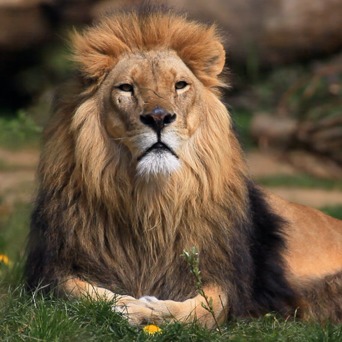
00:00:02 The lion’s fearless reputation is well-founded. 00:00:07 Lions are Africa’s largest native cat. 00:00:12 A full-grown male can weigh up to 230 kilograms, 00:00:17 or about 500 pounds. 00:00:19 Females are smaller but can still weigh up to 180 kilograms, 00:00:24 or nearly 400 pounds. 00:00:28 Lions successfully hunt animals 00:00:31 as large as buffalo and hippos! 00:00:35 Lions are the only cats that live together in social groups. 00:00:41 These groups, called prides, 00:00:43 normally consist of related females and their cubs 00:00:46 along with a small number of resident males. 00:00:50 Healthy adult lions have no natural predators. 00:00:55 However, lions face a threat from a surprising source. 00:00:59 What is it? 00:01:01 Other lions. 00:01:04 Lions are territorial. 00:01:07 They will attack and kill other lions 00:01:09 in an attempt to take over their hunting territory. 00:01:14 Lion cubs face another danger. 00:01:18 Groups of rival males will attempt to drive off the resident males 00:01:22 and take over the pride. 00:01:24 If the invading males are successful, 00:01:27 they will try to kill the cubs that were fathered by other lions. 00:01:31 The invading males can then father cubs of their own. 00:01:35 On their own, the tiny cubs would be defenseless. 00:01:40 But lions vigorously defend their cubs. 00:01:43 Both males and females protect the pride 00:01:46 from other lions. 00:01:49 A mother lion will defend her cubs 00:01:52 even though she may be injured or killed by a larger invading male. 00:01:57 Several mothers may defend their cubs collectively, 00:02:01 giving the cubs a better chance of survival. 00:02:08 Horses were often used in ancient battles. 00:02:13 A charging horse was a powerful weapon. 00:02:17 The mere presence of cavalry 00:02:19 or chariots on the battlefield 00:02:21 was intimidating to opposing armies. 00:02:23 However, horses needed training 00:02:26 to be effective in battle. 00:02:28 Horses are not naturally courageous. 00:02:32 Without proper training, 00:02:34 a horse could be a liability on the battlefield. 00:02:37 Why? 00:02:39 Because of their keen eyesight and hearing, 00:02:41 horses easily become startled. 00:02:45 Horses have a nearly 360-degree range of vision. 00:02:51 Ancient battlefields were filled with sights 00:02:54 that tended to terrify horses. 00:02:56 For this reason, ancient warriors sometimes put blinders on horses. 00:03:02 Horses have 16 muscles that control each of their ears. 00:03:07 They can move their ears to hear sounds more clearly. 00:03:12 A horse can hear the sound of danger before a human. 00:03:17 The possibility of horses panicking in battle 00:03:19 was a constant danger. 00:03:22 Ancient armies would deliberately try to frighten 00:03:26 their enemy’s horses to induce chaos. 00:03:29 How was a horse trained for battle? 00:03:32 Their trainers exposed the horse to sights and sounds 00:03:36 similar to those encountered on the battlefield. 00:03:39 Gradually, the horse would overcome its fear. 00:03:44 When trained properly, instead of fleeing at the sound of battle, 00:03:50 a courageous warhorse would excitedly run towards it. 00:04:02 Across southern Asia lives a small mammal that is surprisingly fearless 00:04:07 —the Indian gray mongoose. 00:04:11 This furry creature is relatively small, 00:04:14 typically measuring less than a meter, 00:04:16 or three feet, in length from head to tail. 00:04:19 Despite its small size, 00:04:22 the mongoose is, in fact, a bold predator. 00:04:26 It feeds on various small creatures, 00:04:28 but the most famous of its prey 00:04:30 are venomous snakes, such as the king cobra. 00:04:35 Several species of mongoose, including the Indian gray mongoose, 00:04:39 are known for their ability to kill venomous snakes. 00:04:43 What protects the mongoose as it fights a venomous snake? 00:04:48 The Indian gray mongoose’s thick fur 00:04:51 is composed of stiff hairs that stand erect 00:04:54 when the mongoose is excited or angry. 00:04:56 This fur serves as a protective layer 00:04:59 to prevent a snake from biting into its flesh. 00:05:02 However, if it is bitten, 00:05:04 the mongoose has an internal defense mechanism 00:05:07 —a tolerance to snake venom. 00:05:10 The mongoose is amazingly fast and agile. 00:05:14 When the snake strikes, 00:05:16 the mongoose swiftly moves out of the way and avoids the bite. 00:05:20 The mongoose also possesses incredible stamina. 00:05:24 It can keep fighting until the snake tires out. 00:05:27 When the mongoose makes its final attack, 00:05:30 it strikes the snake at just the right location to kill it. 00:05:34 The mongoose is endowed with defenses and abilities 00:05:38 that enable it to fearlessly fight and defeat the snake. 00:05:46 Found only in North and South America, 00:05:49 hummingbirds are among the smallest of all birds. 00:05:54 Although the more than 300 species of hummingbirds vary in size, 00:05:58 most species are between 6 and 12 centimeters, 00:06:02 or 2.4 and 4.7 inches, in length. 00:06:07 To the human eye, 00:06:10 the beating of a hummingbird’s wings is just a blur. 00:06:13 Because its wingbeat is so rapid, 00:06:16 this tiny bird generates a humming noise as it flies. 00:06:20 The smaller the hummingbird, the faster its wingbeat. 00:06:26 Larger hummingbirds beat their wings around 10 to 20 times per second; 00:06:31 smaller hummingbirds may beat their wings 00:06:33 70 to 80 times per second in normal flight. 00:06:38 Hummingbirds can fly forward and backward, 00:06:42 sideways, 00:06:45 straight up and down, and, 00:06:48 for brief periods, even upside down. 00:06:52 They hover in place as they feed on flower nectar. 00:06:57 But these beautiful little birds do not have charming temperaments. 00:07:02 Hummingbirds aggressively defend desirable sources of nectar, 00:07:06 attempting to drive off other hummingbirds 00:07:09 that invade their feeding territory. 00:07:12 Females defend their nests. 00:07:16 Especially during mating season, 00:07:19 males of most hummingbird species defend their breeding territory. 00:07:25 Because of their agility in flight, 00:07:28 hummingbirds can chase away 00:07:30 much larger birds, such as crows and hawks. 00:07:33 They will even dive at humans. 00:07:37 Despite their tiny size, hummingbirds are ready to defend themselves 00:07:42 and the things that are essential for their survival. 00:07:52 A herd of African elephants is an impressive sight. 00:07:57 An elephant family group consists 00:08:01 of related adult females and their young. 00:08:05 The close-knit family group provides support to its members. 00:08:11 Elephants have an excellent memory, 00:08:13 and this strengthens their social bonds. 00:08:16 They recognize and remember one another, 00:08:19 even after long periods of separation. 00:08:23 When a young elephant is in distress, 00:08:26 older elephants reassure and comfort the young one 00:08:30 by coming near and touching it with their body or trunk. 00:08:35 If an elephant is weak or injured, 00:08:38 other elephants may attempt to help it to its feet 00:08:41 and assist it to stand. 00:08:44 From the older members of the family group, 00:08:48 young elephants learn vital survival skills, 00:08:52 including how to find food and water. 00:08:56 To find water in times of drought, 00:08:59 the herd may need to travel great distances. 00:09:04 The older elephants lead the way, 00:09:07 helping younger ones make the trip. 00:09:10 How do the elephants know where to go? 00:09:15 Older elephants remember for decades where water can be found, 00:09:19 even in locations hundreds of miles away. 00:09:23 They teach these locations to the younger generation. 00:09:29 The family group also provides protection from predators. 00:09:34 An elephant may charge an attacker 00:09:37 and use its tusks, trunk, and feet as weapons. 00:09:42 To protect the calves, adults encircle them, 00:09:47 standing between them and the predators. 00:09:50 If a member of the herd is seriously wounded, 00:09:54 other elephants, including young ones, 00:09:56 may courageously come to its defense.
00:00:02 The lion’s fearless reputation is well-founded. 00:00:07 Lions are Africa’s largest native cat. 00:00:12 A full-grown male can weigh up to 230 kilograms, 00:00:17 or about 500 pounds. 00:00:19 Females are smaller but can still weigh up to 180 kilograms, 00:00:24 or nearly 400 pounds. 00:00:28 Lions successfully hunt animals 00:00:31 as large as buffalo and hippos! 00:00:35 Lions are the only cats that live together in social groups. 00:00:41 These groups, called prides, 00:00:43 normally consist of related females and their cubs 00:00:46 along with a small number of resident males. 00:00:50 Healthy adult lions have no natural predators. 00:00:55 However, lions face a threat from a surprising source. 00:00:59 What is it? 00:01:01 Other lions. 00:01:04 Lions are territorial. 00:01:07 They will attack and kill other lions 00:01:09 in an attempt to take over their hunting territory. 00:01:14 Lion cubs face another danger. 00:01:18 Groups of rival males will attempt to drive off the resident males 00:01:22 and take over the pride. 00:01:24 If the invading males are successful, 00:01:27 they will try to kill the cubs that were fathered by other lions. 00:01:31 The invading males can then father cubs of their own. 00:01:35 On their own, the tiny cubs would be defenseless. 00:01:40 But lions vigorously defend their cubs. 00:01:43 Both males and females protect the pride 00:01:46 from other lions. 00:01:49 A mother lion will defend her cubs 00:01:52 even though she may be injured or killed by a larger invading male. 00:01:57 Several mothers may defend their cubs collectively, 00:02:01 giving the cubs a better chance of survival. 00:02:08 Horses were often used in ancient battles. 00:02:13 A charging horse was a powerful weapon. 00:02:17 The mere presence of cavalry 00:02:19 or chariots on the battlefield 00:02:21 was intimidating to opposing armies. 00:02:23 However, horses needed training 00:02:26 to be effective in battle. 00:02:28 Horses are not naturally courageous. 00:02:32 Without proper training, 00:02:34 a horse could be a liability on the battlefield. 00:02:37 Why? 00:02:39 Because of their keen eyesight and hearing, 00:02:41 horses easily become startled. 00:02:45 Horses have a nearly 360-degree range of vision. 00:02:51 Ancient battlefields were filled with sights 00:02:54 that tended to terrify horses. 00:02:56 For this reason, ancient warriors sometimes put blinders on horses. 00:03:02 Horses have 16 muscles that control each of their ears. 00:03:07 They can move their ears to hear sounds more clearly. 00:03:12 A horse can hear the sound of danger before a human. 00:03:17 The possibility of horses panicking in battle 00:03:19 was a constant danger. 00:03:22 Ancient armies would deliberately try to frighten 00:03:26 their enemy’s horses to induce chaos. 00:03:29 How was a horse trained for battle? 00:03:32 Their trainers exposed the horse to sights and sounds 00:03:36 similar to those encountered on the battlefield. 00:03:39 Gradually, the horse would overcome its fear. 00:03:44 When trained properly, instead of fleeing at the sound of battle, 00:03:50 a courageous warhorse would excitedly run towards it. 00:04:02 Across southern Asia lives a small mammal that is surprisingly fearless 00:04:07 —the Indian gray mongoose. 00:04:11 This furry creature is relatively small, 00:04:14 typically measuring less than a meter, 00:04:16 or three feet, in length from head to tail. 00:04:19 Despite its small size, 00:04:22 the mongoose is, in fact, a bold predator. 00:04:26 It feeds on various small creatures, 00:04:28 but the most famous of its prey 00:04:30 are venomous snakes, such as the king cobra. 00:04:35 Several species of mongoose, including the Indian gray mongoose, 00:04:39 are known for their ability to kill venomous snakes. 00:04:43 What protects the mongoose as it fights a venomous snake? 00:04:48 The Indian gray mongoose’s thick fur 00:04:51 is composed of stiff hairs that stand erect 00:04:54 when the mongoose is excited or angry. 00:04:56 This fur serves as a protective layer 00:04:59 to prevent a snake from biting into its flesh. 00:05:02 However, if it is bitten, 00:05:04 the mongoose has an internal defense mechanism 00:05:07 —a tolerance to snake venom. 00:05:10 The mongoose is amazingly fast and agile. 00:05:14 When the snake strikes, 00:05:16 the mongoose swiftly moves out of the way and avoids the bite. 00:05:20 The mongoose also possesses incredible stamina. 00:05:24 It can keep fighting until the snake tires out. 00:05:27 When the mongoose makes its final attack, 00:05:30 it strikes the snake at just the right location to kill it. 00:05:34 The mongoose is endowed with defenses and abilities 00:05:38 that enable it to fearlessly fight and defeat the snake. 00:05:46 Found only in North and South America, 00:05:49 hummingbirds are among the smallest of all birds. 00:05:54 Although the more than 300 species of hummingbirds vary in size, 00:05:58 most species are between 6 and 12 centimeters, 00:06:02 or 2.4 and 4.7 inches, in length. 00:06:07 To the human eye, 00:06:10 the beating of a hummingbird’s wings is just a blur. 00:06:13 Because its wingbeat is so rapid, 00:06:16 this tiny bird generates a humming noise as it flies. 00:06:20 The smaller the hummingbird, the faster its wingbeat. 00:06:26 Larger hummingbirds beat their wings around 10 to 20 times per second; 00:06:31 smaller hummingbirds may beat their wings 00:06:33 70 to 80 times per second in normal flight. 00:06:38 Hummingbirds can fly forward and backward, 00:06:42 sideways, 00:06:45 straight up and down, and, 00:06:48 for brief periods, even upside down. 00:06:52 They hover in place as they feed on flower nectar. 00:06:57 But these beautiful little birds do not have charming temperaments. 00:07:02 Hummingbirds aggressively defend desirable sources of nectar, 00:07:06 attempting to drive off other hummingbirds 00:07:09 that invade their feeding territory. 00:07:12 Females defend their nests. 00:07:16 Especially during mating season, 00:07:19 males of most hummingbird species defend their breeding territory. 00:07:25 Because of their agility in flight, 00:07:28 hummingbirds can chase away 00:07:30 much larger birds, such as crows and hawks. 00:07:33 They will even dive at humans. 00:07:37 Despite their tiny size, hummingbirds are ready to defend themselves 00:07:42 and the things that are essential for their survival. 00:07:52 A herd of African elephants is an impressive sight. 00:07:57 An elephant family group consists 00:08:01 of related adult females and their young. 00:08:05 The close-knit family group provides support to its members. 00:08:11 Elephants have an excellent memory, 00:08:13 and this strengthens their social bonds. 00:08:16 They recognize and remember one another, 00:08:19 even after long periods of separation. 00:08:23 When a young elephant is in distress, 00:08:26 older elephants reassure and comfort the young one 00:08:30 by coming near and touching it with their body or trunk. 00:08:35 If an elephant is weak or injured, 00:08:38 other elephants may attempt to help it to its feet 00:08:41 and assist it to stand. 00:08:44 From the older members of the family group, 00:08:48 young elephants learn vital survival skills, 00:08:52 including how to find food and water. 00:08:56 To find water in times of drought, 00:08:59 the herd may need to travel great distances. 00:09:04 The older elephants lead the way, 00:09:07 helping younger ones make the trip. 00:09:10 How do the elephants know where to go? 00:09:15 Older elephants remember for decades where water can be found, 00:09:19 even in locations hundreds of miles away. 00:09:23 They teach these locations to the younger generation. 00:09:29 The family group also provides protection from predators. 00:09:34 An elephant may charge an attacker 00:09:37 and use its tusks, trunk, and feet as weapons. 00:09:42 To protect the calves, adults encircle them, 00:09:47 standing between them and the predators. 00:09:50 If a member of the herd is seriously wounded, 00:09:54 other elephants, including young ones, 00:09:56 may courageously come to its defense.
